Rare discovery in Ialoveni: Fired-clay aqueduct fragments found at the medieval town of Costești-Gârlea
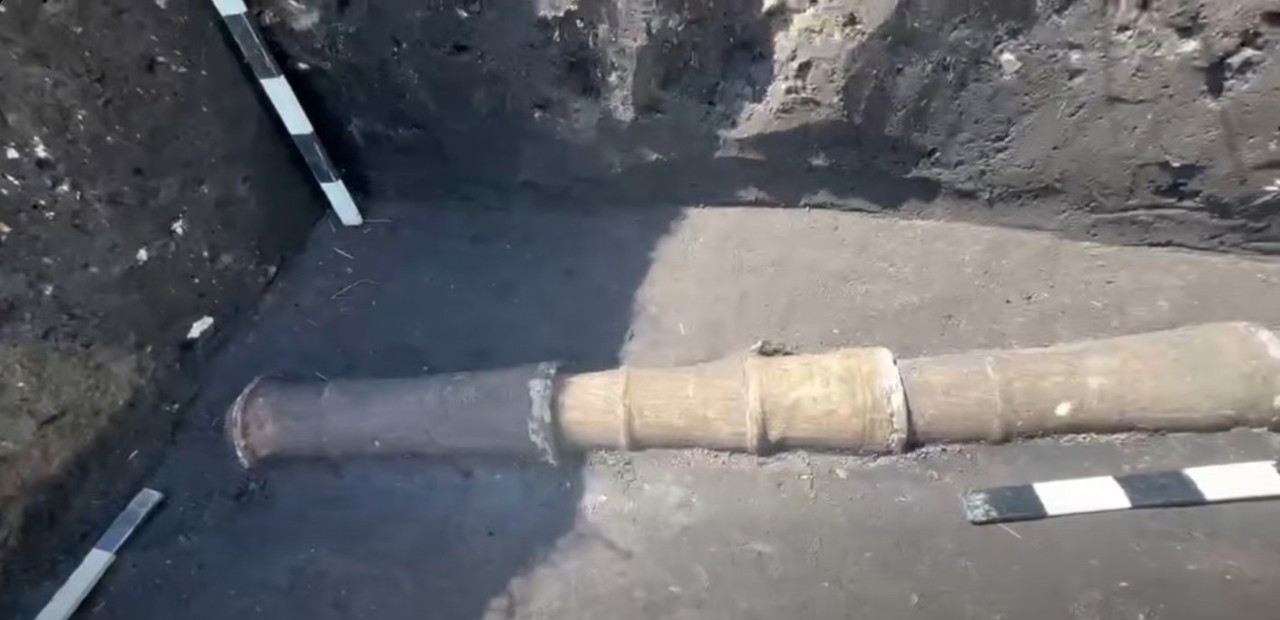
Rare archaeological discovery in Ialoveni district: a section of an aqueduct made of fired clay tubes was identified on the right bank of the Botna River, in the central area of the medieval town of Costești-Gârlea.
The Director of the National Archaeological Agency, Vlad Vornic, said rescue excavations have been underway for nearly two months and that the discovery provides new evidence of the advanced level of organization and infrastructure of the medieval settlement in the area.
“We have a section of a water pipe made of fired clay tubes, each over 50 centimeters long, and here we have five such tubes. This was part of an aqueduct that led to an important structure,” Vlad Vornic said.
Water supply systems are rare and valuable for archaeological research, and this discovery contributes to understanding of urban life in the medieval period across the country. Archaeologists do not exclude the possibility that baths similar to those at Orheiul Vechi may have existed in the area.
“Such discoveries are important; they are archaeological heritage items and will be placed in museum collections, either in the Costești village museum, which we hope to open soon, or in the Văsieni museum, an important institution for this region of the Republic of Moldova,” the director of the National Archaeological Agency added.
During the excavations, researchers also found fragments of fired clay vessels with large, curved slabs and thick walls measuring up to three to four centimeters.
The medieval town of Costești-Gârlea was an important urban settlement in the 14th century, covering about 2.5 km in length and 2 km in width. It lay in a low-lying area along the broad valley of the Botna River.
Author: Veronica Doni, intern.