High-Level EU–Moldova Dialogue: Social reforms reviewed in Brussels one year after the format’s launch
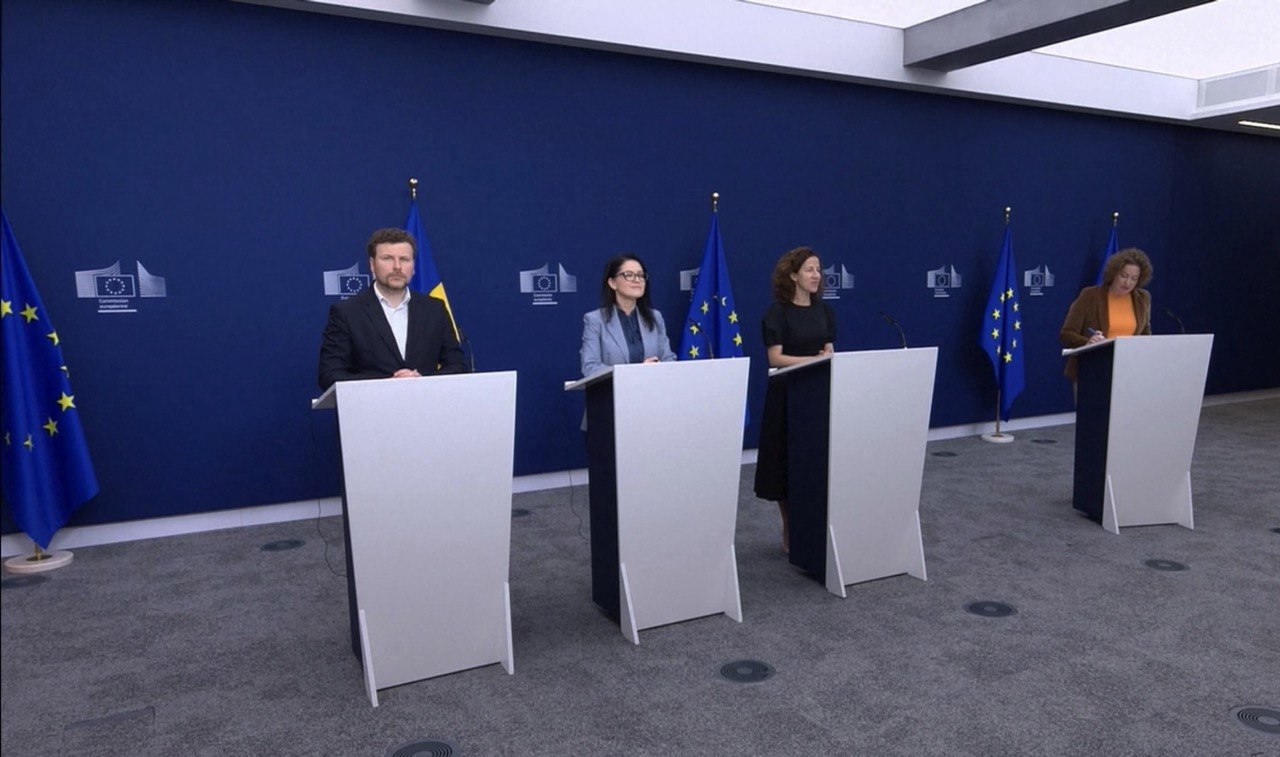
Moldova reviewed its progress in education, social protection, and employment during the second EU–Moldova High-Level Dialogue, held on Tuesday, 2 June, in Brussels. It marks the first meeting hosted by the European Commission since the format was launched in Chișinău in June 2025.
Moldova records “very good progress” in education and social reforms, Brussels says
Vice President of the European Commission for Social Rights, Skills, Quality Jobs and Preparedness Roxana Mînzatu said she is “very pleased to note the very good progress” Moldova has made under Chapter 26 on Education and Culture during a press conference after the meeting in Brussels.
The European Commission announced a new education package, set for adoption this year, which will define a long-term vision for European education systems. It also said Moldova will take part from the start in discussions and in the governance of the next phase of the European Education Area (2026–2030).
Since 2021, Moldova has received over €16 million through Erasmus+, with more than 5,000 Moldovans participating in mobility programs and 53 capacity-building projects involving local organizations, according to Commission data.
Moldova is not yet an associated country to Erasmus+, which would grant full access to the program. To move closer to that goal, the Commission announced €5 million for candidate countries, including Moldova, to help establish national Erasmus+ agencies.
“Republic of Moldova is not yet associated to Erasmus+, but it is steadily moving closer to this goal,” Mînzatu said, highlighting the creation of a national Erasmus+ agency in Chișinău as a key step.
Education Minister Dan Perciun, present in Brussels, said Moldova aims to “to open and close negotiations on Chapters 25 and 26” in 2026, with the government targeting an EU accession treaty by 2028.
He also outlined priorities in education reform, including strengthening school networks, developing model schools, updating curricula and textbooks, advancing digitalization and STEM, and launching a Master’s program in European Affairs in Chișinău in partnership with European universities.
Labour market aligned with EU standards
The labour inspection reform adopted last December marked an important milestone discussed in Brussels. According to Labour and Social Protection Minister Natalia Plugaru, the new legislative changes align the Republic of Moldova with International Labour Organization standards and the requirements of the Enlargement Package.
“We do not wait for accession to start behaving like a member state in social policy, employment, and citizens’ rights,” Plugaru said in Brussels.
Several regulatory acts are on the agenda for alignment. The draft on adequate minimum wages is set to reach Parliament this month, while the directive on pay transparency is under preparation, the minister said.
On platform work, Plugaru noted that Moldova’s assessment as a candidate country is not expected before 2027, but authorities aim to fully implement the directive before accession.
Moldova has also become the first candidate country to sign a partnership with the European Labour Authority, while the National Employment Agency now operates as a National Coordination Office for EURES, the European employment services network.
European Child Guarantee to be implemented by 2030
Plugaru said that while Moldova had over 2,000 children in institutions a decade ago, the number has dropped by 85% to around 300 children in residential care.
“A child’s place is in a family, not in a building,” she said, presenting the expansion of family-based services as an alternative to institutional care.
She added that Moldova is implementing the European Child Guarantee by 2030 and that nearly 300,000 children currently receive free school meals, alongside the expansion of Barnahus-style child-friendly justice centers.
The European Child Guarantee, a 2021 Council Recommendation, commits EU member states to ensuring that vulnerable children have access to free education, healthcare, and adequate housing. The Barnahus model, originally from Iceland, brings protection, justice, and support services for child victims of abuse under one roof.
For persons with disabilities, Plugaru highlighted the development of around 100 community and family-based services under the National Social Inclusion Programme, in line with recommendations from the Enlargement Report.
Online safety for minors remains an open topic
Asked about the EU-developed app for protecting minors online and its possible use in Moldova, the Commission Vice-President described the tool as voluntary. “I see no reason why it could not also be used by candidate countries,” she said.
Minister Perciun framed the issue as part of an ongoing domestic debate over minimum age requirements for app access and obligations imposed on social networks.
He also noted that digital violence was recognized last year as a form of domestic violence in legislation and is punishable as such, including online harassment against women.
The High-Level Dialogue is a sectoral cooperation format separate from formal accession negotiations. The topics covered—employment, skills, education, and child policies—correspond to Chapters 19 (Social Policy and Employment), 25 (Science and Research), and 26 (Education and Culture) of the EU acquis, all of which are included in Cluster 3: Competitiveness and Inclusive Growth.
The six negotiation clusters were technically opened with Moldova in March 2026, but their formal opening still requires unanimity among member states, currently blocked by Hungary.
Negotiations on the first cluster, "Fundamentals", could open on 16 June this year.