Emotional development and the effects of toxic relationships

The relationships we cultivate throughout our lives significantly affect how we view ourselves, our partners, and those around us. While the term "toxic relationship" is often used, many people do not fully understand its underlying mechanisms or the impact it can have on a person's emotional development.
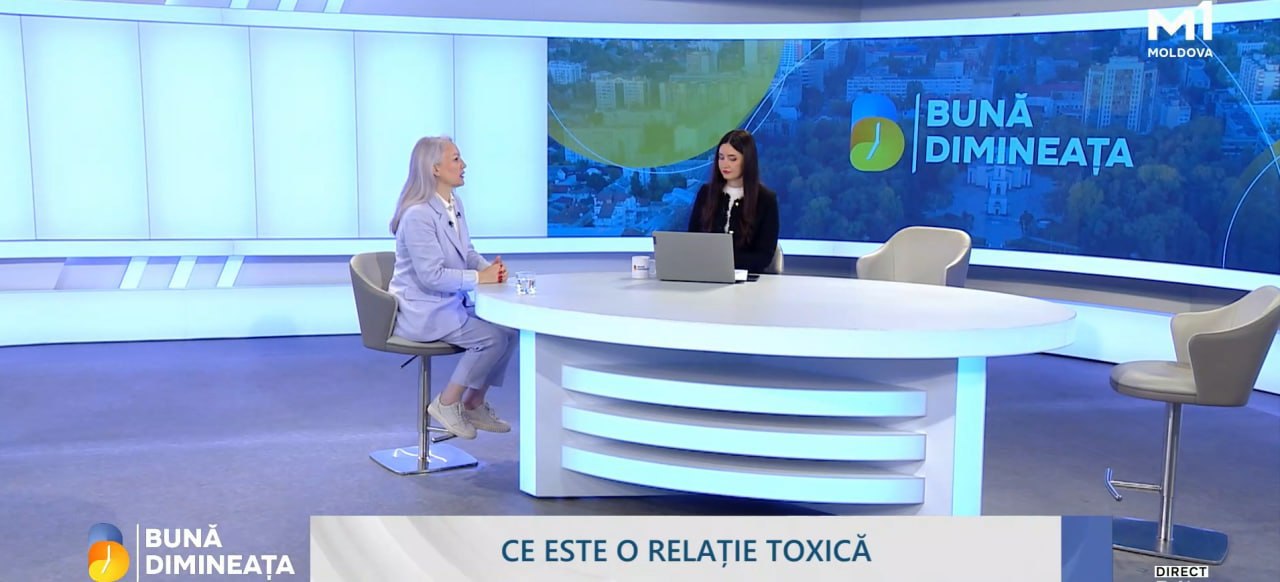
Zinaida Soroceanu, an expert in relationship education and communication, explains that a healthy relationship is characterized by balance, mutual respect, and emotional security. In contrast, toxic relationships are marked by emotional dependence, insecurity, and confusion.
“It's important to recognize that when we enter a toxic relationship—even if we initially feel good with our partner—we often live in a constant state of anxiety. We may feel uncertain about ourselves, unsure of what the future holds, and we cannot be confident that our partner will remain committed,” the expert noted during the show “Bună Dimineața” on Moldova 1.
Manipulation is nearly always a feature of toxic relationships. One warning sign is the use of personal information or vulnerabilities against someone to control or intimidate them.
Healthy relationships, on the other hand, provide predictability and are built on mutually agreed-upon rules. Partners feel safe and are unafraid to reveal their vulnerabilities. However, if one partner frequently creates confusion or is excessively critical of the other, it can lead to emotional imbalances and negatively impact the couple’s well-being.
Zinaida Soroceanu explained that unhealthy relationship patterns often stem from childhood experiences. Children raised in environments where they must "earn" the love and approval of those around them are at a greater risk of developing toxic relationships as adults.
"If you constantly tell a child that you love them only when they behave well, they come to believe that this is a natural relationship pattern," the expert noted.
Amidst feelings of anxiety and an ongoing need for attention and approval, these children tend to replicate vulnerable relationship patterns first with friends and colleagues, and later in romantic relationships. Conversely, individuals who are comfortable with solitude and do not fear social exclusion are less likely to develop dependent relationships with their partners.
The expert clarified that bullying and toxic relationships are not the same, though they can produce similar effects. Bullying is typically overt and creates an immediate sense of intimidation. In contrast, a toxic relationship may initially feel positive, but the negative effects often become evident later on.
Zinaida Sorocianu emphasized that parents serve as the primary relationship models for their children. The way adults communicate, resolve family conflicts, and establish boundaries directly influences the behaviors children will adopt later in life.
A tendency among some parents to raise children who are excessively obedient can negatively affect their ability to protect themselves in relationships with others. She stated, "A compliant child can become a target for a toxic person."
To prevent the development of unhealthy relationship patterns, the specialist recommends involving children in decision-making processes that affect them. By fostering an environment built on respect, safety, and open dialogue, parents can help raise individuals who are capable of recognizing and avoiding toxic relationships.