Armenia votes in crucial election amid EU-Russia rift
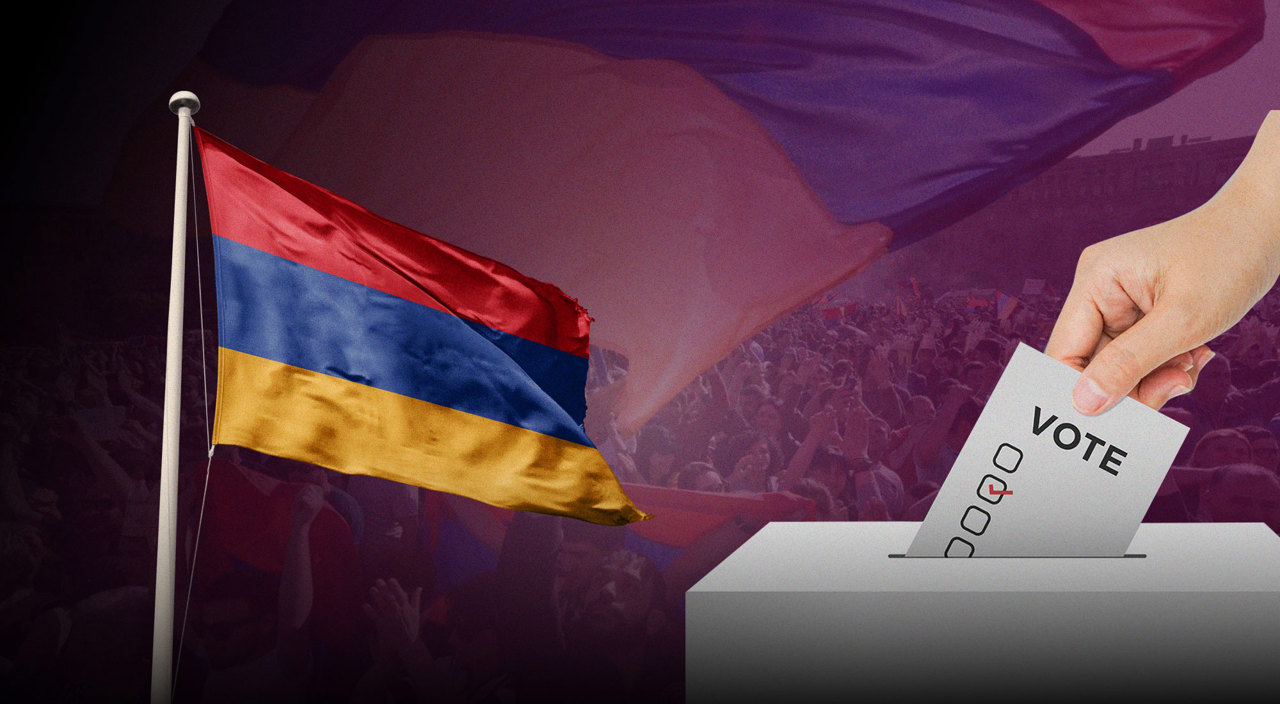
Armenians are casting ballots this Sunday in high-stakes parliamentary elections that will shape the nation's next government. Incumbent Prime Minister Nikol Pashinyan is seeking a third consecutive term to solidify his power. The election is dominated by Armenia's shifting relationship with Russia and Yerevan's explicit push for closer ties with the European Union.
Polling stations opened at 08:00 local time and will close at 20:00. The Central Election Commission is scheduled to announce preliminary results tomorrow, with final definitive outcomes expected within seven days.
Warnings from Moscow and commercial conflict
Yerevan's pro-European rhetoric has triggered deep dissatisfaction inside the Kremlin. Moscow frequently reminds Armenia that integrating with the EU is entirely incompatible with its current membership in the Moscow-led Eurasian Economic Union (EAEU).
Following the May 9 military parade in Moscow, Russian President Vladimir Putin addressed Pashinyan's absence from Red Square. Putin initially stated that Moscow "does not see anything unusual" in Armenia's EU convergence and supports whatever is "in the benefit of the Armenian people." However, he later stressed Armenia's immense economic benefits within the EAEU and suggested Yerevan "must decide," potentially through a national referendum.
Furthermore, the Russian leader drew an explicit parallel between Armenia and Ukraine's recent history. "Where did it all start? From Ukraine's accession or attempt to accede to the EU!" Putin stated. He later warned that "the situation must not be taken to the extreme," a comment widely interpreted by analysts as a direct threat.
In parallel, Russia has systematically implemented successive restrictions on Armenian imports. Moscow banned Armenian flowers on May 22, later targeting "Jermuk" mineral water, brandy, wine, and seasonal agricultural products just as the local harvesting season was about to begin.
Economist Haik Fanyan told the BBC that Armenian authorities view these trade sanctions as a blatant attempt by Moscow to influence the June 7 election outcome.
Accusations of political opposition crackdowns
Pashinyan's political opponents accuse the current administration of aggressively persecuting rivals. Activists, bloggers, and government critics have faced sudden criminal prosecutions, often following critical public statements made by the prime minister himself.
A major campaign scandal erupted in mid-May when Karabakh refugee Artur Osipyan confronted Pashinyan at a campaign rally regarding the region's fate. Security personnel forcibly removed Osipyan, who was publicly insulted and subsequently arrested. Human rights organizations condemned the charges as "illegal, unfounded, and politically motivated."
On the eve of the vote, authorities arrested six candidates from an opposition bloc, while its primary financial backer remains under house arrest. Officials have declined to specify the exact legal charges brought against them.
Prior to the vote, Pashinyan also launched a broad campaign against the Armenian Apostolic Church leadership. He accused top bishops of corruption and covert ties to the Kremlin, allegations that church officials call an outright assault on Christianity.
When billionaire Samvel Karapetian publicly defended the church, he was arrested for allegedly conspiring to seize power. His energy company, Electric Networks of Armenia, was subsequently brought under state control. Pashinyan frequently labels him "the oligarch from Kaluga," referencing his time spent in Russia. Karapetian formed an opposition bloc but cannot run personally due to holding Russian and Cypriot citizenship.
Electoral mechanics and historical context
According to a BBC analysis, this vote could dictate Armenia's strategic alignment for decades. During Pashinyan’s eight-year tenure, Armenia suffered a devastating defeat in the Nagorno-Karabakh war alongside major social crises. However, the opposition has failed to offer a convincing alternative, remaining heavily tied to unpopular former presidents and old corruption scandals.
In May, Yerevan hosted a major EU-Armenia summit attended by European leaders and Ukrainian President Volodymyr Zelenskyy. French President Emmanuel Macron stated that "Armenia is moving resolutely toward Europe," while EU Foreign Policy Chief Kaja Kallas hinted at future EU perspectives. Currently, Armenia is only negotiating visa-free travel enhancements rather than official EU candidate status.
Russia remains Armenia's primary trade partner, accounting for 36% of its foreign commerce in 2025. Conversely, Armenia’s military dependence on Russia has dropped significantly, with 95% of defense imports now sourced from India, France, China, and other nations.
The electorate consists of approximately 2.485 million voters, with no voting organized abroad. Under the proportional system, parties need 4% to enter parliament, while alliances require 8% to 10%. Four seats are reserved for ethnic minorities, including Yazidis, Russians, Assyrians, and Kurds. A 54% majority is required to form a government, failing which a second-round runoff will occur between the top two parties.
Translation by Iurie Tataru