Kosovo and Armenia election results trigger EU geopolitical shifts
Pro-Western ruling parties secured critical victories in yesterday's general elections in both Kosovo and Armenia. Preliminary data indicates near-final results show Kosovo Prime Minister Albin Kurti’s party won the snap parliamentary vote, while Armenian Prime Minister Nikol Pashinyan achieved a decisive victory. These simultaneous elections intensify strategic geopolitical shifts along the European Union's eastern and Balkan peripheries.
Electoral outcomes and institutional hurdles
In Kosovo, Kurti’s victory arrives alongside severe institutional warnings. His Self-Determination movement remains the dominant political force but lacks the parliamentary majority required to govern alone. This third election cycle in less than two years underscores a persistent institutional crisis, further highlighted by a low voter turnout of approximately 37%.
Kosovo unilaterally uses the Euro currency, anchoring its economic aspirations directly to the West. However, Pristina's path to EU accession remains blocked by a complex legal circularity. Brussels requires Serbia to normalize ties with its former province, a move Belgrade rejects as a de facto recognition of independence.
Geopolitical shifts and European integration
Furthermore, Kosovo's sovereignty lacks universal recognition within the bloc itself. Five EU member states, alongside Moldova and Ukraine, refuse to recognize the 2008 independence declaration. Consequently, international bodies currently offer the Western Balkan nation diplomatic reassurances rather than a concrete accession timeline.
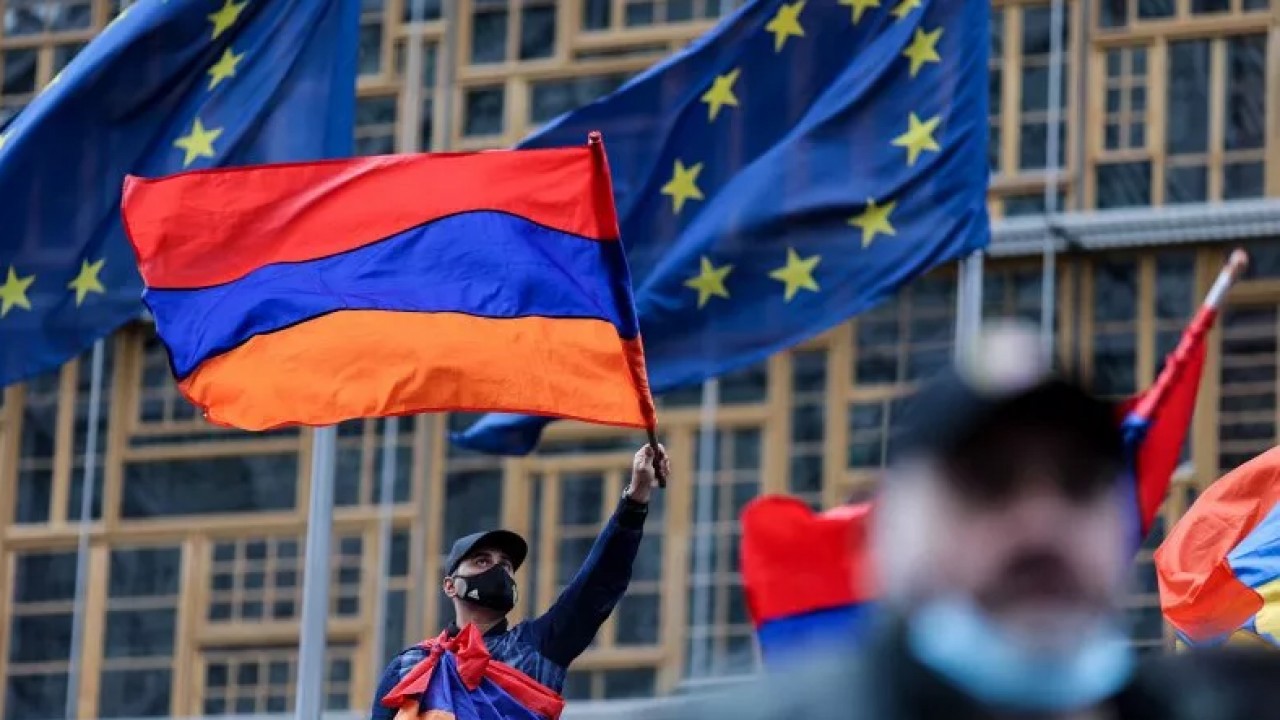
Meanwhile, Armenia's vote served as a strategic referendum on the nation's geopolitical alignment. Prime Minister Pashinyan’s Civil Contract party secured a comfortable lead as the country actively pivots away from Moscow toward the EU and the United States. This historic transition follows the loss of Nagorno-Karabakh and deep public dissatisfaction with Russian security guarantees.
Pashinyan framed the ballot as a definitive choice between Western-mediated peace negotiations and regional confrontation. The Armenian electorate ultimately favored normalization with Azerbaijan and Turkey despite fierce domestic opposition from pro-Russian factions. Both nations share demographic scales comparable to Moldova, yet demonstrate contrasting institutional realities.
For Brussels, these developments reflect the enduring civilizational appeal of the European model. While internal instability and diplomatic vetoes delay immediate enlargement, the outcomes in Pristina and Yerevan confirm that the EU remains the primary democratic anchor in contested spaces.
Translation by Iurie Tataru