Over 100 Moldovan teachers learned the Finnish education model
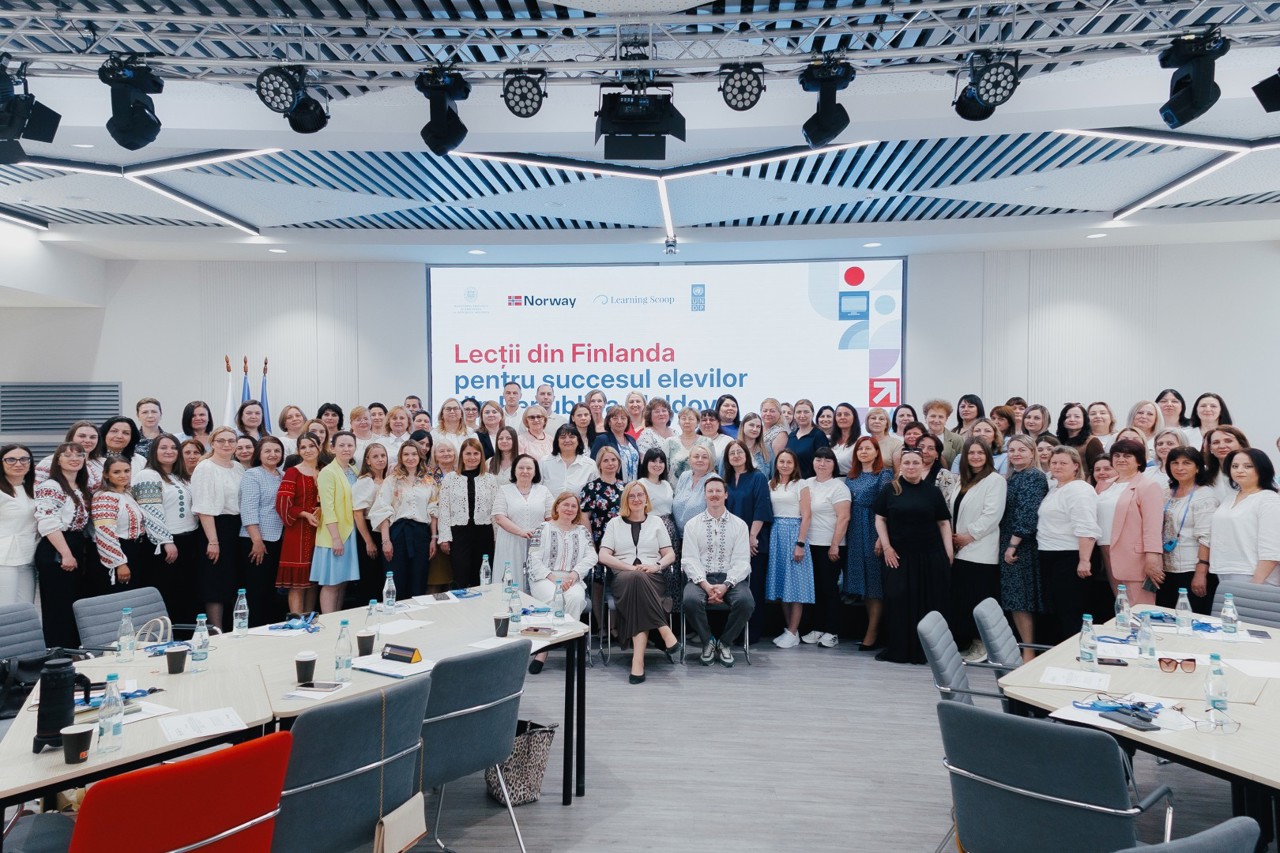
Between March and May, over 100 teachers and trainers from the Republic of Moldova were trained in teaching and learning in schools, following the Finnish model.
According to a press release from the United Nations Development Programme (UNDP) in Moldova, the focus is not solely on introducing new methods or modern teaching techniques but on transforming the overall learning experience for both students and teachers.
"Before changing methods, we need to change the learning experience for students and teachers alike. Sometimes, students do not require more motivation but rather the right conditions to showcase their competence. When this happens, their engagement comes much more naturally. I have seen a similar change in my mentoring work", said Vladimir Vohmeanin, a teacher at the “Mihail Koțiubinski” Theoretical Lyceum in Chișinău.
For many participants, the training experience served as an opportunity for reflection on their own practices.
"After analyzing my work following these courses, I realized that I was granting students too little autonomy and insufficient opportunities for self-expression. From Finland's experience, I learned to leverage students' skills and learning styles. Student autonomy does not mean losing control in the classroom; it enhances their understanding," emphasized Natalia Ursu, a teacher at the “Vasile Alecsandri” Theoretical Lyceum in Bălți.
"School is for the child, and we must recognize and value them as they are. Let’s strive to be model teachers. If students see us as role models, we can work together to build a model society," said Corina Ceban, a teacher at the same lyceum in Bălți.
"We have invested—and continue to invest—in school infrastructure, organizational transformation of schools, and teacher training, including for the implementation of STEAM education. Along the way, we have realized that students’ motivation relies not on a new method, but on how they feel at school: whether they feel heard, seen, and able to make mistakes without facing criticism. These training sessions aimed to promote student-centred pedagogy based on the latest practices," said Ana Moraru, project manager at UNDP Moldova.
The courses were led by experts from Finland who are recognized for their extensive experience in general and special education pedagogy, as well as in teacher training.
Several topics were covered during the training sessions, including motivating students using scientific principles, active and interdisciplinary teaching methods, assessment strategies that support progress, and reflection techniques that foster sustainable learning. The developed content will be integrated into national in-service teacher training programs, and the trained instructors will transfer their knowledge to the institutions where they work and to other schools across the country.
"After these training sessions, we reconceptualized our workshops and programs to include knowledge multiplication activities. Our goal is to develop reflective teachers who understand the reasons behind their actions in the classroom. Moreover, future teachers should be trained according to this model while they are still in university," said Viorica Cojocaru, Head of the Initial Training and Project Management Department at the National Institute for Education and Leadership (INEL).
The training course was supported by UNDP Moldova, in partnership with the Ministry of Education and Research and the National Institute for Education and Leadership, and was funded by Norway. This initiative is part of the project “Transforming Education in Moldova through Model Schools”.