Digital election spending jumps 39% as Moldova updates electoral law
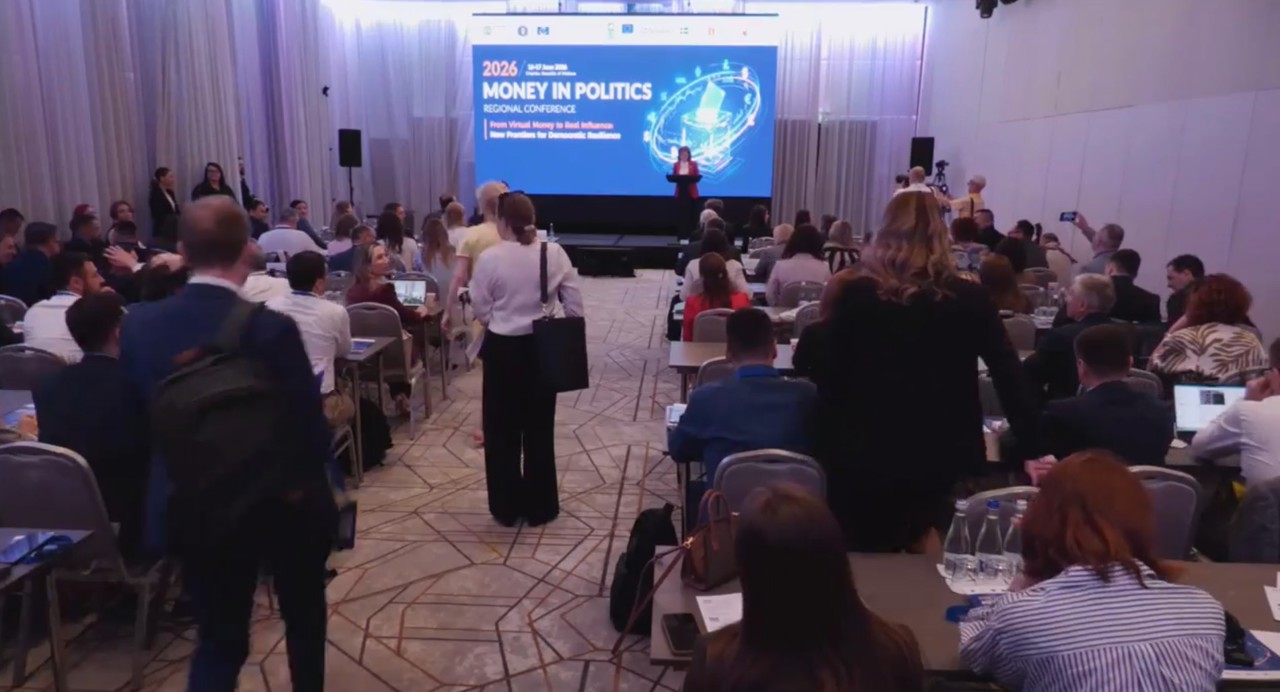
Chisinau hosted the 10th regional "Money in Politics" conference on June 16, 2026, gathering experts from Romania, Albania, Poland, Ukraine, and North Macedonia. The two-day forum focuses on tracking digital financial flows, virtual currencies, and their rising influence on democratic processes.
Official data revealed that during the 2025 parliamentary elections, digital election spending by political parties surged by over €104,000 (approx. 2,038,400 MDL), a 39% increase compared to 2024.
Central Electoral Commission (CEC) President Angela Caraman stated that the digital space has become the primary arena for electoral competition. Consequently, democratic institutions must rapidly adapt their oversight tools to secure these new environments.
The event, hosted by Chisinau for the fourth consecutive year, centers on improving tracking mechanisms for online advertising and coordinated campaign financing.
Caraman noted that while the focus in 2023 was basic transparency, the framework evolved to analyze globalization in 2024, and the direct link between political money, national security, and democracy in 2025.
Moldova has faced highly sophisticated foreign hybrid threats in recent years. Institutional leaders emphasized that democratic resilience requires deep inter-agency cooperation and substantial investments in security expertise rather than just legal adjustments.
Speaker of the Parliament Igor Grosu warned that hostile actors systemically weaponize illicit financing to undermine democratic elections. He noted that Moldova’s direct experience in combating foreign-injected funds can serve as a blueprint for other nations facing similar hybrid challenges.
Grosu announced that the Parliament has drafted a comprehensive package of amendments to the Electoral Code ahead of the next electoral cycle.
The new political cycle will begin with local elections in 2027, followed by the presidential election in 2028, and parliamentary elections in 2029.
The 2026 regional conference concludes on June 17, bringing together 100 high-level delegates representing 20 countries.
Translation by Iurie Tataru