European officials: EU-Moldova summit must confirm the irreversibility of the European path
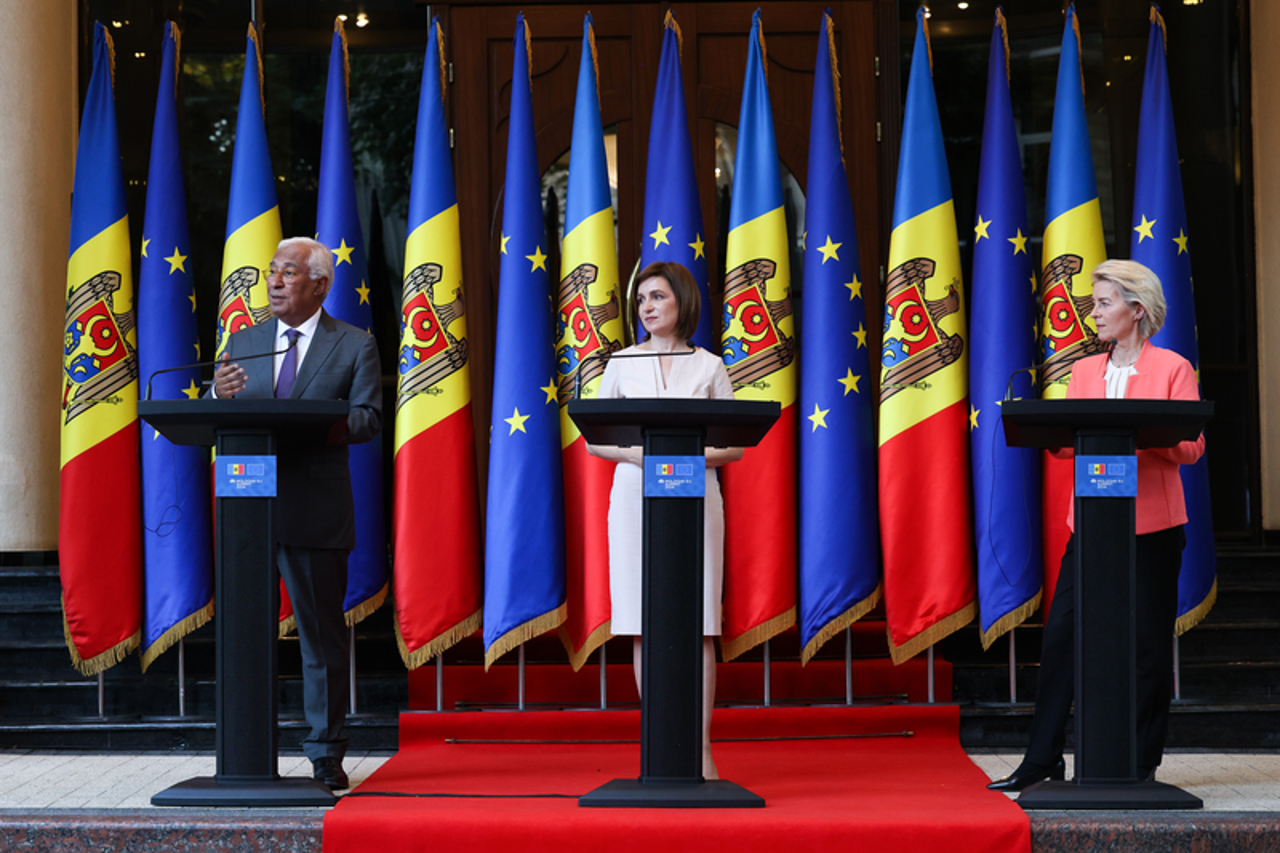
European officials are delivering a strong message of support ahead of the Moldova-European Union Summit on June 22. After initiating the first cluster of negotiations, EU leaders plan to use the meeting in Brussels to reaffirm that Moldova's accession remains a strategic priority. This commitment comes in the context of the ongoing war in Ukraine and the increasing Russian hybrid threats in the region.
The summit will be attended by Moldovan President Maia Sandu, European Council President António Costa, and European Commission President Ursula von der Leyen. It is viewed in Brussels as a critical moment to assess progress and accelerate the European integration process.
European officials believe that the meeting will send a strong political message affirming the irreversibility of Moldova's path toward Europe and outline specific commitments in the areas of the economy, security, energy, and sectoral integration.
The main theme of the summit will be the accession process, with the opening of Cluster 1 being considered a historic milestone for Moldova. Officials insist that subsequent steps must follow without delay.
"We are fully committed to supporting Moldova's European path and determined to do everything in our power to ensure further progress," declared a European official during discussions with journalists prior to the meeting.
The opening of the first cluster represents not just a moment of celebration, but also the start of a new phase of negotiations. Brussels expects the other clusters to open “as soon as possible” on the basis of meritocratic principles.
Another European official emphasized that the European Commission's assessment is clear: the Republic of Moldova is ready to open all negotiation clusters. Moldova completed the screening process in record time and has consistently maintained a strong pace of reforms. However, the final decision rests with the member states, which are currently consulting on the next steps in the enlargement process.
European officials are placing particular emphasis on the “Fundamental Values” Cluster, considered the backbone of the accession negotiations. It includes judicial reform, the fight against corruption, the strengthening of democratic institutions, respect for fundamental rights and public administration reform.
These are difficult reforms, but they matter to citizens. The message from Brussels is that progress in these areas will determine the pace of the entire accession process.
Benefits before accession
Another important topic of the summit will be the gradual integration of the Republic of Moldova into the European Union's policies and programs prior to its official membership status. European officials stated that this approach is designed to provide citizens with tangible benefits during the negotiation process. Achievements so far include Moldova's accession to the European roaming system and its integration into the Single Euro Payments Area (SEPA), which enables faster, cheaper bank transfers.
Brussels is also working on increasing access to European programs for Moldovan youth, such as Erasmus+. An official mentioned, “Our goal is to implement this starting in 2028.” Additionally, the EU is considering expanding the DiscoverEU program for young people in the Republic of Moldova.
Over a billion euros on the Summit agenda
The economic aspect will be a key focus during discussions in Brussels. More than 500 million euros from the Growth Plan for the Republic of Moldova—totalling 1.9 billion euros for the period from 2025 to 2027—have already been released.
The government in Chisinau has successfully implemented 28 out of 30 reforms in the first phase of the program. If this momentum continues, an additional tranche of approximately 500 million euros could be available by the end of the year. These funds are earmarked for the modernisation of infrastructure, energy efficiency, agriculture, connectivity, and the enhancement of public services.
Moldova: on the front line of hybrid warfare
As Russian pressure in the region intensifies, security is set to be a key issue at the upcoming summit. European officials view the Republic of Moldova as one of the primary targets of Russia's hybrid warfare strategy against European states.
One of the anticipated conclusions of the summit is to enhance cooperation within the Security and Defense Partnership, which was established after the previous EU-Republic of Moldova summit. Brussels perceives the Republic of Moldova not only as a recipient of European assistance but also as a contributor of expertise in addressing hybrid threats.
Another expected outcome of the summit is the bolstering of European support for the Republic of Moldova's institutional resilience. European officials have announced an additional allocation of 11 million euros to strengthen the country's abilities to respond to hybrid threats. Simultaneously, the European Union Partnership Mission in the Republic of Moldova will continue to support the development of crisis management, cybersecurity, and critical infrastructure protection capabilities.
The summit is expected to confirm the deepening of cooperation in defense. European officials highlighted that the Republic of Moldova is the second-largest beneficiary of the European Peace Facility, which funds the strengthening of defense capacities in partner states.
"We understand the needs of the Republic of Moldova and we want to respond with clear commitments to its security challenges," stated a European official. He mentioned that a new substantial financial package for the Republic of Moldova is being prepared by European institutions, which will be reviewed by the member states.
A new stage in the EU-Republic of Moldova relationship
In addition to concrete decisions, the meeting in Brussels carries significant political weight. Just days after the opening of the first cluster of negotiations, European leaders emphasized that enlargement is no longer a distant prospect, but an ongoing process.
The key message from Brussels at the summit is that the Republic of Moldova has entered a new phase in its relationship with the European Union. This phase involves advancing accession negotiations, accelerating practical integration, and recognizing the country's security as increasingly interconnected with European security.