EU Summit in Brussels: Moldova completed 90–95% of EU-requested reforms
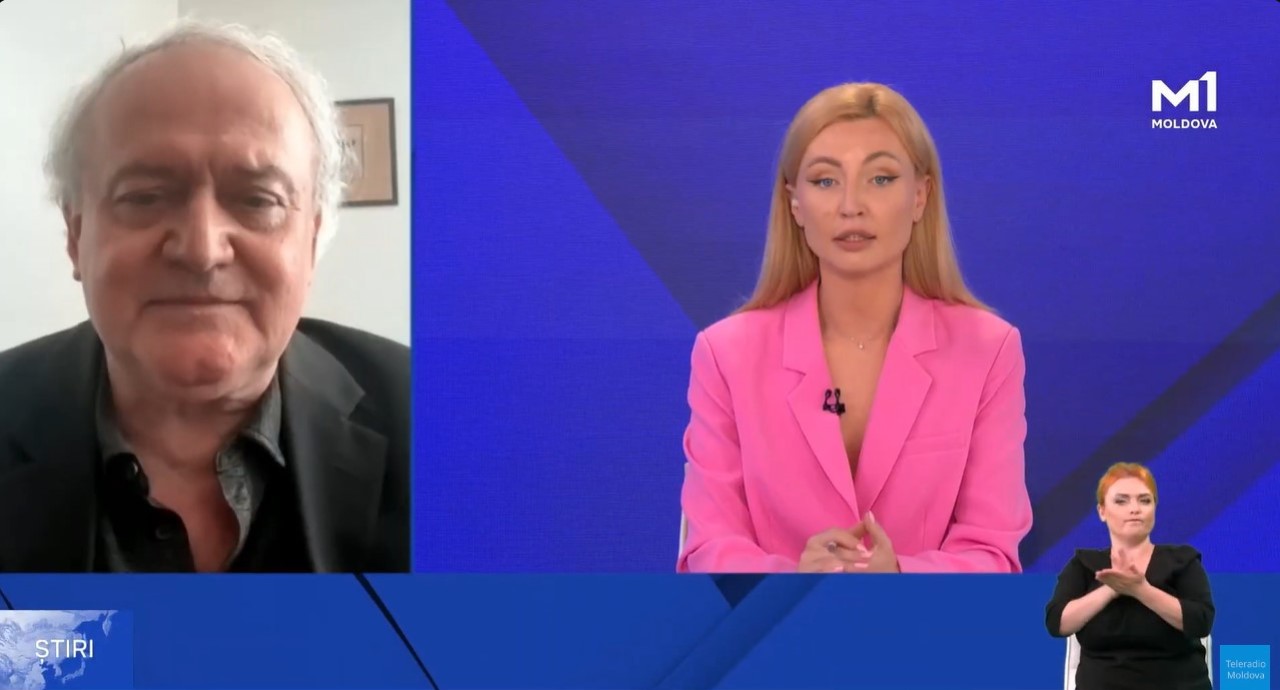
The main goal of the EU-Republic of Moldova Summit in Brussels is to secure a firm commitment that evaluations will be based solely on the principle of "own merit." European leaders have acknowledged the remarkable speed of Moldova's accession process and the advancements made towards the country's gradual integration into the European Union (EU). This analysis comes from Dan Alexe, Teleradio-Moldova's reporter in Brussels.
European validation with a strong political charge*
"Nobody expected, a year or two ago, that the Republic of Moldova would make such progress and receive such a grade. And let's look at the pace of the meetings. Barely a week ago, the first package of chapters was opened, the so-called cluster of fundamental chapters, of fundamental values, namely justice, citizens' rights, the press and fundamental freedoms and so on. And a week later, here we have this meeting. (...) The grade given today, a kind of validation of the Republic of Moldova, has huge political, symbolic, and even moral significance. It is a kind of demonstration of what can be done in such a short time", Dan Alexe declared for the Moldova 1 afternoon newscast.
Republica Moldova, among the best performing candidate states
According to the Brussels reporter, the Republic of Moldova has registered one of the most spectacular rates of reform implementation among all the states on the path to European accession.
*"The progress made in the last year has been truly astonishing. According to statistics and accounting calculations by officials in charge of negotiations, the Republic of Moldova has ticked off about 90 to 95% of all the measures it was supposed to take last year in the race to get closer to the EU. New agreements will be announced, a very important one for young people and researchers, a cooperation agreement in the field of new innovations, research, and all expectations will be confirmed", Dan Alexe said.
Decoupling from Ukraine - a sensitive topic
Despite the increasingly frequent discussions behind the scenes of European institutions regarding the separate evaluation of candidate states, the journalist emphasizes that the subject is officially avoided for geopolitical and diplomatic reasons: "What can be done for the moment is to give the Republic of Moldova encouraging impulses".
"The term 'decoupling' is still taboo. Although everyone is pronouncing it behind the scenes, it will not be pronounced today or next week. It is a minefield. Ukraine must be treated with care at this time, especially since it is going through a delicate moment of unexpected confrontation with its biggest ally in Eastern Europe - Poland. There was that diplomatic incident where the Polish president withdrew a very important decoration from Zelenski, who sent it back. No one wants Poland to become a second Hungary. So this is not the diplomatic moment at all to announce that the Republic of Moldova deserves to be decoupled from Ukraine," said Dan Alexe.
Brussels appreciates the absorption of European money
Another argument that strengthens the country's position in the accession negotiations is the authorities' ability to absorb European funds.
"The Republic of Moldova has already received a quarter of all those 1.9, or almost 2 billion euros that must be disbursed. Again, the way this money was assimilated is a very big progress. So all this will be emphasized and the impetus is certainly given. Now everything will depend on Chisinau's progress", notes Alexe.
At the same time, the journalist explained that the current financial package represents unprecedented support for Moldovan citizens.
"Let's not forget that out of these 2 billion, half a billion does not have to be returned. They are non-repayable grants, and 1.5 billion are loans at very convenient rates. So it's not about accountant's calculations here. It's very good what has happened so far and let's enjoy this validation", Dan Alexe said.
Resilience to hybrid attacks and the "Transnistrian file"
The correspondent reports that the perception within European institutions is that resilience in the face of Moscow's influence and a pragmatic approach towards the Transnistrian region are considered examples of success.
"The fact that the Republic of Moldova has so far managed to brilliantly withstand Moscow's hybrid attacks, despite that Trojan horse that the Transnistrian region represents. And there, the political course of the way the Transnistrian region is treated by Chisinau has satisfied everyone, because, despite the opposition of the politicians there, with that shaky legitimacy that we know, or equal to zero, the population of the region still manages to benefit from most of the progress that the Republic of Moldova has made in the EU integration process. So all of this is seen here, is noted and is another good note for Chisinau", concluded Dan Alexe.
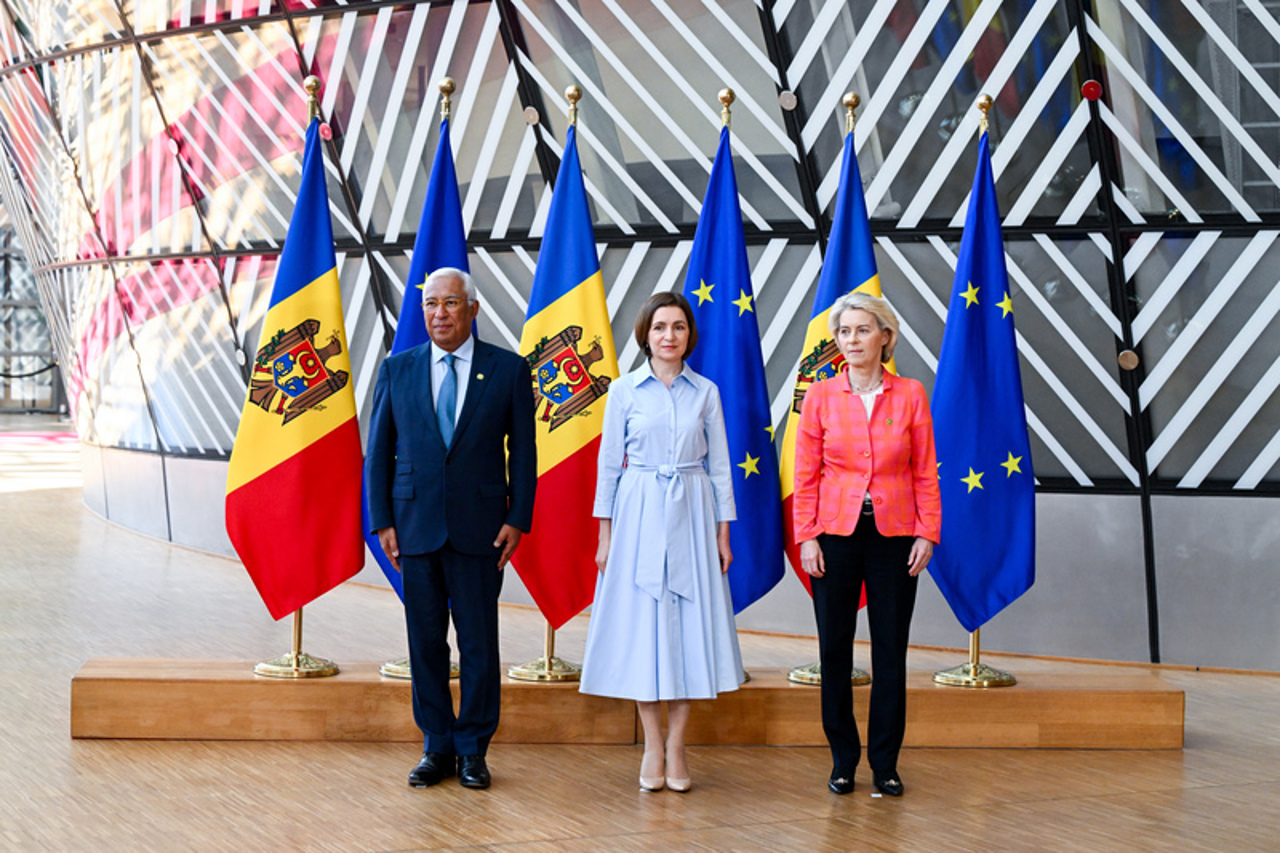
On Monday, June 22, the second summit between the European Union and the Republic of Moldova is held in Brussels. The high-level meeting will be hosted by António Costa, the President of the European Council, and Ursula von der Leyen, the President of the European Commission. The Republic of Moldova will be represented by its Head of State, Maia Sandu.
At the beginning of the session, President Maia Sandu expressed Moldova's determination to capitalize on the "window of opportunity" created by the launch of negotiations on the first group of chapters. She emphasized the need to accelerate the reforms necessary for European integration. In response, President António Costa congratulated Moldova on the progress made towards European integration and highlighted the importance of focusing all efforts on opening the remaining groups of chapters, particularly once the political blockage caused by Hungary has been resolved.
The leaders of the European institutions and Moldovan officials met to assess progress in the accession process and to establish priorities for near-term bilateral cooperation.
This meeting follows a significant event that took place a week earlier: on June 15, in Luxembourg, Moldova officially initiated negotiations for the first "cluster" of its accession process, which focuses on the rule of law, justice, and the fight against corruption. After four years of bureaucratic delays, Chisinau has finally progressed from discussions to actionable steps.