Oana Țoiu: Moldova’s EU path is irreversible despite Russia’s concerns
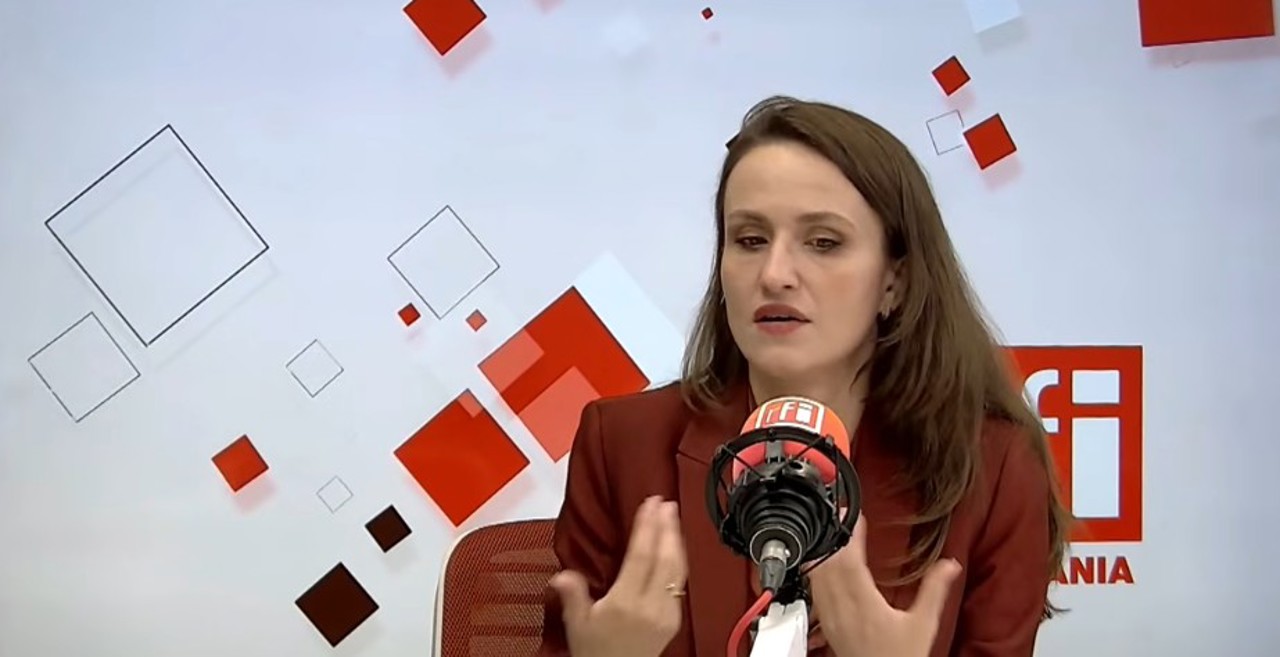
The path of the Republic of Moldova to the European Union (EU) is irreversible, and a stronger EU concerns Russia, stated Oana Țoiu, Romania's interim Foreign Minister, in an interview with RFI.
A few days ago, a historic decision was made: we reached an agreement with all EU member states and began negotiations with the Republic of Moldova for its accession to the European Union, addressing this process chapter by chapter. From this moment on, Moldova’s path toward EU membership is irreversible. Over recent years, we have observed attempts by Russia to control the narrative, including through disinformation campaigns. These campaigns aim to shape the vocabulary and perceptions around relevant events.
When asked if Moldova and Ukraine should be decoupled in their EU accession process, Oana Țoiu stated that there is no formal or technical coupling; it has only been a political approach. Each country must be evaluated based on its own merits and progress in reforms, legislative alignment, and adherence to EU values. The terms "coupling" and "decoupling" have been used politically to emphasize the need for the EU to open its doors to both neighboring countries simultaneously, which happened when the first negotiation cluster was opened for both Moldova and Ukraine. However, it is essential to consider that these countries differ in size, reform paths, industries, and economies. Therefore, each negotiation chapter should be evaluated on its merits, in line with the foundational principles of EU treaties and procedures.
Regarding the congestion at the border, Țoiu mentioned that the strong connection between Moldova and Romania places significant pressure on border transit. To address this, we have invested in infrastructure, including the first bridge built in 30 years, and solutions for joint border verifications are underway. While the responsibility for this lies with the Ministry of the Interior, I want to clarify that the teams at the Ministry are working on optimizing verification processes, necessitating better logistics to connect our countries effectively.
A joint declaration with 20 points was adopted at the second EU-Republic of Moldova summit on June 22, politically affirming the opening of the first group of chapters in the accession negotiations, titled “Fundamental Values”, on June 15, and announcing new support packages for our country’s security and defense.
European Commission President Ursula von der Leyen stated, following last week’s EU leaders’ summit, that the objective is to open as many clusters as possible before the summer. If a unanimous agreement is reached, the next cluster may be officially opened on July 14 during the meeting of EU affairs ministers in Brussels.
The negotiation process is structured into 33 chapters divided into six thematic groups. Conventionally, the first cluster, dedicated to the rule of law, democratic institutions, and the functioning of the economy, is the first to open and the last to close in any accession process.