Aviation agency oversight failure tests Moldova EU accession narrative
The Moldovan air traffic management authority, MoldATSA, has triggered a severe institutional crisis, leading to a wave of high-profile political and administrative resignations. The scandal involves fraudulent executive credentials and highly disproportionate compensation packages within the strategic state enterprise.
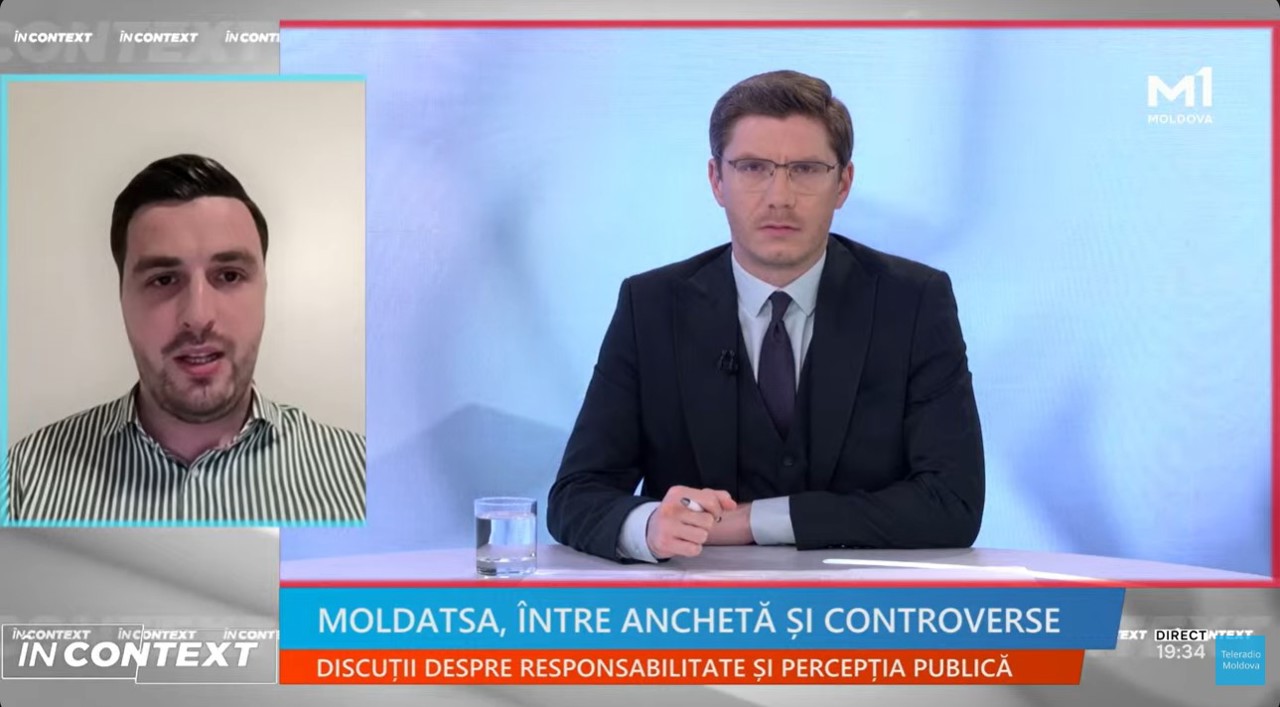
Political science expert Laurențiu Pleșca stated that the developments represent a systemic failure of internal oversight mechanisms. He noted that the situation poses a direct reputational challenge for the ruling Action and Solidarity Party (PAS), which remains under close monitoring by European partners.
The crisis intensified following an investigative report exposing that the recently dismissed MoldATSA Director General, Dumitru Vangheli, falsified his professional qualifications. Concurrently, public records revealed that Anastasia Taburceanu, a relative of Moldovan President Maia Sandu, received over €51,020 (approx. 1,000,000 MDL) in under a year as a spokesperson.
By 2026, Taburceanu's monthly compensation escalated to over €6,122 (approx. 120,000 MDL). This figure represents eight times the national average wage and nearly four times the official salary of the country's president.
Systemic institutional fallout
In response to public outrage, Radu Marian resigned from his position as the Chairman of the Parliamentary Committee for Economy, Budget, and Finance. Marian acknowledged that he recommended Vangheli for the role in good faith based on a childhood acquaintance but accepted accountability for the oversight failure.
The General Director of the Public Property Agency (APP), Roman Cojuhari, also resigned from his post. Cojuhari cited a lack of rigorous institutional monitoring regarding the financial decisions executed by the former MoldATSA administration.
A subsequent evaluation by the National Anticorruption Center (CNA) identified 33 staff appointments completed without mandatory public competitions between 2023 and 2024. The anti-corruption agency also uncovered over €459,183 (approx. 9,000,000 MDL) in irregular state expenditure allocated for unverified training programs.
Implications for European integration
President Maia Sandu confirmed that multiple systemic vulnerabilities allowed these financial anomalies to pass undetected across state enterprises. She ordered comprehensive corporate audits across all major public utilities and demanded the immediate restitution of misappropriated public funds.
The oversight failures emerged at a highly sensitive juncture as the European Commission evaluates Moldova's administrative reforms for EU accession. The European Union recently allocated a vital €1.9 billion Growth Plan to stimulate structural investments across the candidate nation.
Political analysts emphasize that the agility of state institutions in addressing internal corruption will heavily influence Western diplomatic confidence. The APP has extended its specialized fiscal audits to encompass 21 additional state-owned commercial corporations.
Translation by Iurie Tataru