Eurasian banks slap high fees on Russian ruble cash deposits
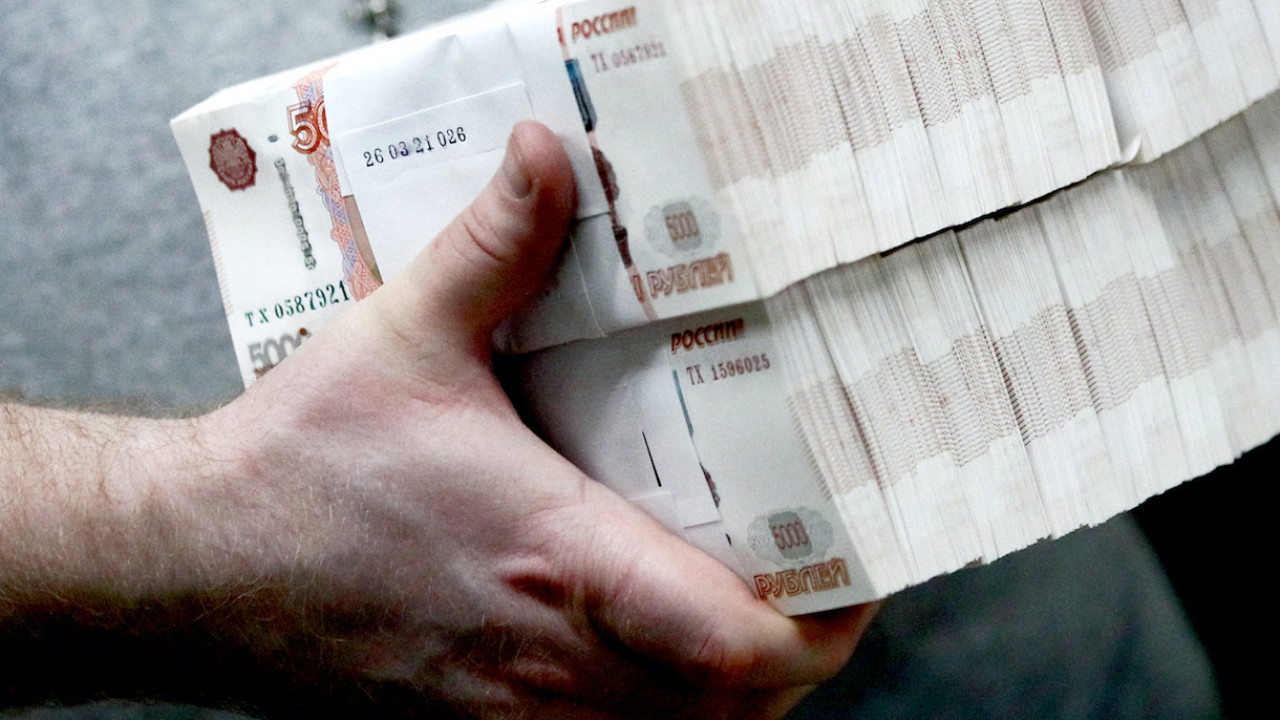
Commercial banks operating within Russia’s closest economic circle have abruptly tightened regulations on physical ruble deposits. Financial institutions across Belarus, Kazakhstan, Kyrgyzstan, and Armenia launched aggressive measures in June to curb a severe systemic ruble cash glut. The sovereign nations, all member states of the Moscow-led Eurasian Economic Union (EAEU), are attempting to protect their domestic markets from an unmanageable surplus of paper currency.
In Belarus, at least eight major financial entities introduced heavy commissions ranging from 2% to 5% on physical ruble deposits. The targeted restrictions encompass prominent institutions including Alfa-Bank, Belarusbank, BelVEB, BNB Bank, MTBank, Sber Bank, TechnoBank, and Zepter Bank.
Regional restrictions expand
Concurrently, Kazakhstan’s Bank CenterCredit established a flat 5% penalty fee for all ruble cash processed through physical counters, terminals, and automated teller machines. In Kyrgyzstan, EcoIslamicBank instituted an identical 5% tariff explicitly targeting financial transfers routed via the SWIFT network. Meanwhile, several commercial banks in Armenia suspended physical ruble transactions and account deposits entirely, though electronic, cashless ruble clearing operations continue without adjustments.
The coordinated banking restrictions follow a massive wave of Russian currency flowing across regional borders. Data published by the National Bank of Kazakhstan reveals that local exchange institutions absorbed 6.5 billion RUB, equivalent to roughly €67 million, in exchange for 39.8 billion tenge during April alone. The monetary influx persisted into May, with Kazakh firms purchasing an additional 4.7 billion RUB, valued at €48.5 million.
Logistical burdens and domestic evasion
EAEU financial hubs face mounting operational overheads directly linked to the handling, security, and physical transit of paper rubles back to Russia. Yury Belikov, managing director at the Expert RA rating agency, noted that processing physical banknotes carries high storage and authentication costs. Because authentic commercial demand for the ruble remains practically non-existent outside the Russian Federation, these cash transactions have become deeply unprofitable for local banks.
The physical cash migration correlates directly with structural shifts within the Russian domestic economy. Financial compliance specialists at FTL Advisers confirmed that Russia's total circulating money supply expanded by a staggering 1,400 billion RUB, approximately €14.43 billion, since the beginning of the year.
Furthermore, the cross-border cash surge serves as an evasion mechanism against tightening domestic fiscal audits inside Russia. Legal advisors at Pen & Paper stated that Russian state banks automatically flag or freeze domestic cash deposits exceeding five million rubles for individuals and 30 million rubles for corporations if the assets are swiftly transferred abroad. To circumvent these freezes, capital is physically transported across EAEU borders. In response, a Kremlin decree enacted on April 1 legally restricts individual cross-border cash exports to a maximum of $100,000, equivalent to €92,000.
Translation by Iurie Tataru