Ombudsman investigates train-car housing for foreign workers
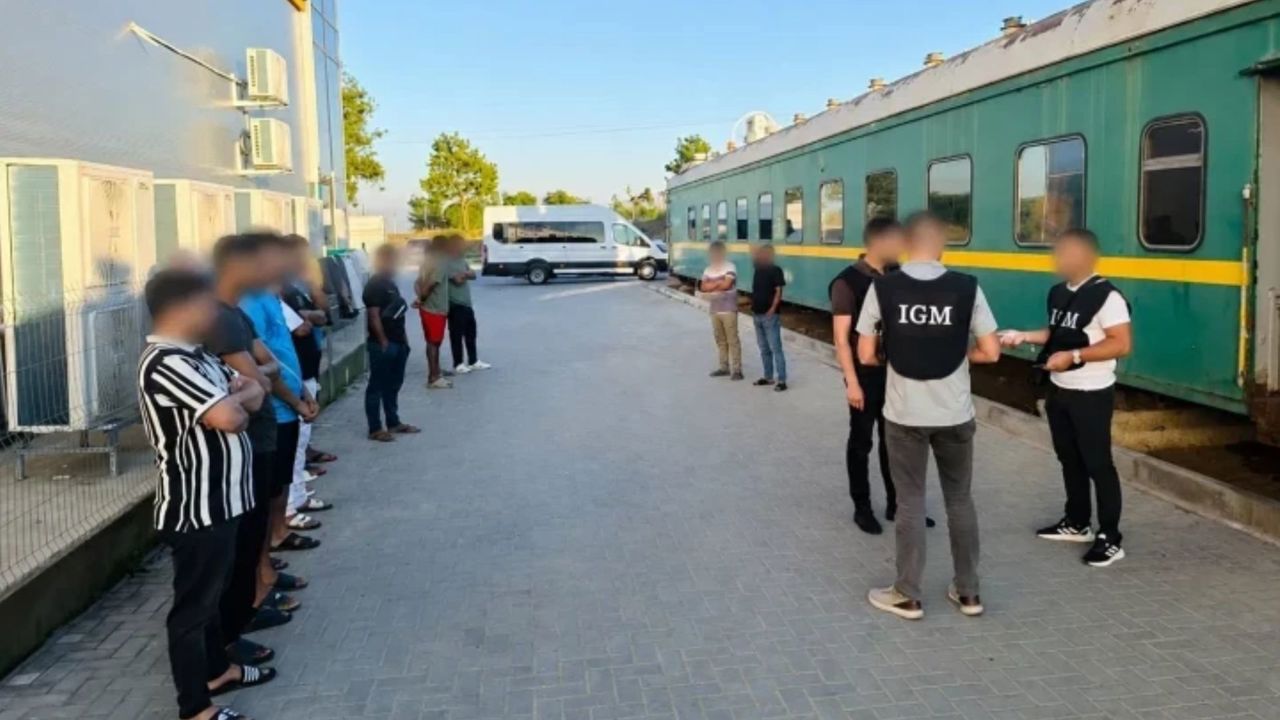
The Ombudsman is investigating the case of foreign workers from Bangladesh and Nepal who are being housed in train cars. The investigation will also examine why authorities failed to take action, despite being aware of the situation since last year. The Ombudsman has raised concerns about potential violations of the right to a decent living and will review the entire chain of responsibility, including both state institutions and the employer.
“Respecting the rights of foreigners, immigrants and migrants has been on the agenda of the Ombudsman’s Office for a long time. We monitor several cases and draw attention to the fact that human rights must be respected regardless of citizenship, if we want to be as close as possible to the European Union,” said Ombudsman Ceslav Panico, on the “Zi de Zi” show on Radio Moldova.
The Ombudsman stressed that foreign workers should not be seen only as a solution to the labor shortage.
“We should not see this migrant only as cheap labor, but as a person with human dignity and rights that must be respected,” he said.
According to Panico, the investigation aims to determine why dozens of workers ended up living in conditions that could violate the right to a decent living and whether state institutions intervened appropriately.
“From preliminary information, the institutions knew about this situation since last year, and now we are discussing the same alleged human rights violations,” said the ombudsman.
The investigation will analyze not only the accommodation conditions, but also the entire process by which the foreign workers ended up in this situation.
During the verifications, explanations will be requested from both the employing company and the responsible institutions. The accommodation conditions, the legal status of the workers, the existence of employment contracts, their access to medical services and social guarantees, as well as compliance with the standards regarding the accommodation spaces will be analyzed.
“We need to see whether the institutions that were obliged to monitor these spaces have carried out the necessary checks and whether they meet the standards. We are not just talking about the accommodation itself, but about the entire chain that led to this situation. We want to understand where the chain of verification and accountability broke,” said Panico.
He believes that the Republic of Moldova must strengthen its framework for the protection of migrant workers, in a context in which the economy needs more and more labor from outside the country.
"Whether we want it or not, we are moving towards importing labor, if we want to relaunch the economy. But these people must be able to defend their rights, benefit from social guarantees, and their cultural and religious rights must be respected," the Ombudsman declared on the national radio station.
At the end of the investigation, the Ombudsman's Office will publish a special report that will not be limited to analyzing this case, but will identify systemic deficiencies and formulate recommendations for the authorities.
"Our approach is to see individual cases as a failure of the system. We will analyse where the rupture occurred, and we will come up with systemic recommendations, not just for this case," concluded Ceslav Panico.
The situation of foreign workers accommodated in train cars near Chisinau has come to Parliament's attention. The Action and Solidarity Party (PAS) faction has proposed organizing parliamentary hearings to assess the reported health risks and the alleged violations of public health, labor protection, residence and employment regulations for these workers.
The hearings are scheduled to take place on Tuesday, July 7.
Several workers from Bangladesh and Nepal, employed by a company in the Republic of Moldova, have been living for more than a year in converted train cars located on the company's territory.
According to a report by Tv8, the so-called "sleeper train" is located on the territory of a window and door factory in the Botanica sector of the capital. The company's management has placed eight train cars there that have been converted into living spaces. Each wagon is said to house approximately 20 people, who return here after work to cook, wash and spend the night.
Company representatives have rejected allegations of poor living conditions. They stated that the wagons are equipped with air conditioners and that the company has toilets and spaces that provide facilities for maintaining personal hygiene. According to them, each wagon accommodates approximately 12 workers, and one of the wagons is equipped as a kitchen, where they can prepare their food.
The number of foreign citizens employed in the Republic of Moldova is increasing. According to the authorities, approximately 5,000 workers from other states are currently active on the country's labor market. In most cases, they benefit from salaries above the national minimum, as well as additional facilities designed to ensure their integration and better living conditions.
Hiring foreign workers has become a solution to the labor shortage on the domestic market.