Constitutional Court reviews APG's requests
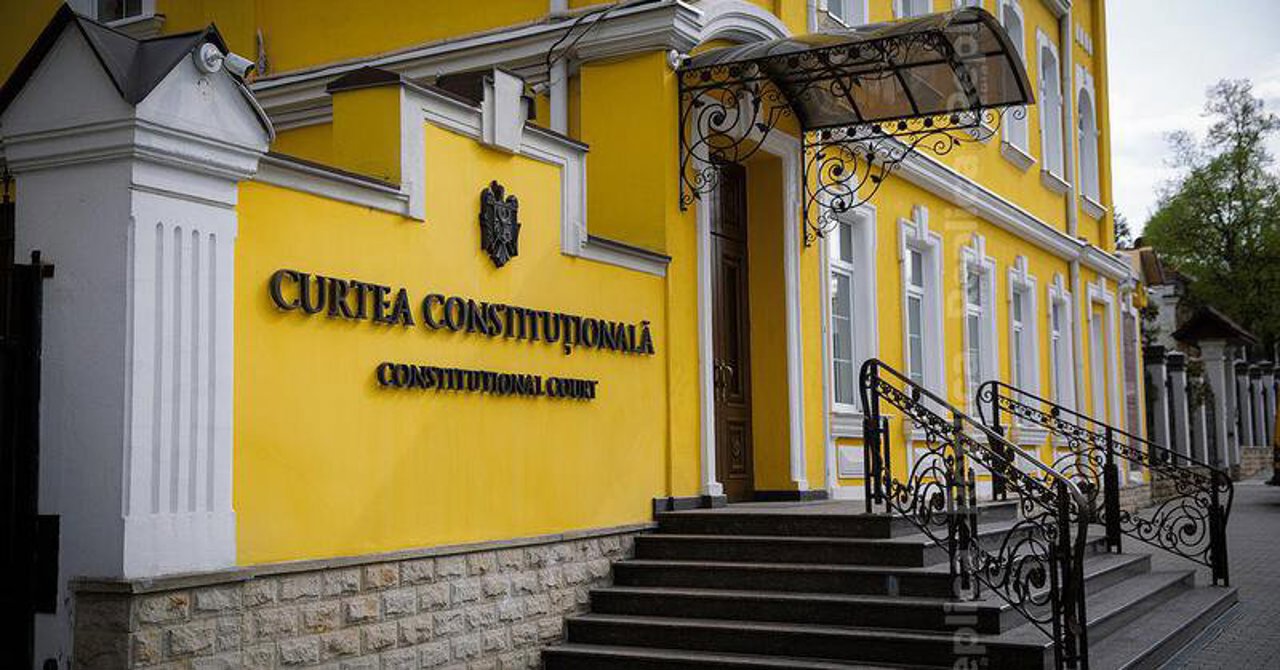
The Constitutional Court has stepped back from deliberations regarding the actions of the People's Assembly of Gagauzia (APG). This concerns the APG's decision to suspend the examination of the Ministry of Justice's request to the High Court to assess the constitutionality of specific provisions in the Law on the special legal status of Gagauzia.
The lawyer of the People's Assembly, Iurie Mărgineanu, requested, at the beginning of the meeting on July 7, to address a request to the Venice Commission to prepare an amicus curiae – an advisory opinion – on the constitutionality of the contested norms, in relation to European standards on territorial autonomy, as well as to suspend the examination of the case until this opinion is obtained.
At the same time, the vice-president of the People's Assembly of Gagauzia, Gheorghe Leiciu, submitted a request for the suspension of the examination of the Ministry of Justice's notification until the Constitutional Court issues a final decision on the verification of the constitutionality of certain provisions of the Electoral Code.
Iurie Mărgineanu argued the need to address the Venice Commission by respecting the principle of constitutional loyalty and the international obligations assumed by the Republic of Moldova through the Republic of Moldova–EU Association Agreement.
“As a candidate state, the Republic of Moldova has made firm commitments to strengthen the rule of law, given that the present case concerns the very functionality of democratic institutions and the independence of constitutional justice. The central pillars of Cluster 1 accession and the Copenhagen criteria require that the resolution of these exceptions be aligned with the acquis communautaire and the standards of the Venice Commission. A unilateral interpretation, which would risk fragmenting the coherence of the justice system, could call into question the country’s commitments in the screening process and in the Cluster 1 negotiation,” the lawyer stated.
According to Iurie Mărgineanu, submitting an amicus curiae request is an act of European diligence and will ensure that the solution pronounced by the Constitutional Court contributes to the success of the negotiations on Cluster 1.
In the request addressed by the Vice President of the People's Assembly, Gheorghe Leiciu, he invoked the unconstitutionality of the term Electoral Council, used in the Electoral Code in relation to the electoral body in Gagauzia, which, according to the Law on the special legal status of Gagauzia, is called the Central Electoral Commission.
“The aforementioned divergence is not a simple drafting inconsistency. It has generated legal uncertainty, administrative and judicial disputes and served as a basis for the suspension, by the courts, of the effects of the acts of the People’s Assembly adopted within the limits of the competence provided for by the Law on the Special Legal Status of Gagauzia, including the acts regarding the establishment of the electoral body of Gagauzia and the establishment of the date of the elections for the People’s Assembly of Gagauzia”, stated Gheorghe Leiciu, requesting the suspension of the examination of the notification to the Ministry of Justice until the constitutionality of the contested norms of the Electoral Code is verified.
The Deputy Speaker of the Legislative Assembly from Comrat also said that the provisions of the Law on the Status of Gagauzia, which enshrines the competence of the People's Assembly to organize and set the date of the elections, as well as to approve the composition of the Central Electoral Commission of Gagauzia for organizing the elections, cannot be modified by simply amending another organic law.
"However, as is known, the Parliament tried, in fact, to limit the powers of Gagauzia not by amending this special law, in accordance with the procedure provided for by the Constitution, but by amending the Electoral Code, adopted, moreover, with 55 votes. Thus, a mechanism was created to indirectly modify the institutional foundation of Gagauzia, without respecting the special constitutional procedure. It is precisely these circumstances that were the basis of the previously formulated request regarding the suspension of the application of the contested provisions of the law", Leiciu also said.
The State Secretary of the Ministry of Justice, Mihai Gheorghieș, noted that the Venice Commission's opinion is always beneficial. At the same time, he said that he did not see how examining the merits of the case could prejudice this approach. The representative of the Parliament, Radu Radu, stated, in turn, that he did not consider it a pressing necessity to obtain the Venice Commission's opinion on this issue.
The Court withdrew for deliberations.
The Minister of Justice, Vladislav Cojuhari, notified the Constitutional Court on March 9, 2026, requesting the verification of the constitutionality of certain provisions of the Law on the special legal status of Gagauzia, including the one that attributes to the People's Assembly the competence to approve the composition of the electoral authority in Comrat, a provision that the ministry considers to be an institutional dualism.
The mandate of the current People's Assembly expired in November 2025, but the dates set for the elections – March 22 and June 21 – were annulled by court decisions. On July 3, the Comrat Legislative Assembly set a new date for the election of local deputies: November 15, also approving a counter-petition to the Constitutional Court, requesting the declaration of the unconstitutionality of some provisions of the Electoral Code of the Republic of Moldova.