Experts back ending tax exemptions for Transnistrian firms
Experts assert that the gradual elimination of tax incentives for companies in the Transnistrian region is essential for economic and fiscal reasons, as well as for the country's reintegration process. They believe that the government's proposed deadline for the initial tax implementation—August 1, 2026—is attainable. However, the success of this reform will rely on the consistency and commitment of the constitutional authorities.
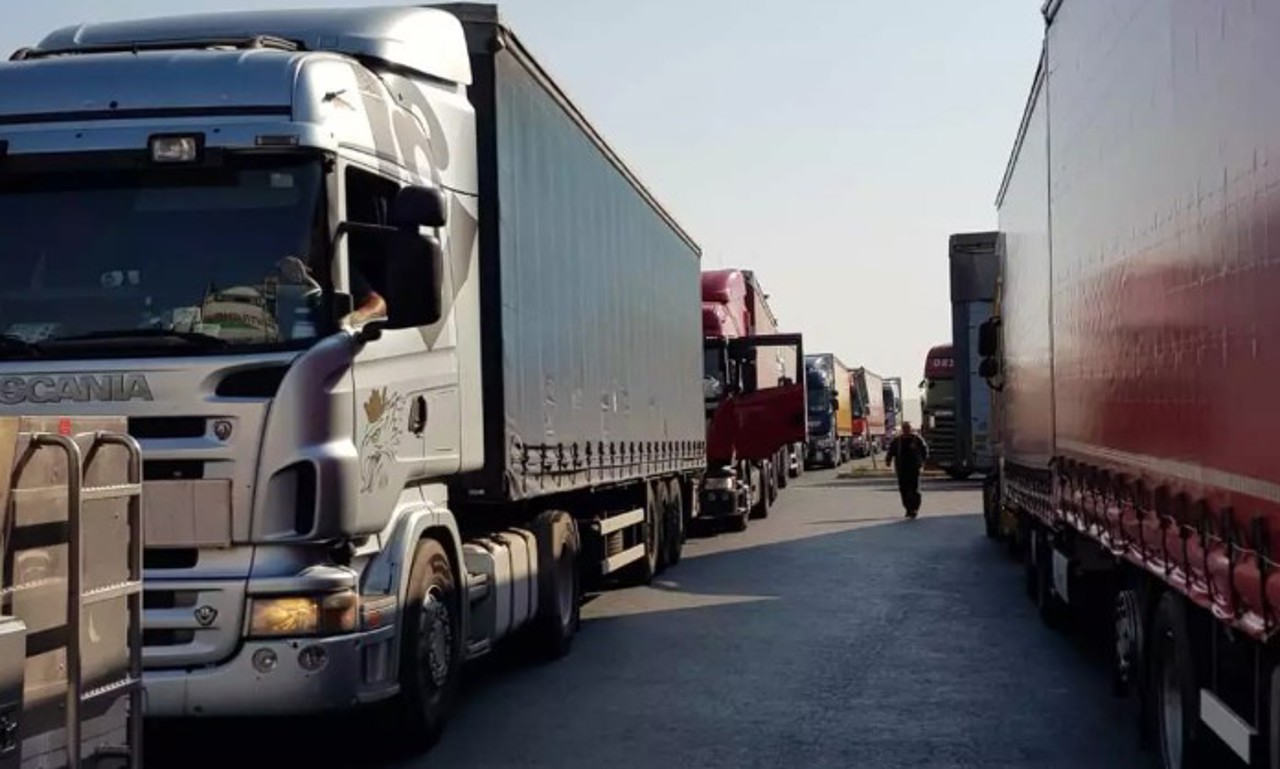
The Government proposes that, starting with August 1, 2026, certain categories of goods imported into the Republic of Moldova by companies from the Transnistrian region, including alcoholic beverages, tobacco products, natural gas or jewelry, be subject to VAT and excise duties.
The draft Government decision, currently under public consultation, establishes the mechanism for applying the new rules, after the legal framework was adopted by Parliament on April 30 and promulgated on May 5 of this year.
“Delayed” measure
Economic expert Ion Preașcă states that the application of the new provisions from August 1 should not encounter technical difficulties, as imports into the Transnistrian region are carried out through points controlled by the constitutional authorities.
"I don't see any problem with it being implemented from August 1, because imports of products into the Transnistrian region practically only take place through the border controlled by the authorities in Chisinau. There is control and I believe that the measure can be implemented without major problems. It is another matter if the economic agents in the region are not prepared, but this is already another problem", Preașca said for Teleradio-Moldova.
The elimination of tax incentives for companies on the left bank of the Nistru is a somewhat delayed measure, says the executive director of the Economica Analytical Center, Marin Gospodarenco.
“This is a measure that, frankly, we should have taken many years ago. For almost three decades, companies from the Transnistrian region have been selling goods on the right bank without paying VAT and excise duties to the budget of the Republic of Moldova, although many of them were registered in Chisinau and benefited from trade agreements signed by our state, including the Free Trade Agreement with the European Union,” Gospodarenco told us.
According to him, equal tax treatment is not only a matter of fairness between taxpayers, but also a necessary technical condition in the process of accession to the European Union.
Both experts argue that the introduction of taxes should be carried out gradually. Moreover, Marin Gospodarenco warns that the simultaneous application of all taxes could generate serious economic and social effects in the region.
"Gradual application is, in my opinion, the only rational option. A sudden application of all taxes, on all categories of goods, will produce three negative effects simultaneously. The first: a strong inflationary shock in the region, where inflation was 14.7% in 2025 and average salaries are twice as low as those on the right bank of the Nistru. Prices for food, medicine and fuel would increase overnight by 20-30%, which would hit, first of all, pensioners, the 97,000 Transnistrian pensioners. The second: the instant bankruptcy of some companies in the region, with job losses and a wave of economic emigration. The third, the most dangerous strategically: Chisinau would offer Tiraspol and Moscow a perfect argument for the narrative of the 'humanitarian crisis caused by PAS', exactly what the separatist regime is trying to build publicly through Krasnoselski's speeches", Gospodarenco explained.
Risk of tax evasion
The majority of the approximately 2,500 economic agents in the Transnistrian region registered with the Public Services Agency will continue to operate within the legal framework of the Republic of Moldova, the expert believes. The reason is economic: without registration in Chisinau, they would lose access to the European Union market, which absorbs over 70% of the region's exports.
As for the estimates regarding budget revenues, they must be interpreted with caution, says Marin Gospodarenco. According to him, the amount of approximately 3.3 billion lei annually, the equivalent of about 195 million dollars, circulated by the authorities, could be reached only in 2030, when all categories of goods will be fully taxed.
*"For closer horizons, the figures are much more modest. For the second half of 2026, revenues of approximately 300 million lei are estimated - so about 10% of the total estimate. For 2027, with more categories included, the figure could rise to 1 - 1.5 billion lei, and here we have a public communication problem that the Government should clarify: the figure of 3 - 4 billion frequently appears in the press without the explanation that it refers to the final regime. The cost of reintegration, estimated by the Government at 500 million dollars annually, is clearly higher than the revenues collected. In other words, even if we collect a maximum of 195 million dollars annually, the gap remains huge and will have to be covered from external assistance - the EU, international financial institutions, possibly a dedicated IMF program,"*pointed out Marin Gospodarenco.
Regarding the risk of tax evasion, experts share different opinions. Ion Preașcă believes that, under normal conditions, it is limited, since VAT and excise duties are paid upon the entry of goods into the country.
“These cannot be postponed and goods cannot enter the territory of the Republic of Moldova without paying the respective taxes. Only through criminal schemes or evasion could they be circumvented,” says the expert.
Marin Gospodarenco admits, however, that the experience accumulated over the last three decades in the gray economy may favor the emergence of attempts to avoid taxes.
"The risk of tax evasion is the central risk of the entire reform. Transnistrian companies have three decades of experience in operations in gray areas. Three schemes are expected. First: companies will declare lower values than the real ones in order to reduce the VAT calculation base. Combating this scheme requires reference price lists updated monthly by the Customs Service and international comparisons. Second: fragmentation of transactions through shell companies registered in the Republic of Moldova with fictitious associates. Here, the digitalization of the Registry of Beneficial Owners - an obligation assumed as part of EU accession - is important. Third, the most serious: smuggling through uncontrolled points, especially on segments of the internal border where control is weaker. Here, investments in scanning technology, surveillance drones and cooperation with the EUBAM mission are needed", Gopodarenco warned.
Convergence fund, a reintegration tool
Both experts appreciate the Government's intention to direct the revenues obtained from the new taxes into a convergence fund intended for the development of the Transnistrian region.
Ion Preașcă believes that it is natural that the taxes collected from economic agents in the region should be subsequently used for development projects in the same area, even if the mechanism differs from the usual practice, in which VAT and excise duties are paid directly into the state budget.
For his part, Marin Gospodarenco states that such a fund can contribute to changing the perception of the population in the region, if the money collected is invested transparently in hospitals, roads, schools and other public services.
In his opinion, the mechanism can also become an instrument for attracting European co-financing, since the European Union is more willing to support a dedicated, transparently administered fund than a consolidated budget.
Consistency of the authorities, decisive for the success of the reform
The authorities in Chisinau must apply the reform consistently and not give up on the objectives assumed for political reasons, experts also say.
"The authorities must be consistent in achieving the objectives. Once they have decided that this reform is beneficial both for Chisinau and for the people of the region, they must implement it to the end", Ion Preașcă pointed out.
The reform represents the most important change in the fiscal relationship between the two banks of the Nistru since the early 1990s.
"Executed well, it can become one of the success stories of the European integration of the Republic of Moldova. Executed poorly, with tolerated evasion, faulty communication and a non-transparent background, it can become an additional argument for those who claim that reintegration is impossible", concluded Marin Gospodarenco.
The government has opened public consultations until July 17 on a draft decision to gradually apply VAT and excise duties to goods imported into the Republic of Moldova by companies from the Transnistrian region. These companies have benefited from tax exemptions for the past 25 years. This measure is in line with a law adopted by Parliament on April 30 and promulgated on May 5, which aims to eliminate tax incentives by 2030 and establish a Convergence Fund. This fund will direct taxes collected toward financing social, economic, and infrastructure projects in the region.
According to the draft, starting August 1, 2026, VAT and excise duties will be imposed on certain categories of goods, including alcoholic beverages, tobacco products, natural gas, electricity, vehicles, perfumes, jewelry, and precious metals.
Beginning January 1, 2027, taxation will also extend to ores, slag, ash, base metals, and items made of base metals.
The project’s authors expect a positive impact on the national public budget. Government estimates suggest that the complete elimination of tax exemptions could generate annual revenues of between three and four billion lei. This revenue could significantly help cover the costs of reintegrating the Transnistrian region, which the Government estimates at approximately $500 million per year.
Although it was initially anticipated that the Convergence Fund would become operational on August 1, 2026, Deputy Prime Minister for Reintegration Valeriu Chiveri recently announced that its launch is likely to be postponed until early next year.