Tofan Government outlines ten priorities for EU integration
The Government will continue to implement reforms and uphold the accelerated pace of the European Union accession process. Prime Minister Vasile Tofan reaffirmed this commitment during a meeting with the European Union Ambassador to the Republic of Moldova, Iwona Piórko, held on July 28 at the Government's offices.
The officials discussed the next steps in the accession process, the implementation of the Reform Agenda and the Growth Plan for the Republic of Moldova, as well as the strengthening of cooperation with European institutions
The Prime Minister highlighted the important progress made in the European integration process, including the opening of Cluster 1 – “Fundamental Values” and Cluster 6 – “External Relations”, these results reflecting the reforms achieved, the consolidated institutional capacity and the strong commitment of the authorities to advance on the European path
At the same time, the Prime Minister noted that the Republic of Moldova is ready to open all other negotiation clusters and to advance rapidly and substantially in the accession process, stating that the country has demonstrated that it “can deliver reforms and results”.
"We are ready to open all remaining clusters and continue negotiations at an ambitious pace. We want to bring concrete results for citizens and the business environment – more investments, modern infrastructure and better-paid jobs", said Prime Minister Vasile Tofan, quoted by a Government press release.
Ambassador Iwona Piórko reaffirmed the European Union's support for the European path of the Republic of Moldova and for the implementation of reforms, with both sides underscoring the importance of maintaining direct dialogue and close coordination to advance negotiations and achieve the set objectives.
The ten priorities of the Tofan Government for the accession of the Republic of Moldova to the EU by 2030
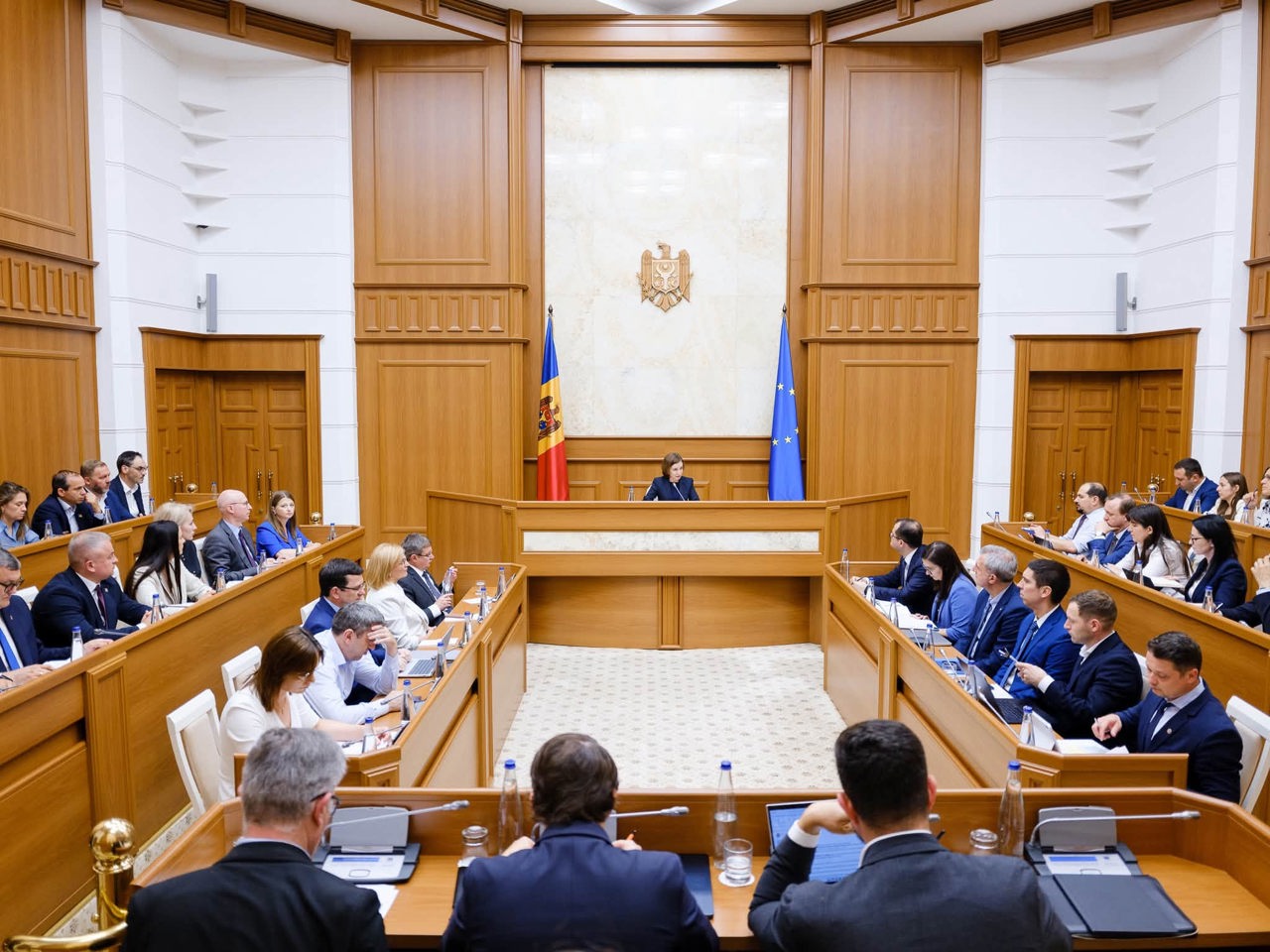
The preparation of the Republic of Moldova for accession to the European Union by 2030 is focused on ten key priorities, defined in the preamble to the integration policies of the new Government led by Vasile Tofan. The action directions were presented at the July 27 meeting of the National Commission for European Integration (CNIE), chaired by President Maia Sandu.
The document establishes that European integration will represent the strategic priority of the Government and the main framework for the modernization of the Republic of Moldova in the coming years. The Executive proposes that all reforms, investments, and major public policies contribute both to the country's preparation for accession and to improving citizens' quality of life.
The first priority aims to prepare the Republic of Moldova for accession to the European Union by 2030.
The government undertakes to implement the reforms necessary for accession negotiations, so that the country is ready to sign the Accession Treaty in 2028 and become a member state of the European Union by 2030.
According to the document, the Republic of Moldova must be prepared, from a legal, institutional, economic, and administrative point of view, to assume all the rights and obligations arising from membership.
The second priority aims to transform European integration into the main engine of economic development.
The executive promises reforms to increase economic competitiveness, improve the business environment, attract investment, and gradually integrate into the European Single Market.
At the same time, the implementation of the Reform Agenda and the use of funds from the European Union Growth Plan are presented as tools for accelerating economic convergence with the member states.
Strengthening the rule of law is the third priority.
The government aims to continue the reform of the judiciary, strengthen its independence, combat corruption, and protect fundamental rights, as these reforms are essential for advancing accession negotiations and strengthening citizens' trust in state institutions.
In parallel, the Executive intends to modernize the central and local public administration, strengthen the civil service and develop the institutional capacity necessary for the efficient absorption of European funds.
According to the document, the institutions of the Republic of Moldova must function at the standards of a future member state of the European Union.
Another priority aims to bring citizens closer to the benefits of European integration before the actual accession.
The Government aims to accelerate integration into initiatives such as SEPA, "Roam Like at Home", the Digital Single Market and the European Energy Market, as well as to expand the participation of the Republic of Moldova in European programs in the fields of research, education, innovation, culture, youth and digitalization.
At the same time, investments are planned in energy and transport infrastructure to connect the country to European networks.
The sixth priority establishes that the National Accession Program 2025–2029 will remain the main instrument for the transposition of European legislation and the harmonization of reforms with the commitments assumed in the accession process.
The Government also aims to strengthen the mechanisms for coordinating the European integration process.
In this regard, the role of the Office for European Integration, the National Commission for European Integration, and the inter-ministerial coordination mechanisms will be strengthened to ensure the permanent monitoring of reforms and compliance with the negotiation calendar.
Externally, the Executive will continue to strengthen the political dialogue with the European Union and the Member States, expand technical partnerships and capitalize on European expertise for the implementation of reforms.
The document emphasizes that active diplomacy is necessary to maintain the unanimous support of the Member States during the accession negotiations.
The penultimate priority emphasizes the involvement of the entire society in the European integration process.
The government promises transparent communication and ongoing dialogue with citizens, local authorities, the business environment, civil society, academia, young people, and the diaspora to strengthen public support for the reforms.
Finally, The Executive aims to promote the Republic of Moldova internationally as a future member state of the European Union, a democratic, stable and reform-oriented partner.
According to the document, European integration is also presented as the strongest guarantee for the long-term security, resilience and democratic development of the Republic of Moldova.
The government led by Vasile Tofan received a vote of confidence from Parliament on July 21, after an investiture session that lasted over nine hours. Tofan replaces Alexandru Munteanu, who announced his resignation in early July, after about eight months in office.
The government program "European economy, efficient state" has 147 pages and is structured around five priorities: relaunching economic growth, accelerating EU accession, an efficient and digitalized state, security and justice, and increasing the quality of life and social cohesion.
The program sets as its objective the completion of negotiations and preparation for the signing of the Accession Treaty by the end of 2028, with accession to the European Union by 2030. The National Accession Program 2025-2029 and the EU Growth Plan, which provide approximately 1.9 billion euros in funding for 2025-2027 in the form of loans and grants, are presented as integrated reform instruments.