Safe bicycle trails would encourage over 96% of Chisinau residents to ride bikes
The number of cars in Chișinău is more than five times greater than the capacity of the traffic network that the city’s road infrastructure was designed to accommodate. One of the major issues identified is the shortage of parking spaces, with the city currently having only about 18.5% of the estimated necessary parking.
The information was presented by Mădălina Moțcanu-Dumitrescu, an urban planning specialist and lecturer at “Ion Mincu” University in Bucharest, during public consultations on August 5 regarding the substantiation study on traffic and transport in Chișinău.
She emphasized, “There are around 50,000 parking spaces available, but over 270,000 are needed, indicating a deficit of approximately 220,000.”
Another issue identified in the study is the lack of a functional city belt. The only existing bypass road, M14, is in a degraded state and cannot efficiently accommodate transit traffic.
The rapid development of localities surrounding Chișinău has not been matched by improvements in transportation infrastructure. Mădălina Moțcanu-Dumitrescu noted that the population in some suburbs, such as Durlești and Stauceni, has increased by approximately 35-40%, while the transport infrastructure has not adapted to this growth.
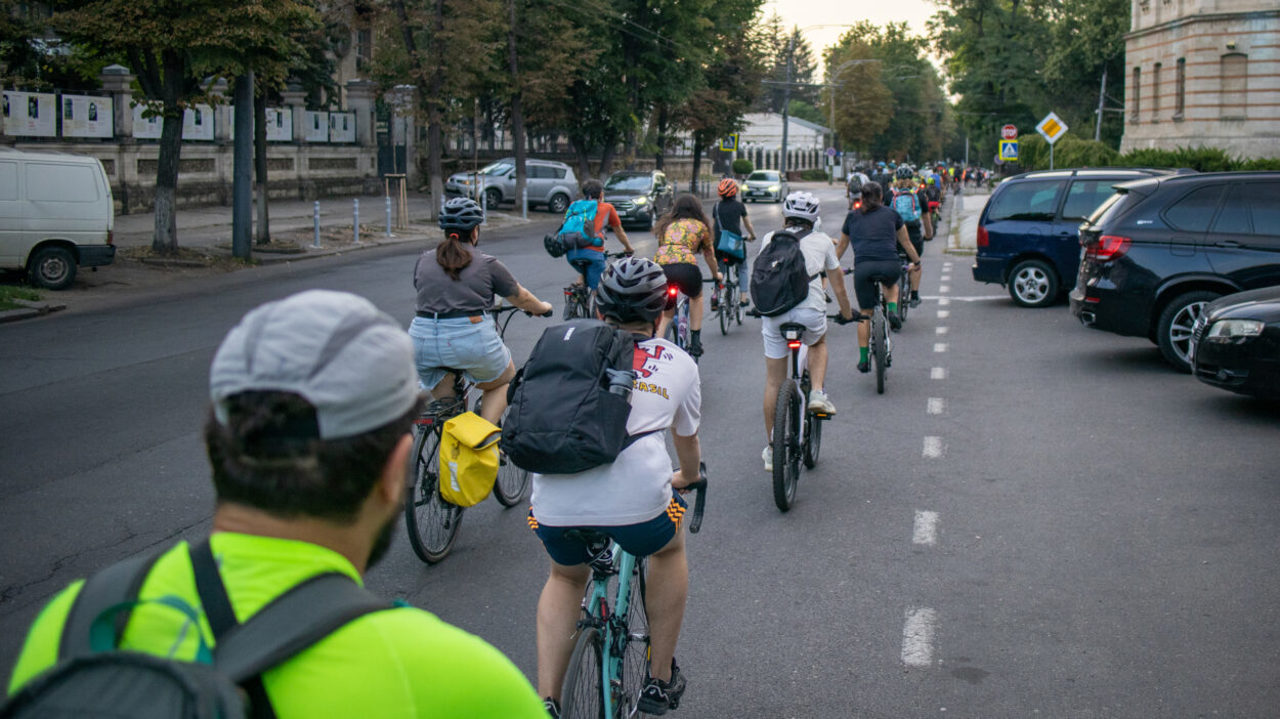
The study also reveals a strong interest in alternative transportation options. “Over 96% stated that they would like to use a bicycle if there were safe infrastructure in place, allowing them to feel secure when travelling from home to work or to other destinations,” the expert explained.
Although the public transport fleet was modernized in recent years, it remains inadequate. Dedicated public transport lanes exist only on certain routes. “Expansion remains a priority,” Mădălina Moțcanu-Dumitrescu stated.
Additionally, there is a lack of “park and ride” facilities at the city entrances. Currently, there is only one operational parking lot with 72 spaces, although five more are planned.
The specialist also highlighted the pressure exerted by new real estate projects on the existing infrastructure. One of the most affected areas is the Albișoara–Testemițeanu–Calea Orheiului corridor, where multiple projects have contributed to the overloading of roadways. “At least five real estate projects have been concentrated in this area, which were approved after 2007, following the implementation of the previous Urban Planning General Plan (PUG). The roads are already congested, and the cumulative impact on traffic was not assessed,” she noted.

The study proposes 64 integrated measures derived from the Sustainable Urban Mobility Plan (SUMP) for the upcoming period. These measures include constructing a functional ring road, developing rapid public transport, establishing park-and-ride facilities, introducing a suburban train service or light rail system to the suburbs, and creating a comprehensive network of bicycle lanes.
Mădălina Moțcanu-Dumitrescu emphasized, “The ring road must be functional; we need a bypass. A project is necessary to reduce congestion in the city center, particularly concerning heavy and transit traffic.”
The study also recommends implementing stricter regulations for new construction projects. Specifically, newly built apartment blocks should be required to include either underground or multi-storey parking facilities, and large real estate projects should be assessed for their impact on traffic.
Additionally, Mădălina Moțcanu-Dumitrescu discussed the importance of the General Urban Plan (PUG) in the capital's development. She stated that the PUG Chișinău 2040 should consider not only the municipality of Chișinău but also its relationship with surrounding localities. Within the capital's area of influence, there are eight cities and 28 villages, organized into 18 administrative-territorial units.