Government approves plan after extreme weather causes billions in losses
Droughts, floods, torrential rains, and hail are causing billions of lei in losses in the Republic of Moldova. Authorities acknowledge that the country is not adequately prepared for the current scale of these risks. On August 12, the government in Chisinau approved the National Program for Reducing Natural Disaster Risks for 2026-2030. This project aims to modernize early warning systems, map vulnerable areas, and protect the nation's natural resources.
According to the document's explanatory note, "the direct economic damage caused by these risks exceeded 1.5% of GDP in 2024."
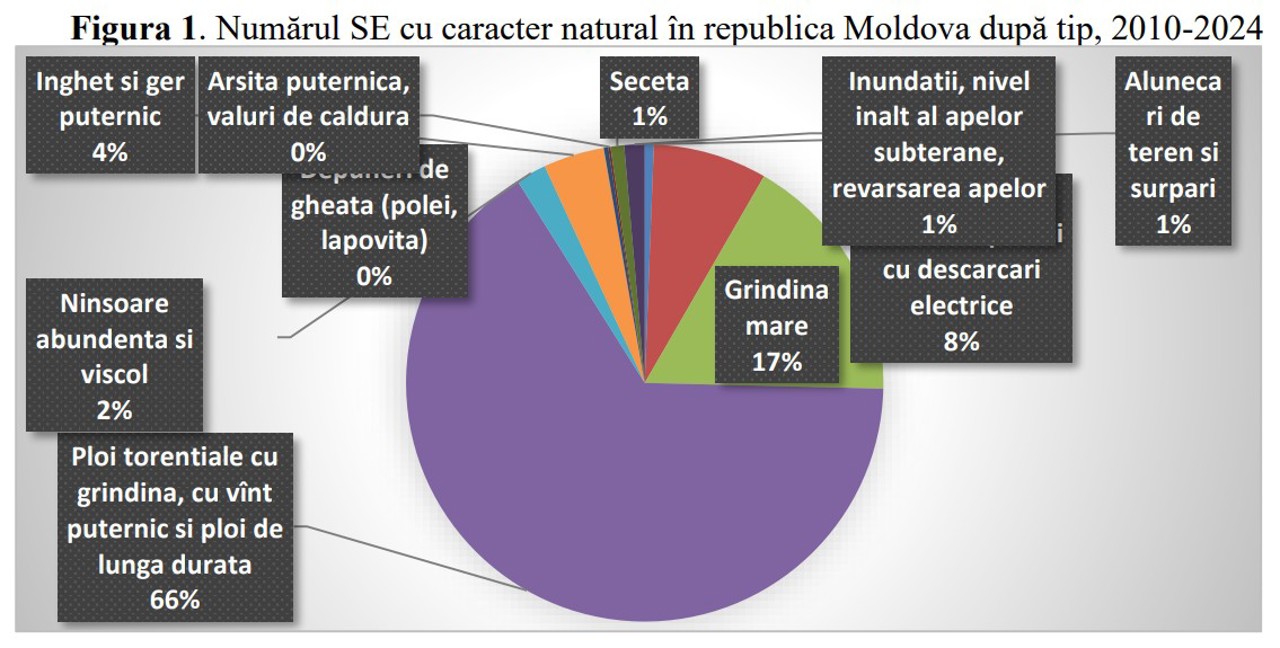
Over the past decade, the Republic of Moldova has recorded more than a thousand emergency natural events, which have resulted in fatalities and injuries.
"Between 2010 and 2024, a total of 1,329 emergency situations (ES) of a natural nature were documented in the Republic of Moldova. These events led to the deaths of five individuals and injuries to three others. The fatalities occurred due to floods in 2010 (two people), torrential rains in 2013 (one person), and heavy snowfalls in 2023 (two people)," the document states.
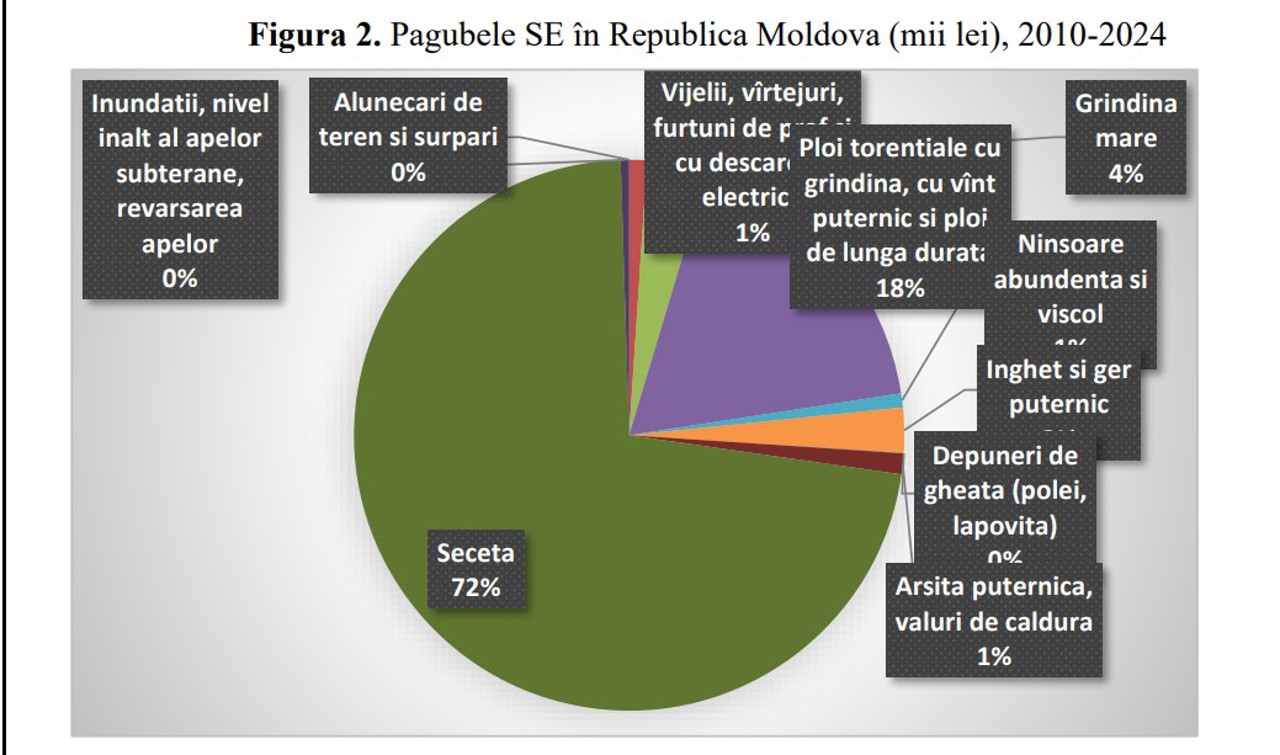
More than 70% of the losses from natural disasters are attributed to drought. This phenomenon, with damages exceeding 23 billion lei, remains the most significant climate risk for the economy.
Drought, a threat to agriculture
Authorities warn that drought is no longer an isolated phenomenon. The document notes “a significant increase in the frequency and severity of droughts”, with periods of hydrological deficit every two to three years in the south and center of the country.
Low river levels, soil degradation, accelerated evaporation and the lack of retention infrastructure are causing significant losses in agriculture and are also affecting the drinking water supply of rural communities. Without intervention, the pressure on water resources, ecosystems and the local economy will continue to increase.
Another problem highlighted in the document is the state of the soils. Over 60% of the soils of the Republic of Moldova are affected by various forms of degradation, including erosion, compaction and loss of humus. Erosion reduces land fertility, contributes to the clogging of lakes and rivers and increases the risk of landslides, affecting small farms in particular. At the same time, forests, which cover about 13% of the country's territory, are exposed to a growing risk of fires, droughts and the appearance of pests.
Environmental problems are also reflected in public health. According to the document, only 18-20% of wastewater is treated according to standards, while over 80% is "conventionally pure" or insufficiently treated.
The situation is even more problematic in the case of decentralized sources, especially rural wells, where water frequently exceeds sanitary limits for nitrates, ammonium and nitrogen. During periods of severe drought, torrential rains or low flows, the risk of contamination of water sources increases, and authorities warn of possible increases in intestinal diseases, especially among children.
Implementation of the Plan requires 129.3 million lei
The National Program for Natural Disaster Risk Reduction for 2026-2030, approved by the Government, provides for the creation of a national spatial data system and the development of risk maps to identify vulnerable areas.
"Among the main measures are the creation of a national spatial data system by developing data and risk maps to identify the most vulnerable areas, the modernization of forecasting and early warning systems, as well as improving the monitoring of meteorological and hydrological phenomena. Monitoring equipment and infrastructure will be modernized so that dangerous phenomena can be detected more quickly and warnings reach the population in the shortest possible time", the project states.
The authorities also propose expanding forested land, restoring and protecting wetlands, conserving soil, and promoting agricultural practices adapted to drought and other extreme phenomena. In the districts with high vulnerability, information and awareness-raising actions are planned for the population.
The program budget is estimated at over 129.3 million lei, but over 80% of this amount depends on external sources or remains uncovered for now. The state will contribute only 10% (12.9 million lei), while 76% (97.8 million) is expected from external partners, and for the remaining 14% (18.5 million), there are still no financing solutions.
Through the new program, the authorities aim to ensure that the intervention begins before damage turns into major losses.