VIDEO | Moldova's 1995 independence marked its official entry into the European value space
Moldova 1 TV continues its editorial campaign titled "35 Years of Independence," which marks the 35th anniversary of the proclamation of the Republic of Moldova's independence. Until August 27, viewers can enjoy two special episodes each day that chronologically explore the key moments in the recent history of the Republic of Moldova.
1995 - A year of protests and a step towards Europe
1995 was a significant year for the Republic of Moldova, marking both the consolidation of its European aspirations and one of the first major civic movements following the declaration of independence.
On July 13, Moldova became the first country in the Commonwealth of Independent States (CIS) to be admitted as a full member of the Council of Europe. This accession required the alignment of national legislation with European standards on human rights and democratic institutions, allowing Moldovan citizens access to the European Court of Human Rights.
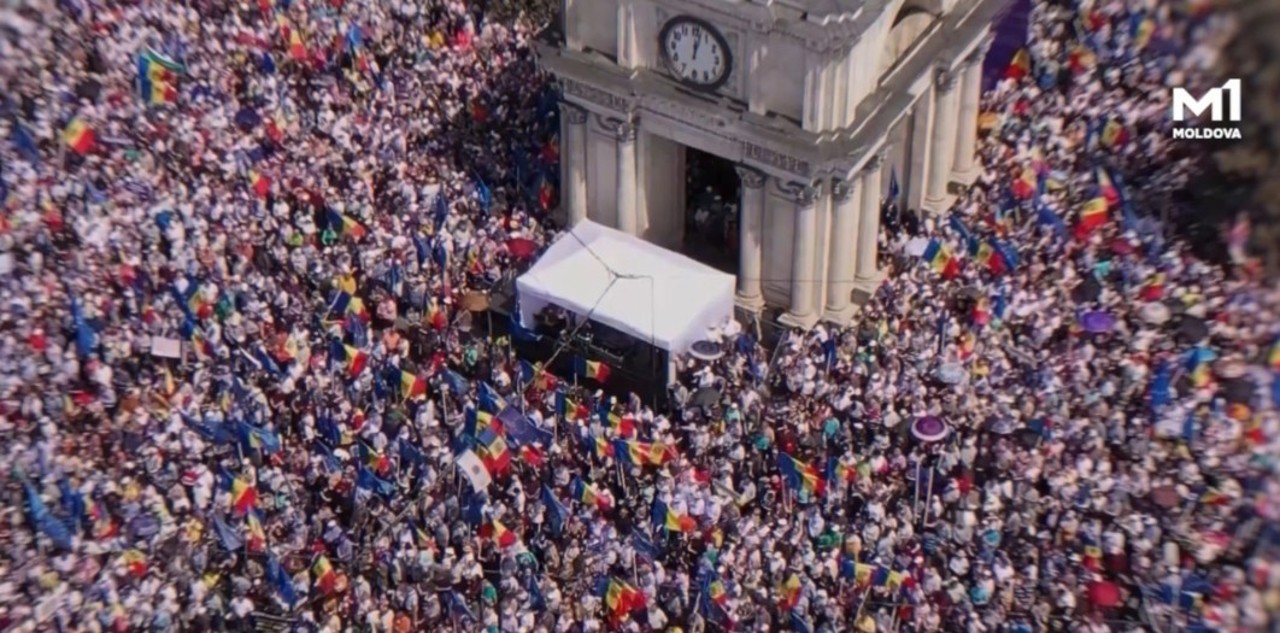
In the spring of that year, students, along with support from pupils and teachers, organized large-scale protests and strikes that lasted for about two months. The demonstrations were sparked by the agrarian government's decision to replace the subject "History of the Romanians" in schools with "History of Moldova."
Additionally, the protesters called for the phrase "Moldovan language" in the Constitution to be changed to "Romanian language."
Thus, 1995 became a year marked by the first major civic movement after independence, as well as the country's official commitment to European values.
1996 - A year marked by a significant institutional dispute between President Snegur and Minister of Defense Pavel Creangă
The President's attempt to dismiss the Minister in March led to a constitutional crisis, which was ultimately resolved by the Constitutional Court. The High Court ruled that a Minister could only be dismissed upon the proposal of the Prime Minister. This crisis underscored the limitations of presidential power in relation to the Government and Parliament.
In the autumn of 1996, the second presidential election in the young Republic of Moldova's history took place. On December 1, 1996, in the second round, Petru Lucinschi, then the head of Parliament, defeated the incumbent President Mircea Snegur.
Thus, 1996 was a politically transformative year, marked by the first change in state leadership and the establishment of the boundaries of power within the Moldovan political system.
The "35 Years of Independence" campaign will air daily on TV Moldova 1 and its digital platforms from August 10 to August 27.
Episodes will be broadcast before and after the main news bulletin "Mesager," and will highlight the key events, decisions, and transformations that have shaped the evolution of the Republic of Moldova from 1991 to the present day.