Moldova rate hike fails to cool retail lending market
The National Bank of Moldova’s policy rate hike from 5% to 7.5% has done little to curb consumer lending, while swiftly driving up state borrowing costs. Economic expert Veaceslav Ioniță highlights an unusual disconnect as annual inflation slows while borrowing policy tightens.
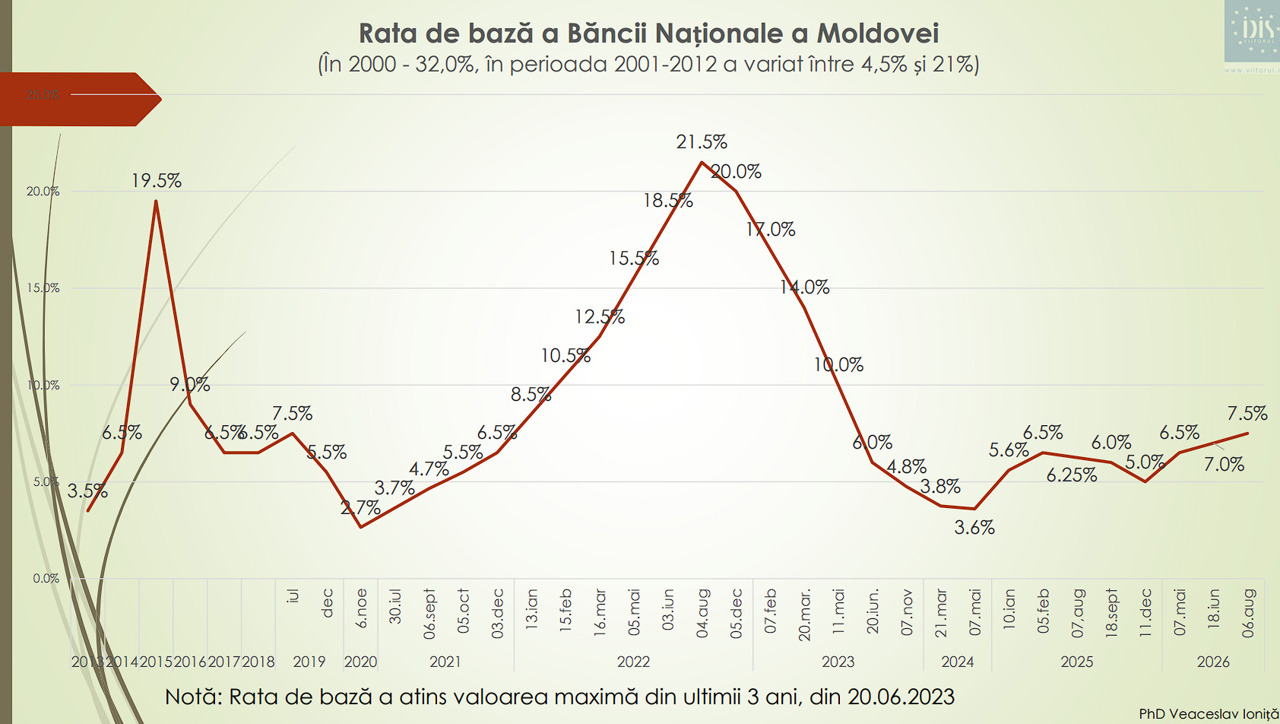
The central bank raised the key interest rate on August 6 to temper credit growth and anchor inflation toward its 5% target. Although the rate reached a three-year high, imported price pressures—spanning energy, fuel, and materials—remain resistant to monetary intervention.
Divergence between inflation and monetary policy
While annual inflation accelerated to 6.5% in the second quarter, summer agricultural supply seasonal drops helped ease consumer prices. Analysts note that agricultural raw material prices declined, countering gains in industrial goods and services.
This landscape leaves central bank policy less effective at guiding consumer behavior. Imported energy shocks continue to dictate broader price dynamics across the domestic market.
Mortgage and consumer credit hit record levels
Retail lending remains largely insensitive to monetary tightening. Average interest rates on personal loans slipped from 10% in late 2025 to 9.7% in mid-2026, while deposit yields rose slightly to 5.7%.
The housing sector exhibits the strongest momentum. Monthly mortgage issuance surged to €56.1 million (approx. 1.1 billion MDL), setting an all-time record despite policy tightening, while average mortgage rates fell from 8.2% to 8%.
Consumer loans similarly reached a record €91.8 million (approx. 1.8 billion MDL) in June, up from €81.6 million (approx. 1.6 billion MDL) a year earlier. Strong demand for real estate and private credit continues to override higher baseline borrowing costs.
Government bears immediate borrowing costs
Unlike retail borrowers, the state feels the impact of interest rate changes instantly. Yields on government securities track the central bank's key policy rate without delay.
State borrowing costs rose from 9.5% early this year to roughly 10% in July. The increase forces the government to spend more when refinancing existing obligations and issuing new debt.
Official forecasts project annual inflation could peak at 9.2% by late 2026 before returning toward the target range. Until structural import pressures normalize, rate hikes will primarily weigh on public debt rather than retail credit expansion.
Translation by Iurie Tataru