Moldova hosts GEF-9 regional environmental talks
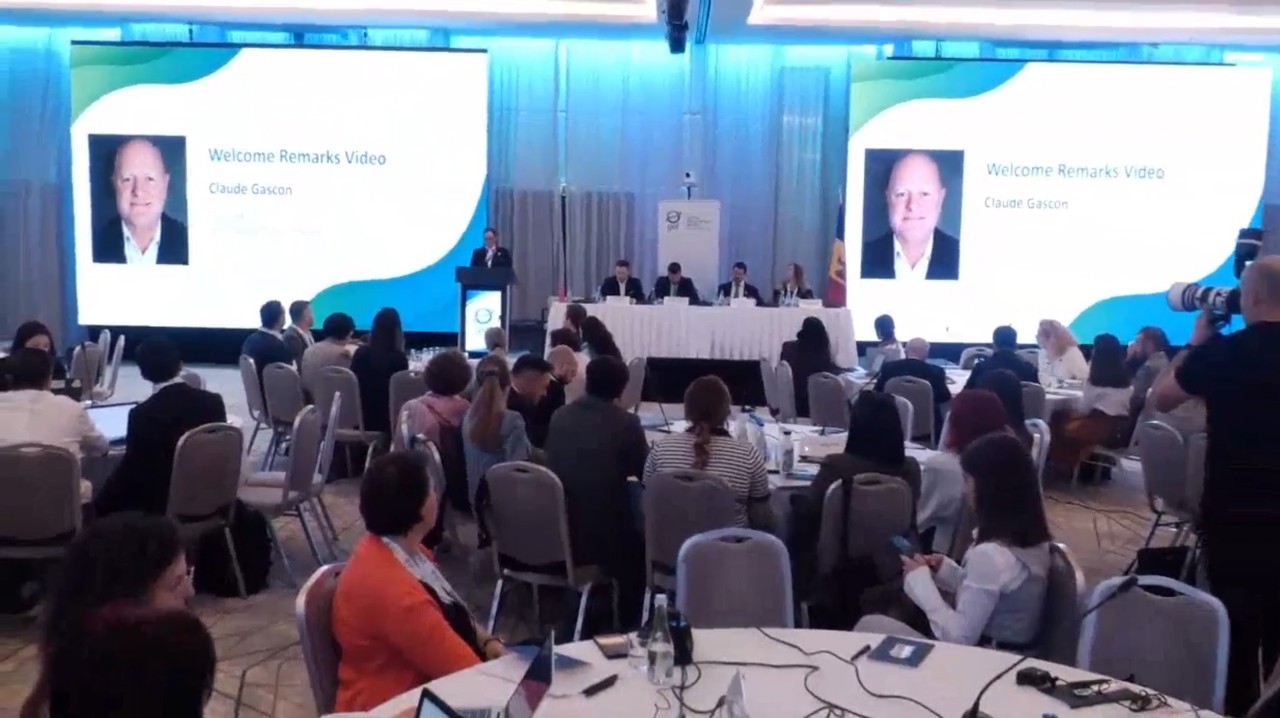
Representatives from 16 countries gathered in Chisinau on Tuesday to set ecological funding priorities through 2030 under the Global Environment Facility’s newly launched $3.9 billion GEF-9 cycle.
The four-day regional workshop, running September 8–11, brings together delegates from Eastern Europe and Central Asia to direct financing toward waste management, agricultural land conservation, and air and water quality. The initial $3.9 billion envelope (approx. 67.2 billion MDL), approved at the Samarkand summit in June, is expected to expand through additional donor pledges.
Climate pressures demand cross-border solutions
Addressing the opening session, Moldovan Environment Minister Gheorghe Hajder stressed that climate risks have outstripped the fiscal capacity of individual nations, making international multilateral support indispensable.
“Climate change is already directly affecting us through floods, hailstorms, and dwindling water reserves,” said Hajder. “Because environmental challenges do not respect national borders, solutions cannot be implemented in isolation. For Moldova, the GEF is a critical partner in translating ecological priorities into durable projects.”
With GEF support, Moldova is advancing environmental restoration along the Dniester River basin through the RE-MAP initiative, as well as preserving wetlands and protected habitats across the Prut River basin.
Enforcing European environmental standards
Aligning national legislation with European Union standards under Chapter 27 (Environment and climate change) is only the first phase of reform, according to Sergiu Lazarencu, vice-chair of the parliamentary committee on environment, climate, and green transition.
“Parliamentary oversight means tracking whether adopted legislation produces visible improvements in people's daily lives—through cleaner air and water, better waste management, and healthier ecosystems,” said Lazarencu, a former environment minister.
Fred Boltz, head of programs at the GEF, noted that the multilateral fund remains focused on structural systemic changes despite growing geopolitical headwinds.
“We are entering the home stretch toward 2030 amid mounting pressures on climate, biodiversity, and resources,” said Boltz. “GEF-9 is designed to deliver structural transformations for a healthy planet.”
Martin Stadelmann, senior policy advisor at the Swiss Federal Office for the Environment, commended the unified “One-GEF” framework, which simplifies fund access and promotes blended finance mechanisms to draw in private investment alongside public funding.
Translation by Iurie Tataru
RELATED COVERAGE
- EU Extension Chief Kos talks Chapter 27 compliance on Nistru River
- European Commission ready to open environmental cluster talks with Moldova as reforms continue
- EU Commissioner Roswall highlights the impact of environmental policies in Chisinau
- Environmental gap: Moldova faces long road to recovery
- World Bank funds 11.8 million USD irrigation project in Moldova