Households eligible for compensation will remain similar to last year
The number of households receiving heating compensation during the upcoming cold season is expected to remain similar to last year’s figures. Minister of Labor and Social Protection Natalia Plugaru announced that she has reached an agreement with Prime Minister Vasile Tofan to maintain approximately the same number of eligible households as in the previous year, when over 600,000 households received assistance. However, the authorities will implement stricter controls when granting this compensation.
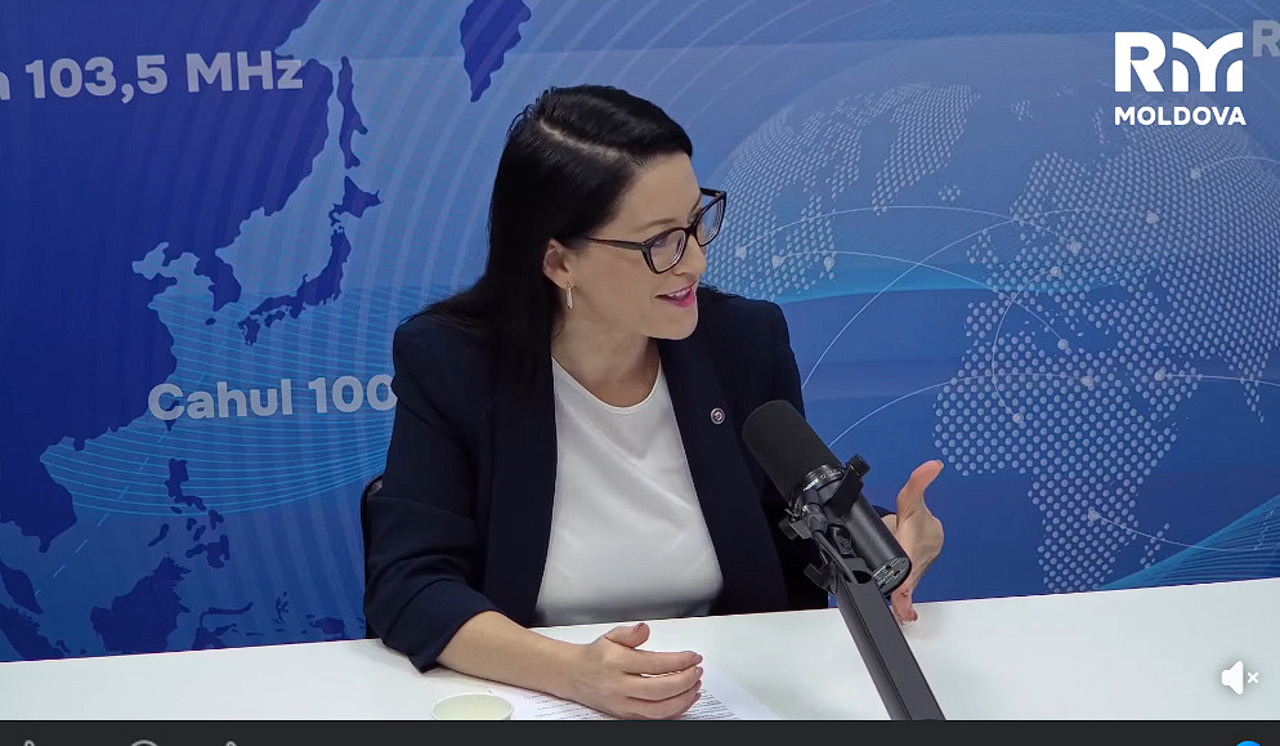
During the Radio Moldova program "La 360 de grade," Natalia Plugaru, the Minister of Labor and Social Protection, revealed that Prime Minister Vasile Tofan had initially suggested reducing the number of households eligible for compensation. Afterwards, the authorities explored various scenarios and assessed the potential impacts of reducing the number of beneficiaries amid rising gas and energy prices.
"Indeed, that is what he initially stated. In the meantime, we have discussed this with him, presented various scenarios, and shown the impact of withdrawing compensation from certain households while considering rising prices. I believe we are moving towards a compromise—a consensus—in which this reduction will not be significantly felt, allowing us to maintain the same number of households or experience only minor fluctuations," stated Natalia Plugaru.
Stricter criteria for granting compensation
The minister has announced that authorities are currently analyzing various criteria to identify households that are most in need of support. As a result, authorities will verify declared income, property ownership, bank accounts, social benefits, and other data available in state databases.
"We are discussing how to better target the households that will be affected and where we need to adjust the criteria to specifically highlight families facing the heaviest burden in paying their bills," the minister explained.
Vehicle ownership is one of the criteria being considered. Minister Plugaru clarified that simply owning a car will not automatically disqualify someone from the program; however, factors such as the number of vehicles and their age may be taken into account.
"This year, we are considering including vehicle ownership as a factor—something that was not considered in previous years. However, discussions are ongoing to ensure we do not disqualify a family just because they own a car. We will likely evaluate whether a household has two vehicles or whether the cars are newer than five or seven years. The goal is not to automatically disqualify someone for owning a car but to incorporate these criteria into our assessment," said Natalia Plugaru.
The minister noted that the system will also verify income that is not explicitly declared in the application. Data will be cross-referenced with information from various institutions, including details on property, bank accounts, and social benefits. "We check for apartments and vehicles, verify bank accounts, and consult the National Social Insurance House regarding social benefits, which includes not just salaries but also any aid, allowances, or subsidies they receive. We also check the Land Registry and the Border Police," the minister explained.
Plugaru added that authorities will conduct additional checks on individuals who declare zero income.
"For example, we might find a case where a person declares zero income yet pays a substantial energy or gas bill. Naturally, that stands out and prompts us to investigate their actual income," the official noted.
The program costs billions of lei
Last season, the compensation program cost 2.4 billion lei over five months, with all funds coming from the state budget. In previous years, the program also received support from European donors. The minister mentioned that authorities are currently in discussions with external partners to secure additional funding.
"Last year, we fully covered the 2.4 billion lei from the state budget. This year, we are again negotiating with donors, but mobilizing such funds is quite challenging. The feedback we receive is that we should manage procurement and payments from the state budget ourselves. After receiving help initially, it is now time for us to fund this from our own budget," she stated.
Natalia Plugaru noted that discussions with external partners are ongoing, but there is currently no confirmation of contributions for this season.
In the long term, the minister believes that the Republic of Moldova needs to reduce its dependence on this type of support by increasing household incomes and developing the economy.
"Overall, in the long run, we need an exit strategy to move away from this permanent compensation program. We must strengthen people's purchasing power. This involves growing the economy and raising wages so that individuals are no longer reliant on these compensations," the Minister of Labor and Social Protection explained.
Prime Minister Vasile Tofan previously stated that the Government would not be able to assist as many compensation recipients as it did last year. He said it would prioritise the most vulnerable families. However, the number of beneficiaries will depend on the available funds, including potential grants that the Government is seeking from European partners.
Tofan estimated that the state would need about 3.8 billion lei to ensure the population feels no impact from potential price hikes, but he noted that the Government does not currently have that sum at its disposal.
Registration for compensation will begin on October 1, and the procedure will remain unchanged. Authorities are expected to announce—either towards the end of September or on October 1 itself—how many households will receive support, as well as the minimum and maximum compensation amounts. Compensation will be provided for five months, from November through March.
During the 2025–2026 cold season, over 620,000 households received compensation. The average amount was 750 lei, varying depending on the heating source. More than half of the beneficiaries received the maximum support: 800 lei for households using solid fuels and 1,000 lei for those using other types of heating.
Over the past four years, the Government has allocated more than 11 billion lei through various support mechanisms to fund the compensation program.