Funeral payments for Russian soldiers cut; one region has canceled them
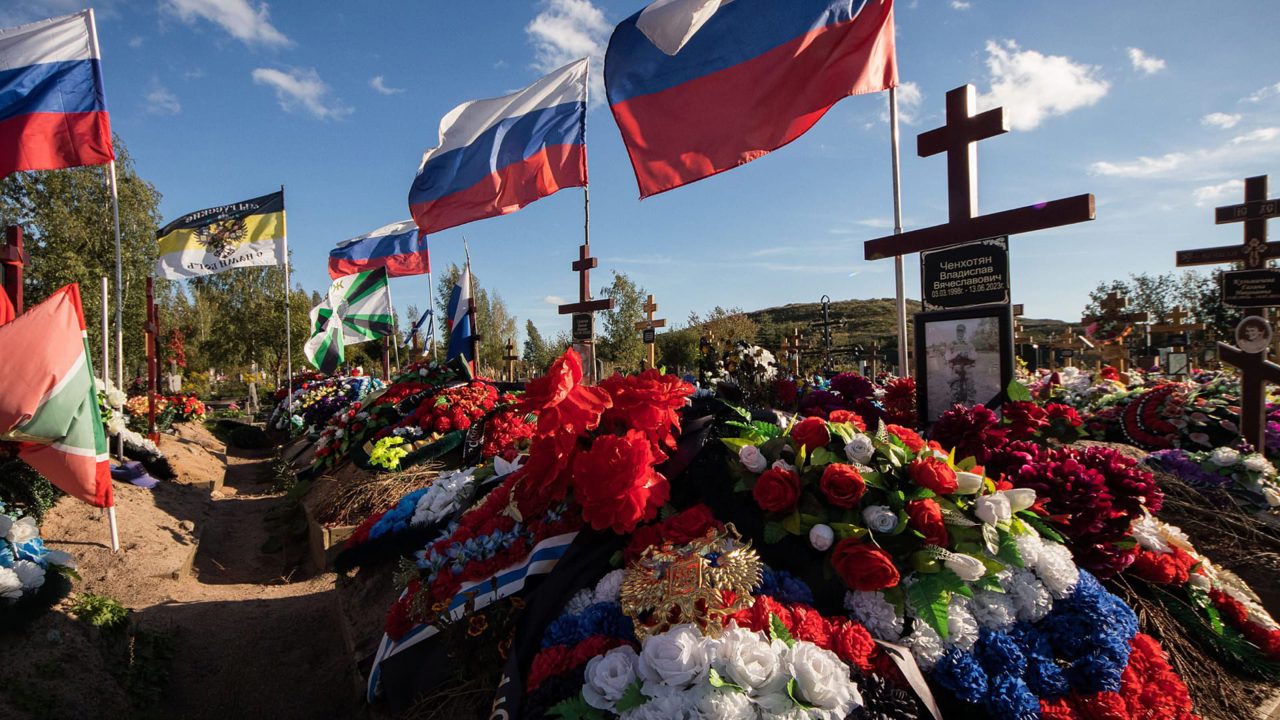
Russian regional authorities are cutting compensation payments for soldiers' deaths in the war against Ukraine due to increasing budget issues. Last year, the budget deficit hit a record 1.5 trillion rubles, according to The Moscow Times.
In recent months, at least six regions of the Russian Federation have significantly cut their "funeral allowances," with one region eliminating them entirely, according to researcher Janis Kluge of the German Institute for International and Security Affairs.
In Bashkortostan, the initial payout for the death of a soldier in the Ukraine war was set at 2 million rubles. This amount was subsequently reduced to 1 million rubles, then to 500,000 rubles, and finally to just 100,000 rubles. The Kirov and Omsk regions have also halved their payments, decreasing from 1 million to 500,000 rubles. In the Ulyanovsk region, the allowance dropped twentyfold, from 1 million rubles to just 50,000 rubles. Additionally, the Orenburg region completely eliminated these payments as of July 1 this year.
Kluge emphasizes that the need to finance war recruitment places an increasing burden on regional budgets. To meet quotas set by the Kremlin, regions have raised the average payment for signing a contract with the Ministry of Defense to 3.4 million rubles this year.
Despite these high sums, the number of contract soldiers recruited fell by 10% in the second quarter compared to the same period last year. In the first quarter, recruitment numbers had already dropped by 20% to 70,500, the lowest level in two years, based on Kluge's analysis.
To balance their budgets, Russian governors are cutting civilian spending, Kluge points out. For instance, regional healthcare funding fell by 6.4% between January and March compared with the same period last year.
The reduction in "death benefits," which had largely remained unchanged throughout the war, follows this trend and aligns with what Kluge describes as "political and economic logic."
Kluge explains, "Regional payments for the fallen play only a minor role in supporting recruitment, which is the primary objective that regional authorities are tasked with. Regions do not depend on these payments, as no one wants to contemplate their own death when signing a contract."