Energy expert: "This winter will be tough; the energy sector is in crisis"
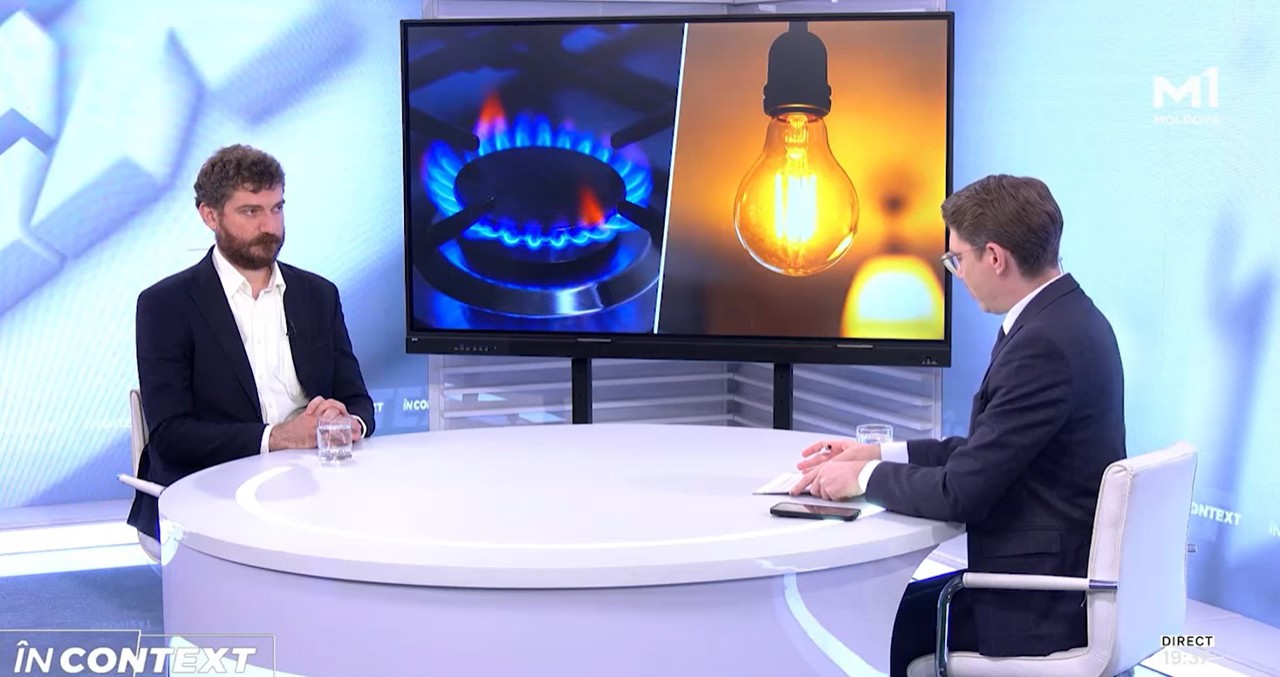
The Republic of Moldova is heading towards a difficult winter, as pressures mount across several segments of the energy market: natural gas, thermal energy, electricity, and fuels. This warning comes from energy expert Eugen Muravschi, who explains that the market cannot be analyzed solely through the lens of seasonal factors, as geopolitical developments play a decisive role.
"It will certainly be a tougher winter than the last one. Multiple crises are overlapping: we have issues with natural gas and fuel; today we learned that heating will also be affected, and we cannot rule out electricity becoming a problem as well. So, all energy-related aspects are in a state of crisis," stated Eugen Muravschi on the Moldova 1 public television program "În Context."
Heating costs under pressure from gas prices
In the expert's view, gas-price trends directly affect the production costs of thermal and electrical energy, as these systems operate using cogeneration.
"They burn gas to produce heat and electricity. If gas prices rise, the cost of electricity produced by CET Nord and Termoelectrica increases accordingly, as does the cost of the thermal energy supplied to consumers connected to the central heating system," the guest explained.
Eugen Muravschi believes that the proposed tariff hikes for thermal energy—over 82% for Chișinău and approximately 96% for the municipality of Bălți—are "too steep."
"ANRE will likely scale back this price increase. ANRE usually cuts costs wherever possible. I do believe ANRE will approve a price hike—we shouldn't delude ourselves into thinking prices won't rise—but probably not by the full 80 percent requested by Termoelectrica," stated Eugen Muravschi.
Gas reserves do not automatically mean lower prices
On the Republic of Moldova's security and emergency gas stocks, the expert explains that they are meant for crisis situations and shouldn't be seen as a source of cheaper gas. Muravschi referred to 2022, when reserves were necessary to keep the energy system operational.
"The fact that we have them doesn't mean they come at a better price, because they were also purchased from the market. They wouldn't influence [the price]. (...) I don't know exactly how much Energocom bought or in which month, but we have already been facing high prices since March," the energy expert explained.
"For reference, on the European TTF exchange, gas cost 30–35 euros before the war started; last week it reached 83, and now it is 73 euros. Gas is currently twice as expensive," the expert added.
He warns that if current market rates persist, pressure on domestic tariffs will continue: "We cannot rule out price hikes for gas and, inevitably, for heating," Muravschi warned.
Gas price to be updated monthly
Most of the gas volumes to be consumed during the cold season have already been contracted, but the price is pegged to market trends. According to the expert, this mechanism means the price for the upcoming month will only be known at the end of the preceding month.
"Energocom contracts them at market prices. (...) This means that on the last day of September, we will know the price for October. On the last day of October, we will know the price for the following month. The downside is that if the cost goes up, the price rises; the upside is that if it gets cheaper, the price charged to consumers will also drop," the expert explained. According to Muravschi, the energy market can no longer be analyzed solely through the lens of seasonal factors, as geopolitical developments have become decisive for prices: "It used to be a seasonal matter; now it is a political one," Muravschi emphasized.
Middle East conflict complicates forecasts
Developments in the Middle East are introducing a new element of uncertainty into energy markets, making it difficult to predict gas price trends.
"Under these conditions—with the war in the Middle East escalating and spreading—I don't know how one can predict prices. And other suppliers are on the market. So, for those who think Energocom isn't doing a good job: let them see how the other suppliers—who offer gas at higher prices than Energocom—are managing," stated Eugen Muravschi.
Diesel: a new source of pressure
International market pressures are also affecting fuel prices. The expert believes that diesel price trends are closely linked to the situation in the Middle East and the global shortage of petroleum products: "Prices will rise because the shortage is worldwide," the expert warned.
On the region's energy infrastructure and transport routes, Eugen Muravschi explained factors that could drive up oil market costs. "The Strait of Hormuz was closed and the Bab-el-Mandeb was hit again, as was the Saudi Arabian oil pipeline they were using. (...) Exports were halted for several days; this, among other things, drives up insurance and transport costs," Muravschi explained.
A winter of pressure on all energy sectors
Termoelectrica and CET-Nord have asked the National Energy Regulatory Agency (ANRE) to raise tariffs for thermal energy supplied to consumers by over 82% in Chișinău and by about 96% in the municipality of Bălți. The companies justify their request primarily by citing rising thermal energy production costs, including natural gas expenses. For the October–December 2026 period, Termoelectrica factored in an average natural gas price of 21,212 lei per 1,000 cubic meters. During the April–September period, the price used in calculations was 14,114 lei per 1,000 cubic meters.
Minister of Energy Dorin Junghietu also announced, following the Government meeting on September 22, that natural gas prices in the Republic of Moldova could rise again due to international market pressures and negative financial imbalances accumulated by Energocom. Energocom could submit a request for a tariff adjustment to the National Energy Regulatory Agency after September 30. The official also said diesel fuel could soon reach 40 lei.
To prevent potential crises and mitigate the impact of price hikes on the population, authorities announced a 60-day state of emergency in the energy and water sectors, starting September 26.