Moldova is ready to open all negotiation clusters. Valdis Dombrovskis: "We are ready to move forward"
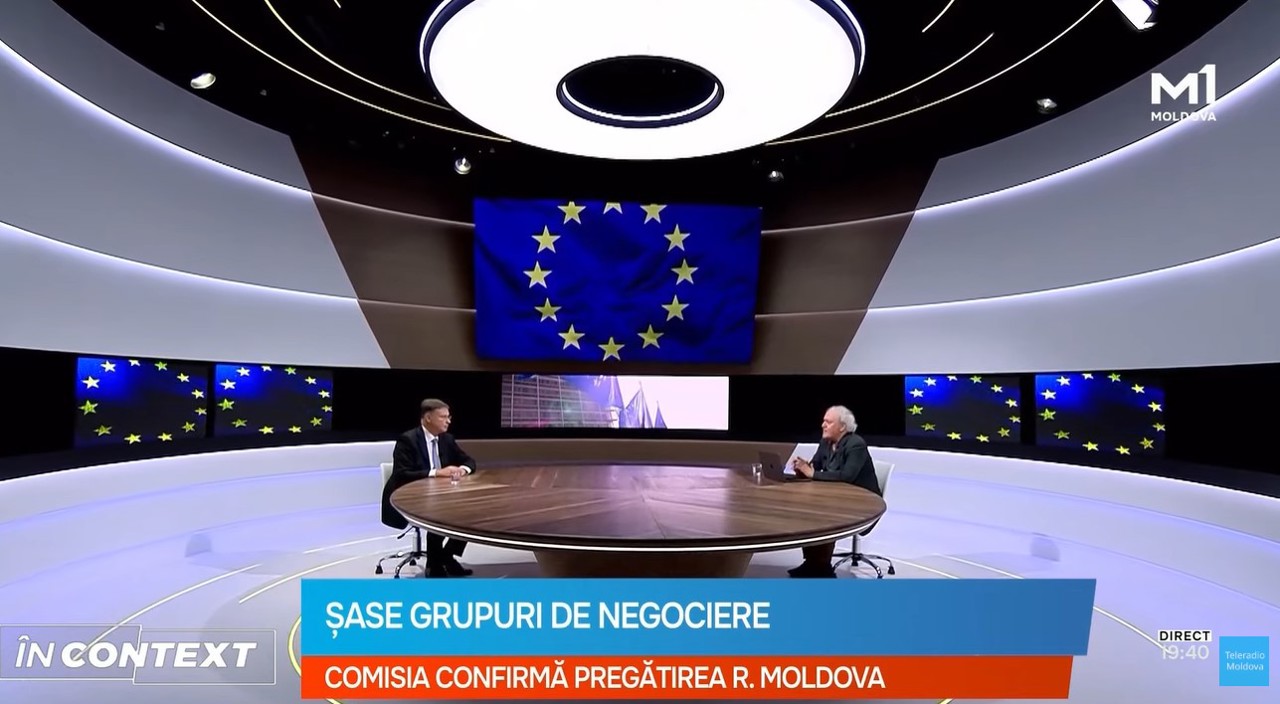
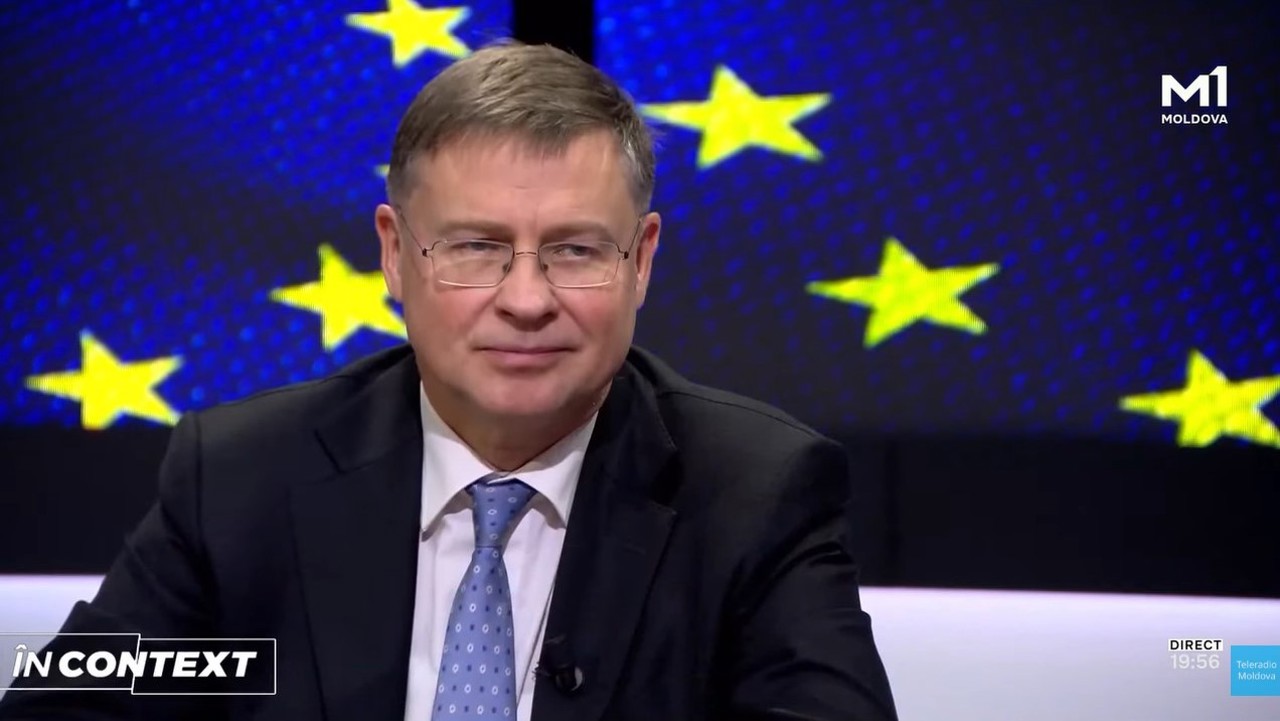
The Republic of Moldova is technically and politically prepared to open the six negotiation chapter clusters for accession, and European Union (EU) enlargement has become a geopolitical imperative, states Valdis Dombrovskis, European Commissioner for Economy and Productivity, and Commissioner for Implementation and Simplification.
Republic of Moldova poised to advance in negotiations
Speaking about a "roadmap" aimed at leading candidate states—including the Republic of Moldova—the European official explained that this instrument offers a "pragmatic approach," bypassing the complex procedure of amending EU treaties. The initiative is designed to streamline negotiations as well as the EU's future functioning—"not as a union of 27 member states, but perhaps of 30 or even more," the European official noted in an interview with Moldova 1.
"The unanimity principle leads to situations where the national veto delays various measures, even when they do not concern the vital national security interests of the respective member states. We are also taking into account lessons learned from previous enlargement rounds; until recently, for instance, we saw Hungary blocking numerous decisions," stated Commissioner Valdis Dombrovskis in an interview with Dan Alexe, Teleradio-Moldova’s special correspondent in Brussels.
European integration and the Transnistrian issue
The European official noted that "the negotiation and EU integration process could contribute, to some extent, to facilitating a resolution to the Transnistrian issue."
He cited the precedent of Cyprus, noting that resolving the territorial dispute was not a "precondition for EU accession." "Cyprus managed to join even with the Northern Cyprus issue unresolved. However, we hope that this enlargement process will help and that, ultimately, Moldovan citizens on both banks of the Nistru will be able to benefit from EU accession," noted Valdis Dombrovskis.
The European official refrained from predicting a timeline for resolving the Transnistrian issue, noting that "enlargement negotiations will certainly take a long time": "We hope that the EU accession process itself could contribute to this."
"Geopolitical changes in recent years" have driven the expansion of the European Union in order to maintain regional security, the Commissioner added.
"We now consider it a geopolitical imperative to have a larger and stronger European Union. Put simply, we can either export stability to our neighbors or import instability. We prefer to export stability," Dombrovskis emphasized.
Republic of Moldova, a "very close partner" of the EU
From a geopolitical standpoint, the Republic of Moldova is a very close partner, the European official said. He clarified that the status of military neutrality enshrined in the Republic of Moldova's Constitution does not pose an obstacle, as member states are not required to join NATO. "There are EU member states that are not part of NATO. Therefore, I would not say that this aspect constitutes an obstacle in itself. From a geopolitical perspective, we view the Republic of Moldova as a very close partner," stated Valdis Dombrovskis.
During his first visit to Chișinău on October 1–2—which includes official meetings and discussions with the business community—European Commissioner Valdis Dombrovskis noted that he looks forward to "continuing cooperation with the Moldovan authorities."
Goal: Full EU membership by 2030
The Republic of Moldova was granted EU candidate status in June 2022 and officially launched accession negotiations in June 2024.
This summer, Moldova opened the first two negotiation clusters, with the remaining four expected to open by year-end, according to earlier announcements by Brussels officials.
In a speech delivered in Strasbourg on September 16, European Commission President Ursula von der Leyen reaffirmed that "the future of the Republic of Moldova lies within the EU" and announced that Brussels would propose roadmaps for candidate countries that have made the most significant progress in the European integration process.
After the State of the Union address, Romanian MEP Dan Barna called on the European Commission to take concrete action on EU enlargement. Speaking in the European Parliament plenary, Barna noted that Ursula von der Leyen’s statements had instilled "hope and confidence" in the accession process.
Deputy Prime Minister for European Integration Cristina Gherasimov said the decision would bring greater predictability and help set priorities for implementing reforms.
Authorities in Chișinău have set the goal for the Republic of Moldova to become a full member of the European Union by 2030.