EU Commissioner in Chișinău: €157 million support package for Moldova
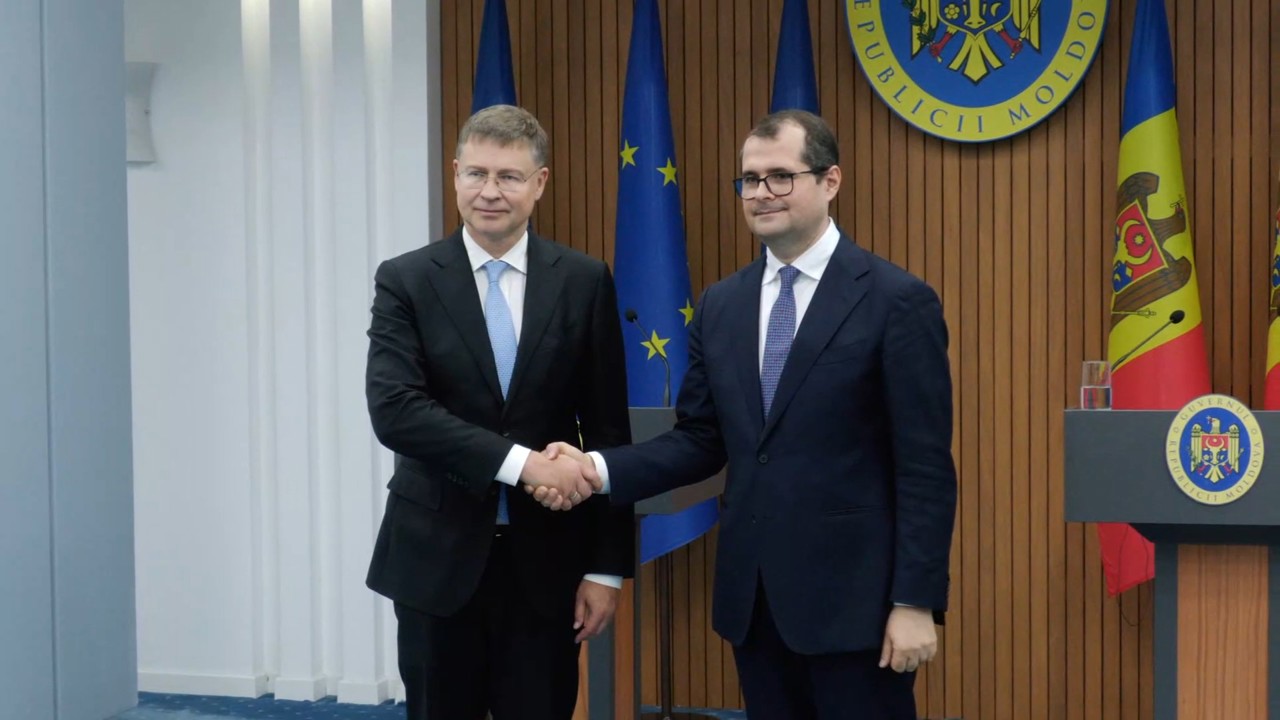
The Republic of Moldova is making progress in implementing the €1.9 billion Growth Plan. Grants totaling over €500 million have already been made available to the country. The European Union is assessing reform steps leading up to June 2026 in order to disburse the next tranche of support—worth €157 million—European Commissioner Valdis Dombrovskis announced on Thursday, October 1, during his visit to Chișinău.
Dombrovskis: Reforms are bearing fruit
At a press conference held alongside Prime Minister Vasile Tofan, Valdis Dombrovskis—Commissioner for Economy and Productivity, Implementation and Simplification—welcomed the Chisinau government's commitment to prioritizing economic growth on its agenda, despite the challenges posed by the Russian Federation's war of aggression in Ukraine.
"The Republic of Moldova has made significant progress since submitting its accession application. It has reduced bureaucracy, improved public investment management, and strengthened the country's energy security—and all these efforts are already bearing fruit. At the Moldova Investment Conference, investment plans totaling €641 million were announced by international financial institutions and private investors. This is a clear signal that reform attracts investment and that this environment conducive to reform must be maintained," Valdis Dombrovskis said.
According to the Commissioner, the government's steadfast commitment to reform in recent years is preparing the Republic of Moldova for accession, though much remains to be done.
"We are roughly halfway through the implementation period of the Growth Plan, yet we still have about two-thirds of the reforms to complete. So, we are making good progress, but there is still a lot of work ahead. Moving forward, we will continue to work closely with the government of the Republic of Moldova to ensure we stay on track with all the reforms," Dombrovskis highlighted. He noted that 40 reforms must be implemented by December, with another 57 planned for 2027. Some of these include major reforms, such as restructuring state-owned enterprises and reforming public administration.
EU seeks solutions to accelerate investment
On the pace of investment, the Commissioner said the government is seeking opportunities to accelerate investment and unlock additional economic potential. He noted that the centralized entity established by the Government—which will centralize the implementation of strategic projects—could make a tangible difference.
During the conference, Prime Minister Vasile Tofan reaffirmed the Government's commitment to fiscal discipline. Public funds, including European funds, are managed with care to ensure maximum impact for every euro and leu spent.
Tofan: New clusters to open by the end of October
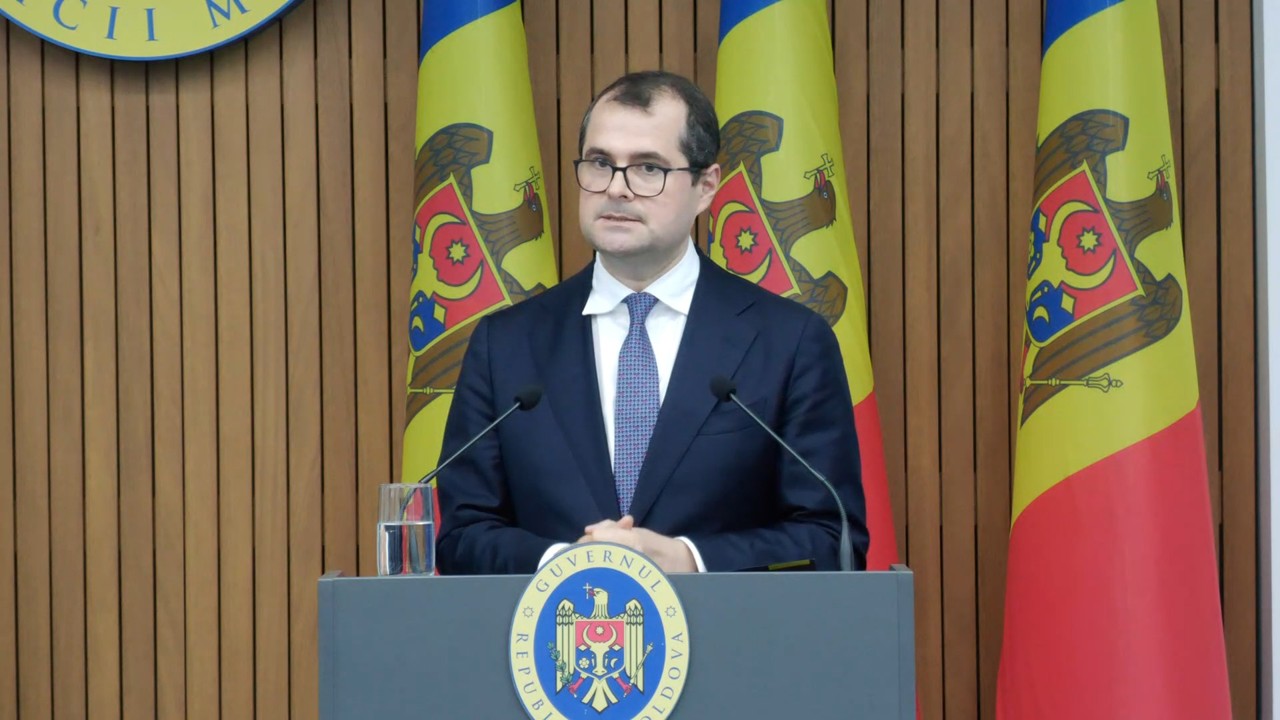
Vasile Tofan reiterated Chișinău's expectation that all negotiation clusters would be opened by the end of the year and expressed gratitude for the support received.
"I want to assure you that our civil servants did not take leave in August; they worked overtime and on weekends to achieve the committed results. I hope we can make progress by the end of October, open new clusters, and begin closing negotiation chapters next year. I know it is an ambitious goal. If we didn't like ambitious goals, we wouldn't have set the target of signing the accession treaty by 2028," the Prime Minister stated.
The Head of Government acknowledged that while the Republic of Moldova is making good progress on its commitments, it is lagging behind regarding capital investments.
"I must admit there is still work to be done there, as some projects are delayed. Our intention is to dramatically increase productivity by centralizing functions into an agency—'Moldova Proiect,' as I announced at yesterday's government meeting. This will also allow us to save money in the medium term, as there will be a single agency instead of twelve, and we will be able to move forward much faster," the Prime Minister explained.
Valdis Dombrovskis is paying his first working visit to the Republic of Moldova on October 1 and 2. The agenda includes discussions with officials in Chișinău regarding the Growth Plan for Moldova, investments, and bringing the country's economy closer to the European Single Market.
During the meeting with President Maia Sandu, the two officials discussed the reforms the Republic of Moldova is implementing on its path to European Union accession, as well as the progress achieved. The Presidency's press service highlighted the fulfillment of commitments undertaken as part of the Growth Plan, the simplification and digitalization of business procedures, the fight against undeclared work, and the more rigorous management of public investments and budget expenditures.
"These reforms, alongside the local public administration reform, make institutions more efficient, ensure better use of public funds, and bring quality services closer to citizens," stated the Presidency's press release.
The Head of State emphasized that the European Union is the Republic of Moldova's main trading partner and the primary destination for Moldovan exports. The gradual integration of the economy into the European market opens up new opportunities for companies and attracts investment. On the energy sector, the President highlighted the diversification of natural gas supply sources, investments in electricity interconnections with the European Union, and increased production from renewable sources. The European Commissioner will also meet with the Governor of the National Bank of Moldova, Anca Dragu, and on the second day of the visit, she will meet with members of the parliamentary Committee on Economy, Budget, and Finance.