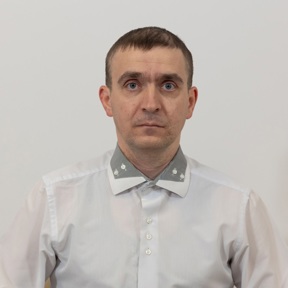
Vasile Tofan in Brussels: Moldova-EU Association Council "roadmap"
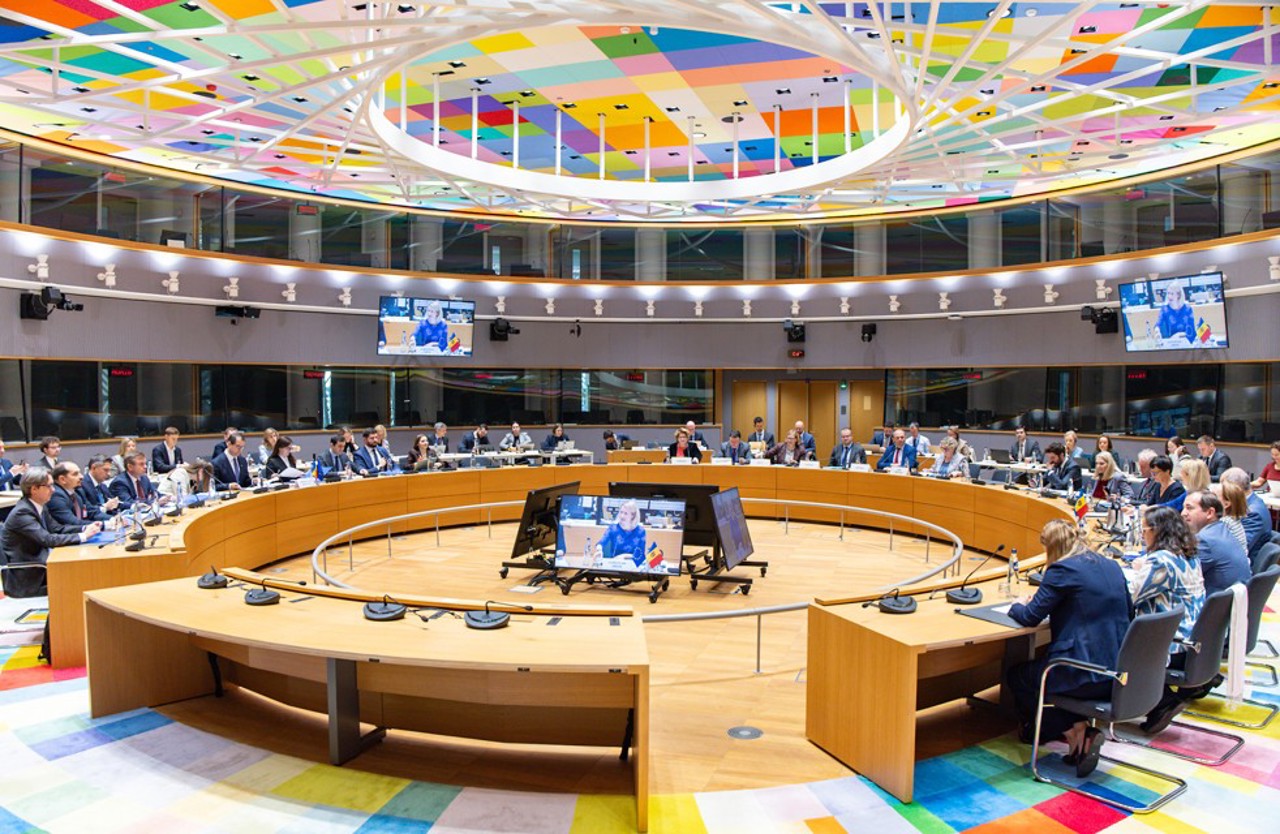
The Republic of Moldova has already fulfilled 95% of its commitments and will receive a "roadmap" outlining the accession stages, alongside the other most advanced candidate states: Montenegro, Albania, and Ukraine.
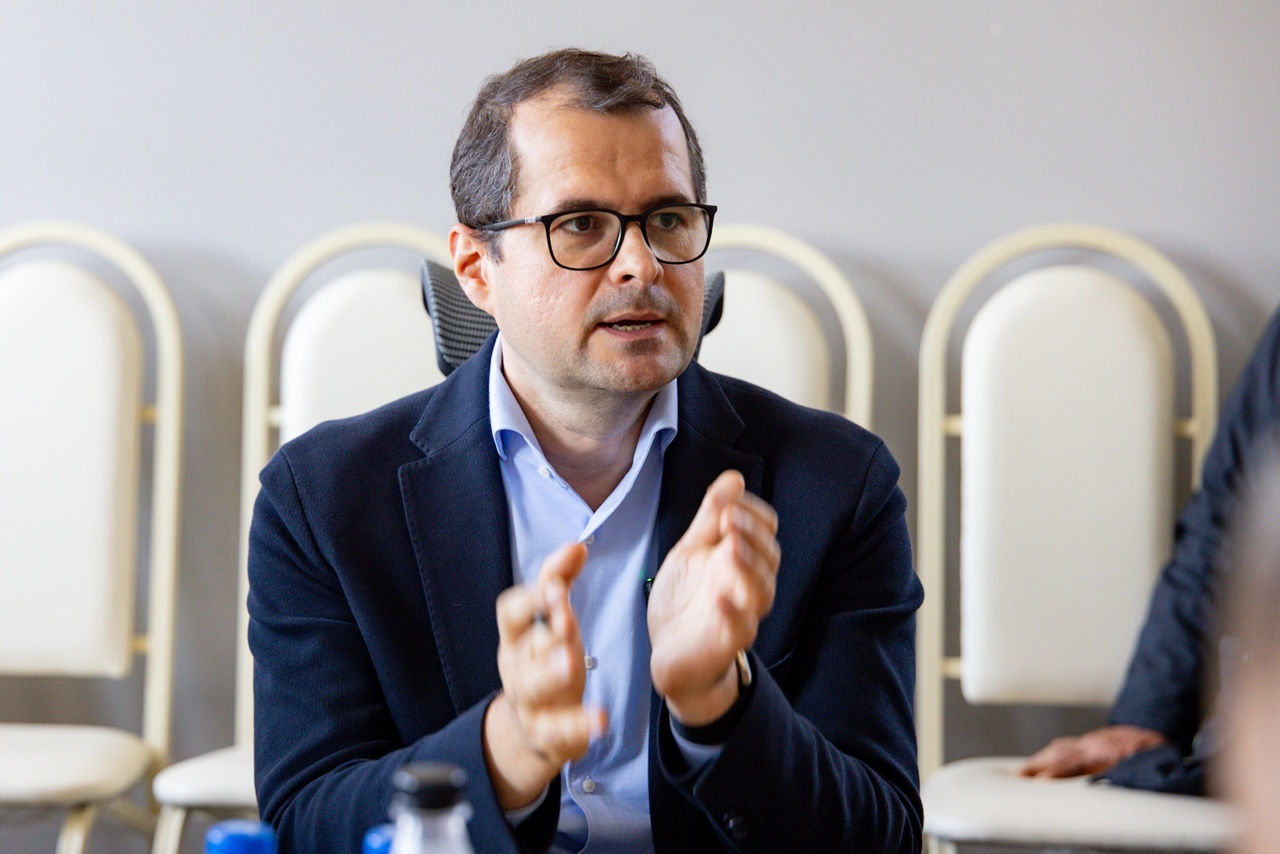
This is the announcement that preceded Prime Minister Vasile Tofan’s first official visit to Brussels for the annual meeting of the EU-Moldova Association Council. The head of the Chisinau government began his visit with a meeting with the EU’s foreign policy chief, Kaja Kallas, and with Marta Kos, the European Commissioner for Enlargement.
At this 10th Moldova-EU Association Council meeting—only the tenth, given that although the Agreement was signed in 2014, the first meeting took place in 2015 and the annual schedule was subsequently interrupted by the pandemic—Vasile Tofan took stock of the past 12 months of cooperation with the European Union. He discussed progress on justice and economic reforms, foreign and security policy, and economic cooperation—with a focus on energy and trade—and also met with Energy Commissioner Dan Jørgensen and the European Commissioner for Financial Services, Maria Luís Albuquerque.
The official discussed the status of justice and economic reforms, foreign and security policy, and economic cooperation—with particular emphasis on energy and trade—and met with Energy Commissioner Dan Jørgensen and the European Commissioner for Financial Services, Maria Luís Albuquerque. Wave of positive feedback
At a press conference held alongside EU foreign policy chief Kaja Kallas and Marta Kos—the European Commissioner for Enlargement—a new tranche of €157 million from the EU’s €1.9 billion Growth Plan was announced. Kaja Kallas noted that "Moldova is advancing rapidly toward the European Single Market."
Security was a key agenda item. Kaja Kallas described the Russian drones that violated Moldova's airspace just this past weekend as "unacceptable," while praising the country's participation in EU military missions in Somalia and Bosnia.
The European official emphasized that the situation in the Transnistrian region would not be an obstacle to Moldova's accession, although she acknowledged that the situation remains fragile.
For her part, Enlargement Commissioner Marta Kos estimated that the four remaining negotiation "clusters" would be opened by the end of the year.
Accelerating the enlargement process
The conclusion is that since the summer—specifically the second Republic of Moldova–European Union Summit attended by President Maia Sandu, European Council President António Costa, and European Commission President Ursula von der Leyen—Moldova has made rapid progress. The European Commission is now preparing a very concrete "roadmap" that Chișinău will be required to follow. Such a "roadmap" is not entirely new: Croatia received one in 2008 as it was preparing to conclude negotiations, and similar programs are currently being prepared for the other countries furthest along in the negotiation process—namely Montenegro, Albania, and Ukraine.
Vasile Tofan’s visit to Brussels comes just ahead of the publication—scheduled for Tuesday, October 6—of a document defining the European Union’s new enlargement policy; this document will provide, among other things, a "roadmap" for the Republic of Moldova, alongside the other most advanced candidates: Montenegro, Albania, and Ukraine.
The new mechanism includes, among other diplomatic and technical innovations, a clause requiring future members to agree—for a transitional period (talks suggest 15 years)—not to oppose EU decisions reached by consensus. Another clause would allow existing EU members to suspend certain rights of a new member—specifically the right to vote—for a period yet to be defined (though a 10-year transition is proposed). This action could be taken via a "qualified majority" (comprising 15 of the 27 member states and/or representing 65% of the EU population).
Progress this year has been rapid: on June 15, the first package of EU accession negotiations—covering "fundamental values"—was opened. On that occasion, European Council President António Costa congratulated Maia Sandu on the progress achieved, describing the track record as "impressive."
Subsequently, in July, the EU announced that Moldova and Ukraine could begin accession negotiations within a second "cluster"—a grouping of negotiating chapters—out of a total of six; this cluster concerns foreign policy. These rapid strides made by Chișinău include participation in the Single Euro Payments Area (SEPA), the "Roam Like at Home" program (the European mobile roaming area), and the "Creative Europe" program, among many others.
Indeed, over the summer, European Commission President Ursula von der Leyen noted that Moldova had implemented 93% of the required reforms; this achievement led to the release—so far—of €500 million from the €1.9 billion Growth Plan for the Republic of Moldova covering the 2025–2027 period.
Detailed breakdown of EU funds disbursed to date
To date, Moldova has received approximately €504 million of the total €1.9 billion—just over a quarter of the entire package. The funds were disbursed in several tranches:
€270 million – pre-financing (July 2025): Announced by Ursula von der Leyen during the first EU-Moldova summit.
€18.9 million – first regular payment (September 2025): Disbursed by the European Commission following the fulfilment of four reform indicators, including the development of competitive energy markets and the strengthening of energy security.
€189 million – second tranche (May 2026): Funds earmarked exclusively for investments and economic development projects, rather than for covering the budget deficit.
Release of funds
In June, a new EU-backed investment worth €232.7 million under the Growth Plan was announced, specifically for the rehabilitation of the Chișinău–Comrat road section, including the Porumbrei–Comrat segment.
Added to this are an €11 million support measure to strengthen the Republic of Moldova's resilience against hybrid attacks, €17 million in investments for border infrastructure to support security and territorial integrity, and the €157 million announced today, Monday, October 5.
The Commission also supports the Republic of Moldova's full association with the upcoming Erasmus+ program and intends to extend the DiscoverEU rail pass scheme to young Moldovans in 2027.
Attention now turns to the "roadmap" for the Republic of Moldova, which is expected to be announced on Tuesday, October 6, alongside those for Montenegro, Albania, and Ukraine.