SIS director at Moldova Security Forum 2026: Money now drives Russia's strategy to destabilize Moldova
Money has completely replaced ideology in Russia's strategy to destabilize the Republic of Moldova, and the entire spectrum of hybrid warfare is supported by huge financial resources. To amplify manipulative messages, not only hackers but also psychologists are used, revealed the director of the Information and Security Service (SIS), Alexandru Musteața, at the Moldova Security Forum 2026.
Ideology no longer gets people out to protest
Processes involving foreign interference and attempts to derail the European path no longer have any connection to the political doctrines of the past, the SIS director said.
Nowadays, any act of sabotage or attempt to influence political life in Chișinău is a paid service. This paradigm shift demonstrates that financial interest has become the primary driver of anti-democratic actions.
"Everything related to interference in the electoral process comes down to money. Twenty-five or thirty years ago, it was about ideology—the Russian language, the Soviet past; there was a lot of ideology involved. We have seen that this plays a lesser role now; money has replaced ideology," explained Alexandru Musteața.
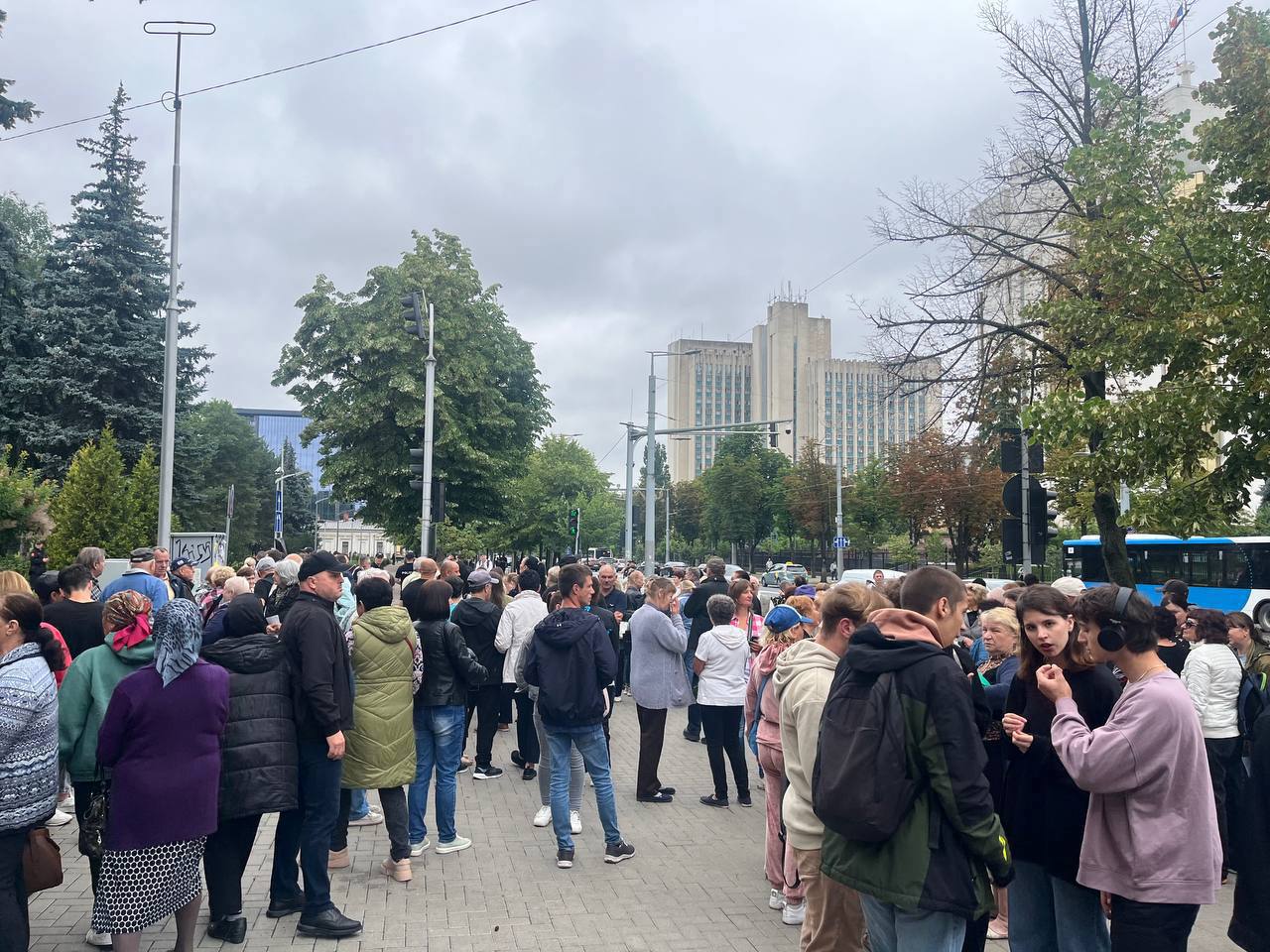
Consequently, street protests have gradually turned into a business venture where citizen participation is contingent solely on payment. To evade the monitoring of financial transactions, criminal networks have abandoned shell companies in favor of the widespread use of cryptocurrency. "We have been analyzing the protests in the Republic of Moldova and found that people were turning out solely for the money. Protest is a democratic tool for citizens, yet it has turned into a business. For the past three years, we have been discussing illicit financing. In the past, there were shell companies; funds moved through corporate transactions and banks before finally reaching individuals. Now, cryptocurrency has entered the picture. Cryptocurrency is not well-regulated globally and is used to conceal the origin of funds," the SIS chief explained to the forum participants.
The funds allocated to destabilize the Republic of Moldova cover a wide range of logistical and technological expenses. Every stage of the disinformation campaigns is rigorously budgeted, from office rentals to the acquisition of advanced software.
"You have to pay people; you have to pay for equipment, offices, technology, and software. The entire process is paid for. Unfortunately, Russia—with the help of Ilan Șor, who has been convicted in the Republic of Moldova—has developed a mechanism. They created a tool that allowed them to funnel money into the Republic of Moldova and influence electoral processes in 2023, 2024, and 2025. This has become a global phenomenon," Musteața noted.
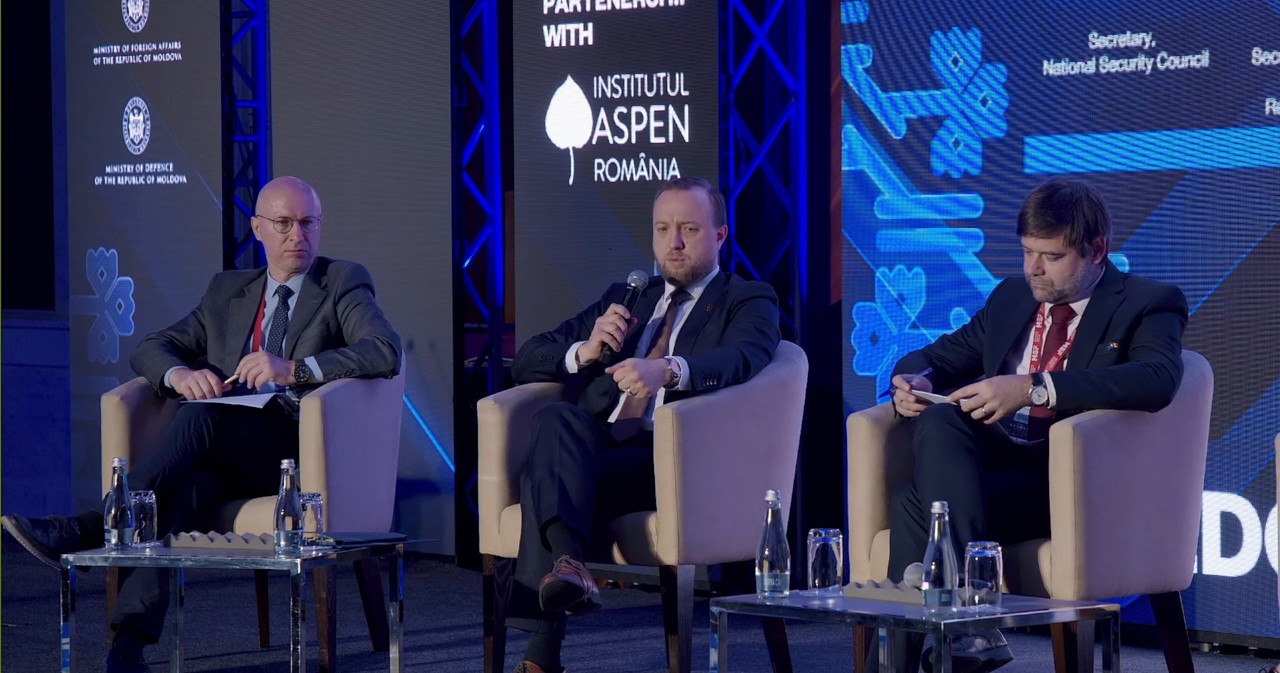
Hackers and psychologists used to cause destabilization
Efforts to influence Moldovan society are not limited to election periods but are ongoing. Psychological warfare is waged daily through the repetition of narratives designed to erode public trust in state institutions.
The ultimate goal of this constant information pressure is to discredit the country's European development path.
"The information space is affected by psychological warfare. It neither pauses during election campaigns nor begins only when they start; it is a continuous process. Psychological warfare involves small, repetitive narratives—spread daily across various channels, on both small and large scales—aimed at instilling a lack of trust in institutions within society, specifically in the case of the Republic of Moldova. Simply put, the goal is to make people distrust institutions. The idea is planted that the European path is not the best option," explained Alexandru Musteața.
Conducted on popular platforms such as TikTok, Facebook, and Telegram, this cognitive warfare employs experts in manipulating collective behavior.
Although individual actions may appear isolated or chaotic, they are part of a meticulous plan. A comprehensive analysis of these incidents reveals a clear pattern of undermining national stability. "Psychological warfare is an ongoing process. Our citizens are exposed to it on platforms like TikTok, Facebook, and Telegram. And I must point out that this involves more than just those with backgrounds in IT or finance; psychologists are involved as well. There are individuals who understand mass psychology and create the impression that various minor events are unrelated. Think of chaos theory: the events may appear to be distributed chaotically, but that is not actually the case. When you examine them, a pattern emerges," concluded the Director of the Intelligence and Security Service.
The Moldova Security Forum is a dialogue platform dedicated to analyzing security risks, countering hybrid threats, and strengthening the democratic resilience of the Republic of Moldova.
The third edition of the event, held this year on October 8 and 9, brings together nearly 100 speakers from over 20 countries.
The forum is organized by the Institute for European Policies and Reforms (IPRE), with the support of more than 40 partners from the Republic of Moldova, the European Union, and the United States of America.