Experts: Moldova needs $700 million in foreign investment annually for real development
The Republic of Moldova should attract around $700 million in foreign direct investment annually to make a significant economic impact. Given the size of the country’s economy, experts consider investment equivalent to 3% of gross domestic product (GDP) an optimal level.
Furthermore, investors emphasize that outcomes depend on the areas toward which funds are directed, the available infrastructure, and the state's ability to ensure clear and predictable rules.
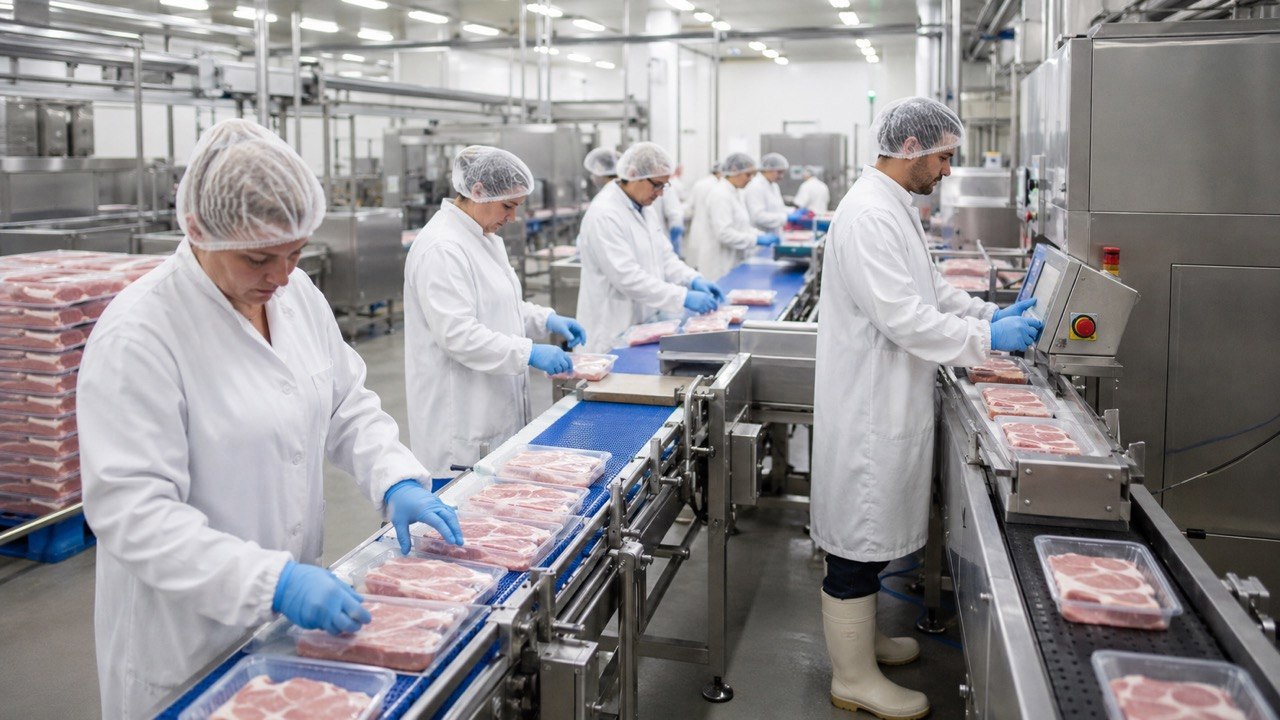
Investments in the manufacturing industry—particularly those geared toward exports—can contribute far more to productivity and wage growth than investments focused exclusively on the domestic market, noted economic expert Stas Madan during the program "Spațiul Public" on Radio Moldova.
Currently, approximately 60% of the stock of foreign direct investment in the Republic of Moldova is concentrated in the financial and trade sectors, while the manufacturing industry attracts only 18%.
In the expert's view, this structure should gradually shift so that the economy can benefit from greater technology, innovation, and value-added production.
"Agri-food processing, certainly. Within the industrial sector, electronics—for instance—would be a strong candidate, especially given that nations everywhere are increasingly turning their attention to this field. We aren't starting from scratch here, either; we have a certain tradition to build upon. Then there is the IT sector, though we face a major challenge there: we must invest in a way that preserves our competitiveness and allows us to sell more—moving beyond the current model of selling 'man-days,'" stated Stas Madan.
From the investors' perspective, infrastructure development remains one of the essential conditions for attracting capital. Access to roads, utility networks, and other connections necessary for economic activity can decisively influence the choice of a location for an investment, states Nicolae Balaur, president of the Union of Real Estate Agencies. He believes that the state should prioritize infrastructure development—both within the country and along the routes connecting to the European Union and Ukraine.
"The point is that many logistics centers will be established here, which will directly support business operations. However, investors looking to enter the market—including those involved in construction materials, reconstruction, and similar sectors—require access. We live in a fast-paced world; artificial intelligence is disrupting many companies. We are in a period of radical change regarding the current landscape. Right now, speed is crucial, and access routes are vital for investments," Balaur said.
According to Mihai Burunciuc, Deputy Director of the Investment Agency, key strategic sectors include the automotive industry, electronics, the production of construction materials, the textile, chemical, and pharmaceutical industries, as well as agri-food processing, the IT sector, business services, and renewable energy.
A major obstacle for investors remains the lack of predictability and the length of administrative procedures. Mihai Burunciuc noted that there is currently a draft law on strategic investments—already passed in the first reading by Parliament—which aims to establish clear rules to facilitate such projects. "An investment will be considered strategic if its value exceeds 10 million euros. What incentives will be provided? First, the simplification of administrative procedures and the process for obtaining certain permits. Second, land-related incentives. For investments exceeding 20 million euros, a land lease agreement for a term of up to 49 years will be provided. For projects worth over 40 million euros, a direct contract will be concluded between the entrepreneur and the Government, outlining the responsibilities of each party; this ensures that the investor has the certainty that their project in the Republic of Moldova is fully secure and predictable," explained Burunciuc on the national radio station.
In the first nine months of 2026, the Investment Agency helped facilitate 16 projects that could generate investments of over 40 million euros and at least 400 jobs during the 2026–2027 period.
Last year, the institution reported 17 investment projects totalling approximately 41 million dollars, which created 253 jobs.