Moldova adopts 2027 tax policy with higher levies on business
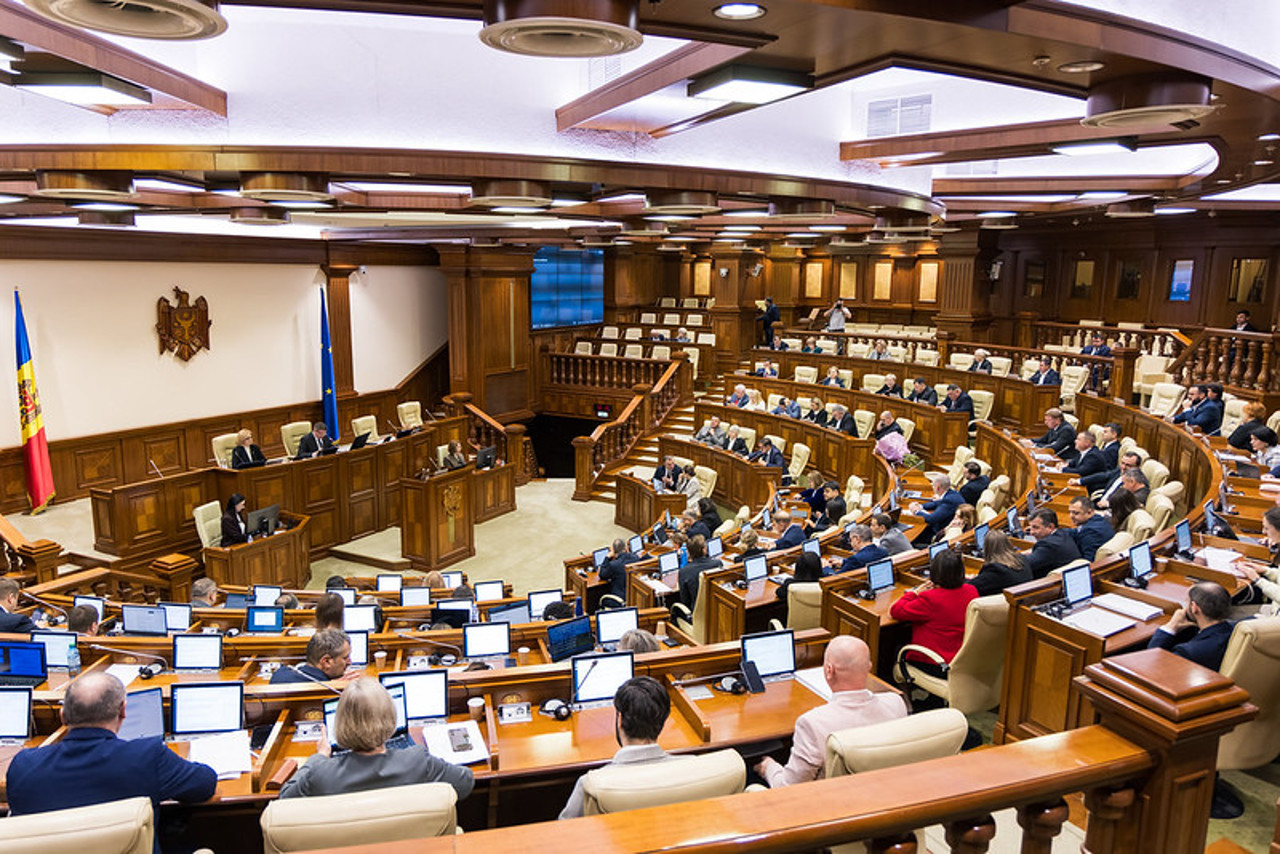
Moldova’s parliament passed the country’s 2027 fiscal and customs policy on October 22, raising taxes on hospitality businesses, dividends and several consumer goods while introducing VAT relief on household energy consumption.
Higher taxes for businesses and consumers
The package is expected to generate an additional €253.1 million (approximately 5.1 billion Moldovan lei) in public revenue, according to the Ministry of Finance. Most measures will take effect on January 1, 2027, while some provisions have separate implementation dates.
The hospitality sector, including restaurants, hotels and catering services, will see its reduced value-added tax (VAT) rate rise from 8% to 12%. The tax on dividends will increase from 6% to 8%, while financial and insurance activities will be subject to an 18% income tax rate, up from the previous general rate of 12%.
The policy also introduces new excise duties on nicotine-free liquids, energy drinks, certain sugar-sweetened or sweetened non-alcoholic beverages, and pyrotechnic products. Excise duties on tobacco products and diesel fuel will increase by 20% in 2027, while rates for most other excisable goods will rise by 10%.
A new 0.8% property tax will apply to high-value residential real estate exceeding 4 million lei (approximately €198,500). The rate will apply to the value above that threshold, according to the policy provisions described by the authorities.
Households to receive tax relief on energy
From April 1, 2027, the first 150 kilowatt-hours (kWh) of electricity consumed each month at each household consumption point will be subject to zero-rated VAT. Consumption above that threshold will be taxed at the standard 20% rate.
Household natural gas consumption will benefit from a reduced 8% VAT rate for the first 150 cubic metres per month. Consumption above that limit will be subject to the standard rate.
The package also increases personal income tax allowances. The standard annual personal allowance will rise from 29,700 lei to 40,020 lei (approximately €1,986), while the allowance for each dependent will increase from 9,900 lei to 11,040 lei.
Higher personal allowances of up to 46,680 lei will apply to certain categories, including people with disabilities dating from childhood and people affected by combat operations or the Chernobyl nuclear disaster.
Capital gains will be taxed at 12%, while the rules governing tax relief on the sale of a primary residence will also be revised.
Online parcels and agricultural products
From November 1, 2026, imported parcels valued at up to €150 will be subject to 20% VAT and a fixed fee of 12 lei (approximately €0.60) per parcel. The measure removes the previous exemption for these low-value consignments.
The policy retains an 8% VAT rate for grain products until the end of 2027, reversing the government’s earlier proposal to raise it to 12%. Basic food products, including bread, milk, eggs, fresh fruit and vegetables, will also retain the reduced 8% rate, according to the source text.
Other agricultural products, including livestock, crop production and horticultural products, are listed among the categories subject to a 12% VAT rate. The precise scope of these categories should be checked against the final legislation, particularly where the treatment of fresh produce overlaps with the reduced rate for basic foodstuffs.
Gambling operators face two levies
The policy introduces a 6% levy linked to deposits into gambling accounts and the sale of lottery tickets. It also provides for a separate tax of 25% on gambling operators’ gross revenue, according to the government’s presentation of the measures.
The two charges have different tax bases and should not be interpreted as a single 31% tax on the same amount.
Opposition amendments rejected
Opposition lawmakers submitted dozens of amendments before the final vote, proposing additional taxes on banks and energy companies, larger tax allowances for families and further relief for farmers. The parliamentary majority rejected the proposals.
Socialist MP Petru Burduja proposed a special 25% tax on commercial banks, arguing that banks had accumulated profits of nearly 19 billion lei over five years while poverty continued to affect a significant share of the population.
He also proposed a 25% tax on electricity and natural gas suppliers, saying the additional revenue could help reduce costs for consumers. Other proposals included giving domestically manufactured products a price-evaluation advantage of up to 15% in public procurement contracts worth up to 2 million lei.
Burduja also sought to retain a 7% tax rate for family farms and allow companies to recover VAT owed by the state for more than three years. None of his eight proposals received enough votes.
Alternative Bloc MP Liliana Iaconi proposed larger tax allowances for spouses, children and people with severe disabilities. She argued that the allowances should reflect inflation and household expenses.
“This amendment is intended to support families and socially vulnerable groups,” Iaconi said.
Her proposal received 22 votes and was rejected. She also sought a VAT-free electricity allowance of 200 kWh for households that rely exclusively on electricity for cooking, rather than the 150 kWh threshold in the policy. She said the measure would benefit approximately 47,000 families.
Iaconi further proposed removing excise duties on bottled sweetened drinks, retaining local tax exemptions for funeral services and preserving tax incentives for private schools. She cited 25 private schools with around 9,000 pupils and 900 teachers, arguing that transferring those pupils to public schools would cost the state approximately 600 million lei annually. Her amendments were also rejected.
MP Ion Chicu proposed raising the income tax rate for banks to 24%, rather than the 18% included in the package. He argued that the tax treatment of banks and dividend income should be more equitable.
Opposition lawmakers also sought to limit the annual increase in diesel excise duties to 10%, instead of 20%, citing potential pressure on farmers and transport operators. Another proposal would have exempted companies from paying VAT on advances for supplies not yet delivered. These amendments were rejected.
Parliamentary lawmakers submitted approximately 70 amendments before the second-reading vote. Business representatives and other stakeholders proposed more than 100 changes during the broader consultation process, some of which were incorporated into the package.
Government expects €253 million in additional revenue
The Ministry of Finance estimates that the policy will generate approximately 5.1 billion lei in additional public revenue. About 820 million lei is expected to come from income tax and the gambling levy, 1.6 billion lei from VAT, and 2.7 billion lei from excise duties.
The government approved the fiscal and customs policy on September 8, and Parliament passed it in the first reading on September 10 with 54 votes from the 95 lawmakers present, according to the source text.
Most provisions are scheduled to take effect on January 1, 2027. The household electricity and natural gas VAT measures will begin on April 1, 2027, while the separate start date for parcel taxation is November 1, 2026, as stated in the source article.
Translation by Iurie Tataru
RELATED COVERAGE