Moldova faces EU reform test as Hungary delays accession talks
Moldova is stepping up efforts to join the European Union, but weak implementation of reforms and Hungary's opposition to further accession steps are complicating its progress, while security ties with Ukraine remain crucial.
Passing laws is not enough
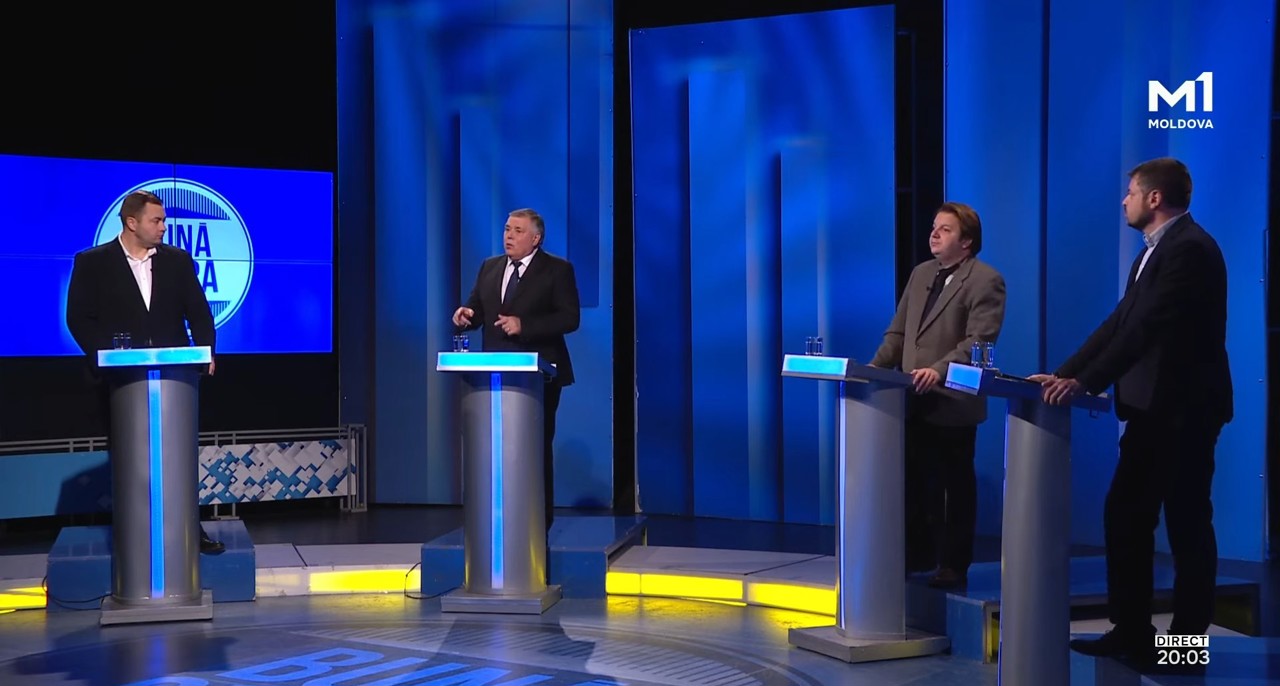
Moldova is ready to open the remaining two negotiation clusters, but the decision ultimately depends on agreement among EU member states, Adrian Băluțel, a lawmaker from the ruling Party of Action and Solidarity (PAS), said on Moldova 1's Bună seara programme.
“We are fully prepared to open the remaining two negotiation clusters, but this no longer depends on us. It depends on a European consensus, which we hope will be reached by the end of this year,” Băluțel said, adding that the government was mobilising its diplomatic resources to secure progress.
However, Moldova's European integration faces a challenge at home as well: the gap between legislation adopted to meet EU requirements and its implementation in practice.
Former ambassador and lawmaker Iurie Reniță said Moldova had made undeniable progress, but warned that legislative alignment was increasingly outpacing the implementation of EU rules, known as the EU acquis.
“If we focus primarily on legislation, the most important issue remains implementation. This is where we need to make progress. The government and parliament must monitor adopted laws more closely,” Reniță said.
Public policy expert Andrei Curăraru, from the Watchdog community, said the European Commission's assessment expected on October 28 would provide a clearer picture of Moldova's actual progress.
“We are running an obstacle marathon at sprinting speed,” Curăraru said, warning that the rapid adoption of legislation, often without consultations, raised questions about the quality and sustainability of reforms.
He acknowledged that the government faced pressure to move quickly while the current geopolitical opportunity remained open.
“If we fail to fulfil this historic mission by 2030, we may have to wait another generation to join the European Union,” Curăraru said, describing that outcome as a worst-case scenario amid continuing geopolitical shifts linked to the war in Ukraine.
Hungary's position complicates accession progress
Moldovan officials have sought to distinguish relations with Hungary from the broader political obstacles affecting EU enlargement.
Băluțel said Moldova had maintained good bilateral relations with Budapest and had not encountered direct objections from Hungary to its European aspirations at the bilateral level.
“We have excellent bilateral relations and have never faced objections to our European path,” he said, arguing that Ukraine's integration into the EU was also a major geopolitical investment for Moldova.
However, the bilateral relationship does not remove Hungary's ability to influence accession decisions at EU level. Moldova 1 reported in October that Hungary had blocked the next stage of accession negotiations for Moldova and Ukraine, highlighting the distinction between bilateral ties and the unanimity required for progress within the bloc.
Alexandru Bujorean, co-chair of the League of Cities and Communities (LOC), said diplomacy remained essential to overcoming the impasse.
He pointed to a bilateral memorandum signed in 2020 under which Hungary committed to supporting Moldova's European integration.
“These sensitive issues ultimately come down to negotiations and diplomacy. We have every confidence that Hungary will eventually honour its commitment,” Bujorean said.
Moldova's European path remains linked to Ukraine
Moldovan officials and experts have also rejected suggestions that Chişinău should seek to separate its accession process from Kyiv's.
Băluțel said Moldova should concentrate on domestic reforms and demonstrating its ability to meet European standards, while leaving decisions on the accession process to the European Commission and EU member states.
“We are not talking about separating or joining the two countries' paths. We are talking about Moldova's ability to align with European standards,” he said.
Reniță said the process would increasingly depend on practical achievements rather than political decisions shaped by international circumstances.
“From now on, we are moving towards the practical implementation of the 33 negotiation chapters,” he said, arguing that each candidate country would need to demonstrate its own capacity to implement EU requirements.
He added that Moldova and Ukraine should continue supporting each other, particularly on security matters.
Curăraru said the two countries could not be separated geographically or strategically, pointing to Ukraine's role in protecting Moldova from regional security threats.
“For us, European integration is a security project as well as a prosperity project. Geographically, we cannot decouple from Ukraine,” he said.
He argued that Ukraine's air defences also contribute to Moldova's security by intercepting drones that might otherwise pose a greater threat to Moldovan territory.
Curăraru said calls to separate the two countries' European paths risked creating artificial tensions between Chişinău and Kyiv.
The central challenge for Moldova, he added, is to turn legislative commitments into tangible reforms while maintaining the regional cooperation needed to safeguard its European future.
Translation by Iurie Tataru
RELATED COVERAGE
- Hungary has blocked the final two reform clusters for Moldova and Ukraine's accession negotiations
- Ukrainian Ambassador on EU accession obstacles for Moldova and Ukraine: “No one can forbid a people from shaping its future”
- Joint declaration supports Moldova and Ukraine's European integration
- Hungary lifts Ukraine EU veto, opening path for Moldova