Nosatîi on opposition's criticism of the Ukraine military deal: They serve Moscow's interests; all threats come from Russia
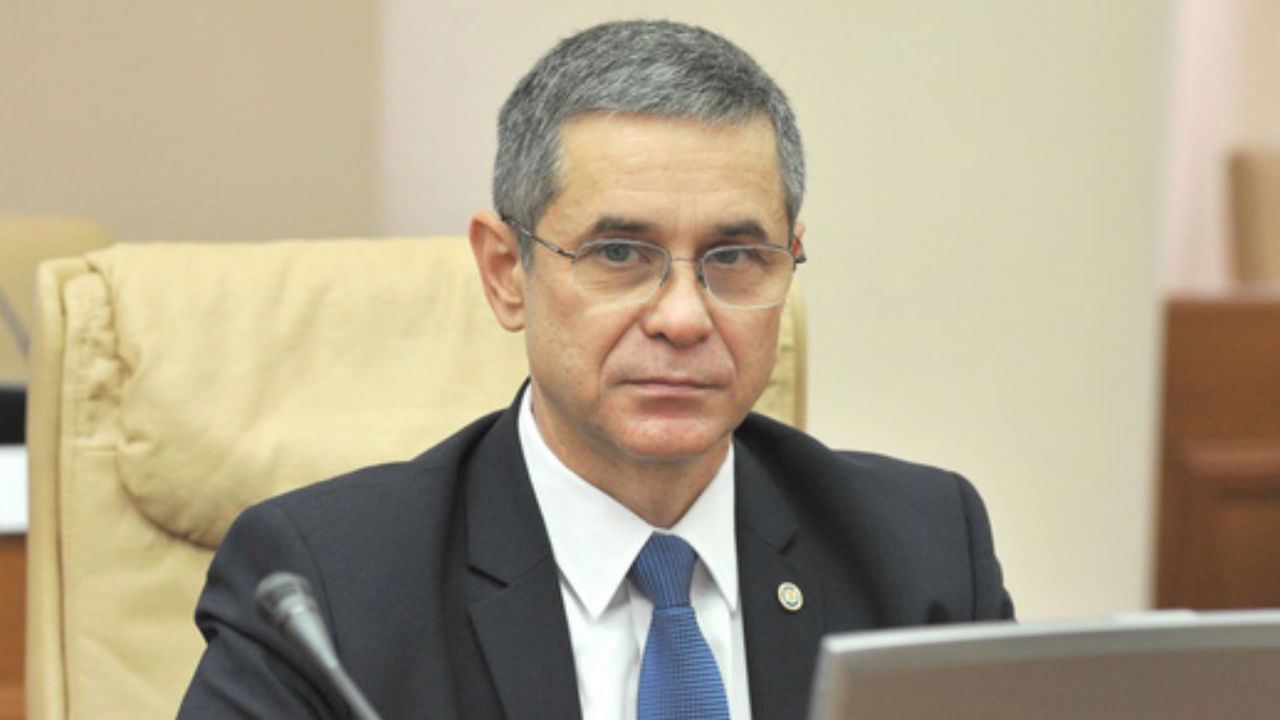
Minister of Defense Anatolie Nosatîi rejects the opposition's criticism regarding the technical-military cooperation agreement between the Republic of Moldova and Ukraine, accusing the opposition of playing into Moscow's hands. The official maintains that the document aims to strengthen the Republic of Moldova's defense capabilities—particularly in light of the threats posed by the war in Ukraine—and dismisses allegations that the agreement violates the Constitution or entails providing direct military assistance to a country engaged in an armed conflict.
"It is in the nature of the opposition to oppose everything that is done well for the Republic of Moldova—promoting the agenda of the Russian Federation and wishing for our country to remain a powerless state, incapable of meeting security requirements in the interest of its citizens," stated Anatolie Nosatîi following the Government meeting on October 28.
To counter the opposition’s "disinformation" and "falsehoods," the Minister noted that the Ministry of Defence has concluded over 120 military-related treaties with partner states, covering various areas of cooperation, including training, logistics, military medicine, and cybersecurity.
He said technical-military cooperation is outlined in framework agreements, while some states also have additional, more detailed arrangements.
In this context, Nosatîi pointed out that the Republic of Moldova has had military cooperation agreements in place with Belarus since 1995, with the Russian Federation since 1997, and with Turkey since 2000.
Partnership with Ukraine will help the Republic of Moldova counter Russian drones and missiles
On cooperation with Ukraine, the minister noted that the Republic of Moldova has 11 additional bilateral agreements that supplement the foundational agreement signed in 1993. These cover areas such as air defense, aviation, military topography, military medicine, military transport, logistical support for troops, and military pensions.
The new agreement on technical-military cooperation defines sectors where the two states can exchange expertise and specialized information—including the modernization and safe operation of military equipment and weaponry, the development of communication systems, the training of specialists, the protection of critical infrastructure, and the strengthening of cyber defense capabilities.
"Under this agreement—specifically Article 3—cooperation will be limited exclusively to consultation, analysis, and the exchange of technical-scientific information, specialized documentation, best practices, and professional experience. Therefore, actions taken within the framework of this agreement cannot be interpreted as providing direct military assistance to a state involved in an armed conflict. I have read out the specific provisions of the agreement to leave no room for the manipulation or disinformation of citizens," the minister stated.
Nosatîi added that the partnership with Ukraine could help the Republic of Moldova improve its defense systems, including its capacity to counter the drones and missiles used by the Russian Federation. "It is the responsibility of the Ministry of Defense and the Government to identify ways to enhance the defense capabilities of the Republic of Moldova. Currently, the best expertise and the most effective solutions for countering the new types of missiles and drones employed by the Russian Federation—which, regrettably, fly through the Republic of Moldova’s airspace, endangering the lives of its citizens—can only be obtained from the Ukrainians; they are the ones testing these systems daily and using them to protect their own citizens and critical infrastructure," the official explained.
The Minister emphasized that the experience Ukraine has gained during the war could prove extremely valuable for strengthening the security of the Republic of Moldova. He added that the threats facing the country are direct consequences of the war launched by Russia against Ukraine.
"Were it not for this unjustified and unprovoked war in Ukraine, we would not be seeing drones in the Republic of Moldova today. All these threats and dangers originate from the Russian Federation; furthermore, they are amplified and promoted here by individuals who travel to Russia, support Russian policy, and employ falsehoods and narratives to divide our society and hinder support for projects aimed at modernizing the National Army," noted Anatolie Nosatîi.
The full text of the agreement will be made public
According to the minister, the Ministry of Foreign Affairs will receive the document, after which the Ministry of Defence will initiate its ratification in Parliament; the full text will then become available to the public.
"The document will be received by the Ministry of Foreign Affairs, serving as the basis for the Ministry of Defence to pursue its ratification by Parliament. At that point, the full text will be accessible to the entire society—including those who are spreading the false claim that this treaty is secret. Once ratified, the agreement will be posted on the Parliament’s website and will enter into force in accordance with the provisions applicable to international treaties," the minister stated.
Regarding the potential conclusion of a defense cooperation agreement between the Republic of Moldova and Romania, Anatolie Nosatîi stated that he had discussed with Romanian partners the identification of equipment and tools necessary to strengthen the country's defense capabilities.
"As Minister of Defence, I have held discussions—notably in Romania, but also in many other countries—about acquiring the systems and tools needed to protect the Republic of Moldova across all domains. This goes beyond just drones and anti-drone systems; it encompasses everything required to make the Republic of Moldova more resilient and better equipped to respond to military-related challenges and threats," the minister declared at the Government headquarters.
Republic of Moldova also discusses access to the European SAFE mechanism
Regarding the possibility for the Republic of Moldova to benefit from the European SAFE mechanism—designed to strengthen defense capabilities—Nosatîi stated that the authorities are in discussions with partners to identify ways to participate.
The Minister noted that although the Republic of Moldova is not an EU member state, it could access funding through this instrument, provided a participating country agrees to its involvement.
Such an opportunity could facilitate access to defense products and equipment under more favorable financial terms than those available through independent procurement.
"We are in discussions with our partners. Once we make progress in this area, we will make the information public," stated Anatolie Nosatîi.
SAFE is a European Union instrument that makes loans of up to 150 billion euros available to member states for defense investments and the joint procurement of military equipment. The Republic of Moldova's participation will depend on the applicable conditions and the agreements reached with partner states. Moreover, Prime Ministers Vasile Tofan and Luca-Alexandru Niculescu announced in Chișinău on October 27 that the Republic of Moldova and Romania are exploring the expansion of defense cooperation through the joint production of anti-drone systems—projects that could also be financed via the European SAFE program.
We remind you that the technical-military cooperation agreement between the Republic of Moldova and Ukraine was signed in Kyiv on October 26 by Minister of Defense Anatolie Nosatîi and his Ukrainian counterpart, Yevhenii Khmara. The agreement aims to leverage Ukraine’s practical experience and provide access to technologies and solutions that have already been tested—including those for monitoring airspace and managing aerial threats.
"The agreement will allow us to draw upon the practical experience of our Ukrainian partners, as well as access modern technologies and proven solutions—including in the areas of airspace monitoring and the management of aerial threats," stated Anatolie Nosatîi following the signing of the document.
Subsequently, Prime Minister Vasile Tofan said that the technical-military cooperation agreement with Ukraine does not constitute a military assistance treaty and does not conflict with the Republic of Moldova’s status of neutrality. According to the head of government, the agreement will enable the country to acquire modern air defense technologies—such as drone interceptors—that have been tested under actual wartime conditions.
"Neutrality does not mean remaining helpless or being indifferent to one’s own defense. Ukraine is fighting every day and testing new technologies daily—not in laboratories, but on the battlefield. As a nation with limited resources, we want to ensure that we acquire technologies that are both proven and cost-effective," Vasile Tofan stated on October 27. Prime Minister Tofan further stated that the authorities are in discussions with their Romanian partners regarding the expansion of cooperation in the fields of security and defense, including within the framework of the European SAFE program, which aims to strengthen the defense capabilities of participating states.