Poland’s court crisis deepens ahead of judges’ assembly
Poland’s Constitutional Tribunal faces a fresh test on Tuesday as judges meet amid a dispute over its leadership and the status of newly elected members.
Disciplinary proceedings against Tribunal leaders
Poland’s Constitutional Tribunal judges are due to meet on Tuesday, November 3, amid a deepening dispute between Prime Minister Donald Tusk’s government and President Karol Nawrocki over control of the institution.
The agenda is expected to include a proposal for a random draw to select judges who would hear disciplinary cases against suspended Tribunal President Bogdan Święczkowski and Vice-President Bartłomiej Sochański.
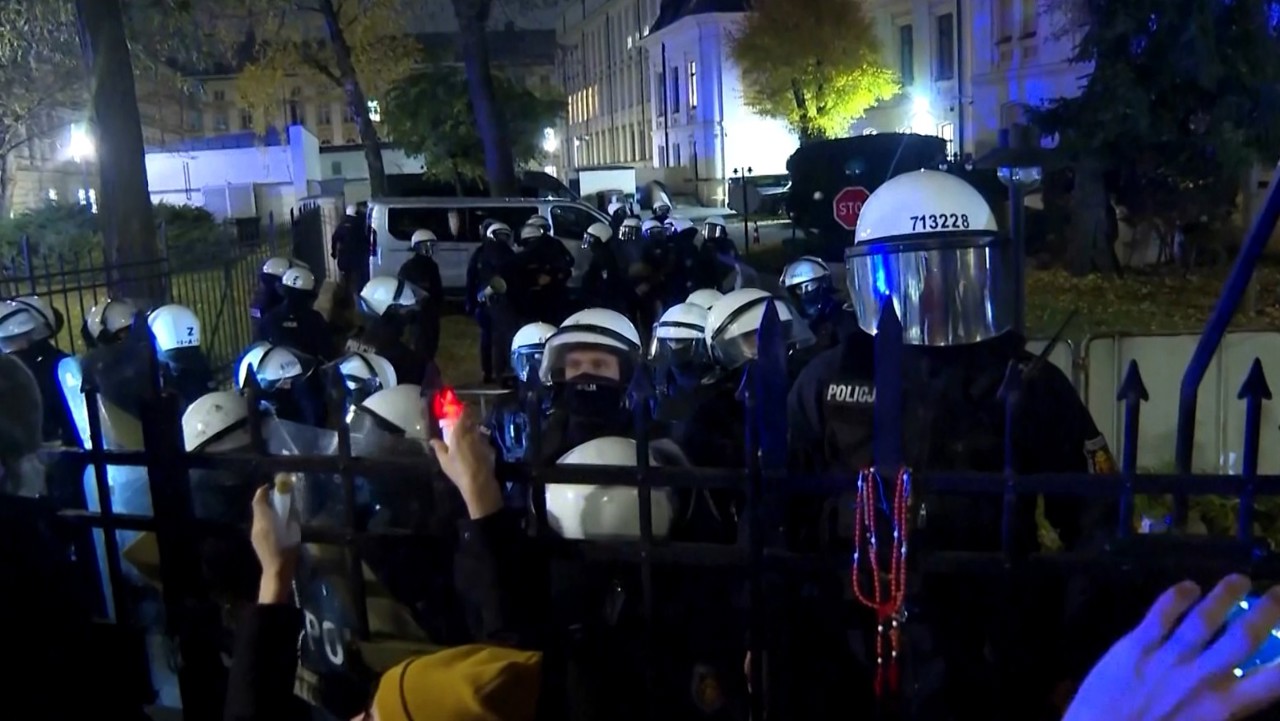
The meeting comes amid growing tensions surrounding the Tribunal, whose headquarters have been guarded by law enforcement officers since Friday evening.
Several judges elected by the current parliamentary majority have suspended the institution’s leadership, which was appointed under the previous government, now in opposition. Anna Korwin-Piotrowska, the longest-serving judge, has assumed responsibility for overseeing the Tribunal.
Święczkowski has rejected the move, questioning the authority of the newly appointed leadership.
“Any decisions taken by Ms Piotrowska and these usurpers at their meeting will be binding neither on the President, nor on the Tribunal’s judges, nor on you, the citizens of the Republic of Poland,” the suspended Tribunal president said.
Dispute over judicial appointments
The conflict erupted after President Nawrocki refused to receive the oaths of judges elected by the parliamentary majority. The judges subsequently took their oaths in parliament, but the Tribunal’s existing leadership refused to recognise their status.
The dispute prompted sharp criticism of the president from the Speaker of the Sejm and the foreign minister.
“The brown coalition is fighting for power, not values. Consequently, the president did what he knows best. He decided to barge in, force his way through, use physical force against a woman and shout in the corridor. Once again, it proved ineffective,” Sejm Speaker Włodzimierz Czarzasty said.
“The embarrassing footage from Saturday evening will follow him forever. It is no source of pride, either for him or for Poland, which he is supposed to represent with dignity,” he added.
Foreign Minister Radosław Sikorski also challenged the president’s position in the dispute.
“Judges of the Constitutional Tribunal are elected by the Sejm, not by the president. The president has certain ceremonial roles in the state, but this does not give him the authority to govern Poland. The president can, at his own discretion, award someone a decoration, grant Polish citizenship or issue a pardon,” Sikorski said.
Concerns over judicial independence
Donald Tusk’s government says it is seeking to restore the Constitutional Tribunal’s independence following years of criticism from the European Union over political influence on Poland’s judiciary.
The presidential camp, however, disputes the parliamentary majority’s attempts to change the institution’s composition. Legal experts warn that actions by both sides risk deepening political polarisation and undermining public confidence in the justice system.
“I am not very optimistic about restoring the rule of law, because a large part of society will perceive this move as a forced takeover of power, essentially a political act. Both the president and Donald Tusk seem more concerned with deepening polarisation than with effectively restoring the rule of law,” said Krzysztof Izdebski, a legal expert at the Stefan Batory Foundation.
Translation by Iurie Tataru
RELATED COVERAGE