Moldovan unions challenge plans to ease employee dismissals
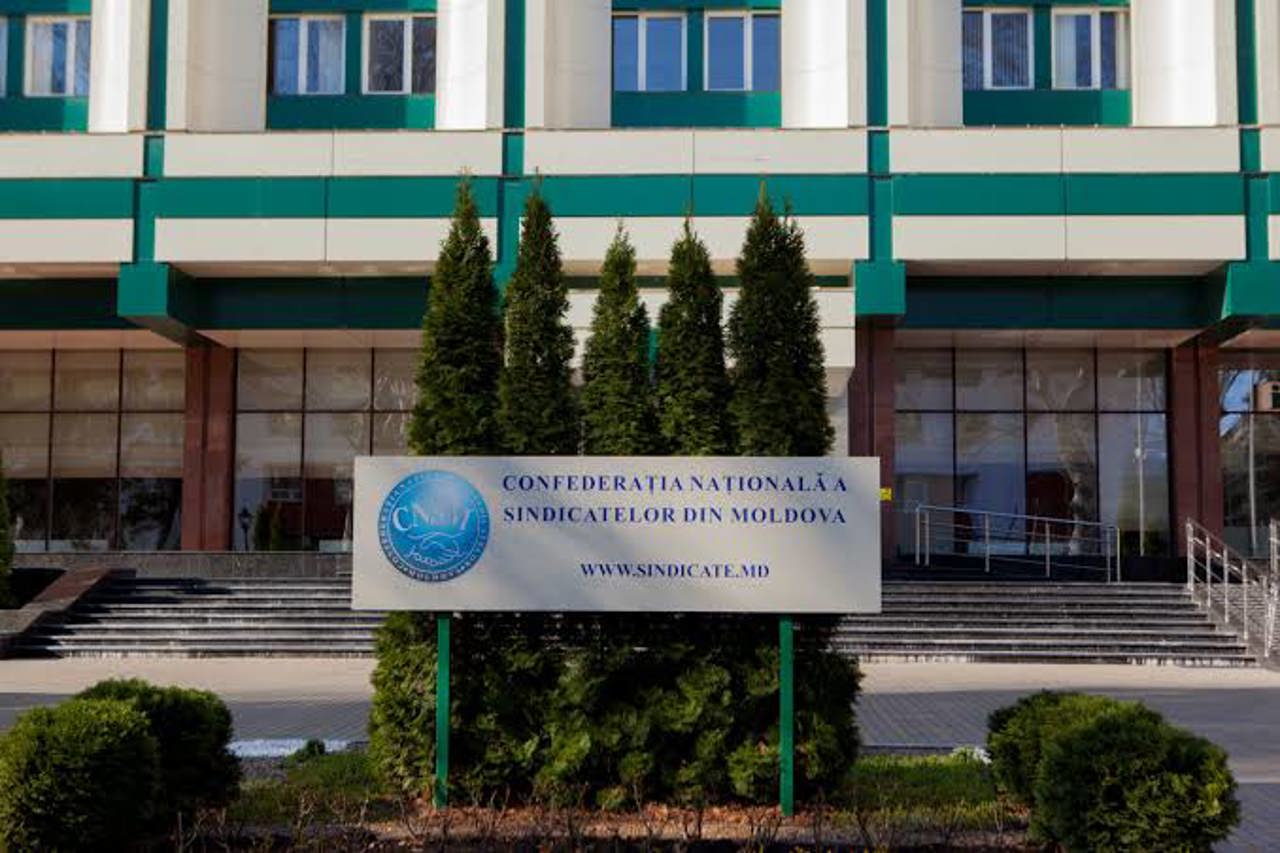
Moldova's National Confederation of Trade Unions warned on November 6 that government plans to ease employee dismissals must not weaken legal protections and called for consultations before any Labour Code amendments.
Unions demand transparency and consultation
The National Confederation of Trade Unions of Moldova (CNSM) said it had not been informed about the Government's plans to amend the Labour Code, despite Prime Minister Vasile Tofan announcing that work on the changes was already underway.
The confederation said employee representatives should have been involved from the earliest stages of drafting the proposed amendments.
"What surprises us is that the Prime Minister says the Government is already working on such amendments, while the CNSM has not been informed that any such process has been initiated. We are unaware of any reasons or arguments justifying such a major approach, let alone the specific proposals that are to be put forward," the confederation said in a public statement.
The trade unions said they supported modernising labour legislation and improving the efficiency of public institutions. However, they argued that these objectives should not come at the expense of employees' rights.
Dismissal procedures are safeguards, unions say
"Legal dismissal procedures must not be portrayed as obstacles to economic development or good governance. They are essential safeguards against arbitrary and abusive dismissals by employers," the CNSM said.
The confederation cited the Labour Code, legislation governing social dialogue, International Labour Organization conventions ratified by Moldova and European legal instruments. These establish conditions for terminating employment and provide for employee representatives to participate in decisions affecting workers.
The CNSM also rejected the Prime Minister's argument that public institutions face difficulties dismissing staff because courts subsequently overturn such decisions.
"The fact that courts order employees to be reinstated when employers deliberately fail to comply with legal procedures cannot, in itself, justify reducing employee protections. Compliance with the law cannot be regarded as an obstacle to human resources management," the statement said.
The confederation called on the Government to disclose the substance and current stage of the proposed amendments and organise consultations with social partners. It said it would not support initiatives that restrict employees' rights.
Government seeks greater flexibility in workforce decisions
On November 5, Prime Minister Vasile Tofan announced during a TV8 interview that the Government was working on amendments to the Labour Code to make workforce decisions easier for both public institutions and private companies.
Tofan argued that the current legislation makes dismissals excessively difficult, exposing public institutions to the risk of court-ordered reinstatements when employers fail to follow all the required procedures.
"We have a Labour Code that is so outdated and so restrictive that, when it comes to making decisions, we will try to change things, only to create an even bigger problem," Tofan said.
The Prime Minister also said that ministries and government agencies had been instructed to reduce spending and staff by between 10% and 30%, depending on the institution. Some public bodies are also expected to merge as part of the restructuring.
The measures form part of the Government's efforts to narrow the budget deficit, which Tofan estimates at around 6% of GDP in 2026. The Government aims to bring it below 5% in 2027 and under 4% in 2028.
Translation by Iurie Tataru
RELATED COVERAGE
- Wage arrears and job insecurity top employee complaints in the Republic of Moldova
- Moldova trade unions protest for better wages and conditions
- Moldovan teachers protest in Chisinau over frozen September pay rises
- Moldova minimum wage still below poverty line
- CNSM and CNPM push for 6,000 lei minimum wage in Moldova