Moldova could join EU by 2030 despite unresolved conflict
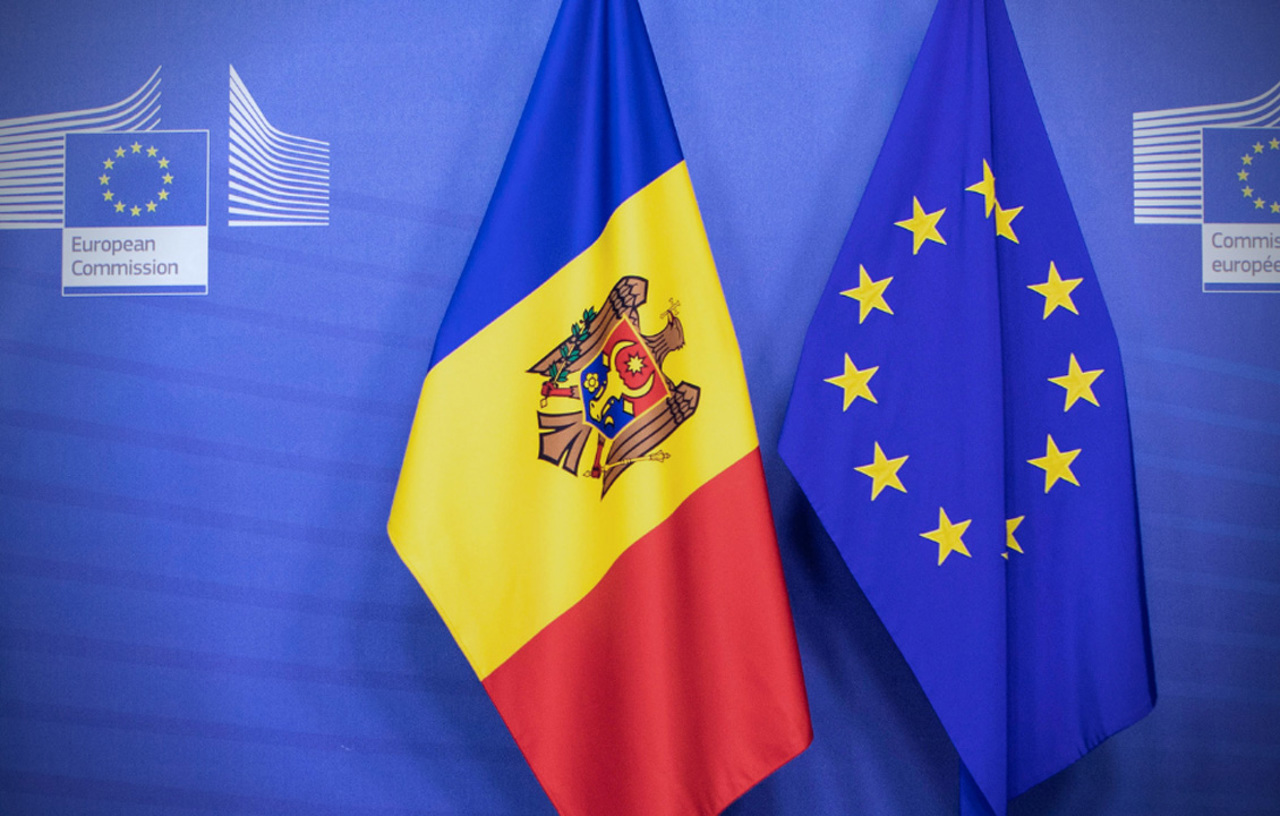
Moldova could join the European Union by 2030 without first resolving the conflict on the Dniester’s left bank, Foreign Minister Mihai Popșoi said in a TVR Info interview on Friday.
No Russian veto over EU accession
Popșoi said Moldova could follow the example of Cyprus, which joined the EU despite its unresolved territorial division. However, he cautioned that Chisinau could not rely entirely on that precedent.
The minister said European partners had not made a direct link between resolving the conflict and Moldova’s EU accession.
“If such a condition were imposed, we would give the Russian Federation enormous leverage, almost a veto, over our EU accession process,” Popșoi said.
The government is also pursuing closer economic ties between the two banks of the Dniester. In September, parliament passed legislation aimed at aligning tax rules on both sides of the river, the minister said.
More than 70% of exports from the left-bank region go to the European Union, compared with approximately 65–67% for the rest of Moldova, according to Popșoi.
“The left-bank region of the Republic of Moldova is more closely anchored in the European market than the rest of the country. Its economic elites know where the future lies and where the real prospects are,” he said.
Moldova considers 2030 accession target realistic
Popșoi said Moldova remained on track to achieve its EU membership objective by 2030, pointing to faster reforms and progress in aligning national legislation with the EU acquis.
He said the relationship with the European Commission had changed as Moldova strengthened its institutional capacity. Whereas Brussels previously urged Chisinau to accelerate reforms, Moldovan authorities are now pressing EU officials to provide faster feedback on draft legislation submitted for assessment.
“We have reached a point where we have to remind our colleagues in Brussels to respond more quickly to the draft laws we submit for feedback. This demonstrates our increased capacity and clear political determination,” the deputy prime minister said.
Popșoi addresses prospects for union with Romania
The foreign minister also discussed the possibility of unification with Romania, saying such a decision would require a democratic process and broad public support on both banks of the Prut River.
He acknowledged that current opinion polls do not show a majority in Moldova supporting unification, although he said the idea enjoys a degree of openness within society.
Popșoi argued that practical infrastructure and energy projects were already bringing the two countries closer together.
He cited the planned extension of the Union Highway to Ungheni, new bridges across the Prut and energy interconnection projects as examples of growing cooperation.
The minister said discussions about unification remained relevant given the current security environment but must respect the will of citizens.
An unresolved conflict and Russian military presence
The left-bank region remains outside the constitutional control of Moldova's authorities and continues to host Russian troops and ammunition depots.
Negotiations over the conflict have largely stalled in recent years. The 5+2 format has effectively ceased functioning following Russia's full-scale invasion of Ukraine, leaving direct 1+1 contacts between Chisinau and Tiraspol as the main negotiation channel.
Moldovan authorities have increasingly pursued gradual economic integration of the region, including the application of national trade and tax regulations to companies operating on the left bank and exporting to the European market.
Moldovan officials have repeatedly argued that resolving the conflict should not be a prerequisite for EU membership.
During her visit to Chisinau in May 2026, EU foreign policy chief Kaja Kallas also said the unresolved conflict would not obstruct Moldova's European future.
Translation by Iurie Tataru
RELATED COVERAGE
- EU accession could happen before the Transnistrian conflict is resolved: Kaja Kallas’ message in Chisinau
- EU path boosts Transnistrian settlement; no conditions from Brussels, Chiveri
- Moldova could join the EU before reintegrating the Transnistrian region, authorities and experts
- Moldova to pursue EU integration and Transnistrian settlement as separate tracks to prevent external veto
- RETROSPECTIVE 2025: Energy crisis and Moldova’s new reintegration strategy