Russia reportedly raises Moldova federalisation in security talks
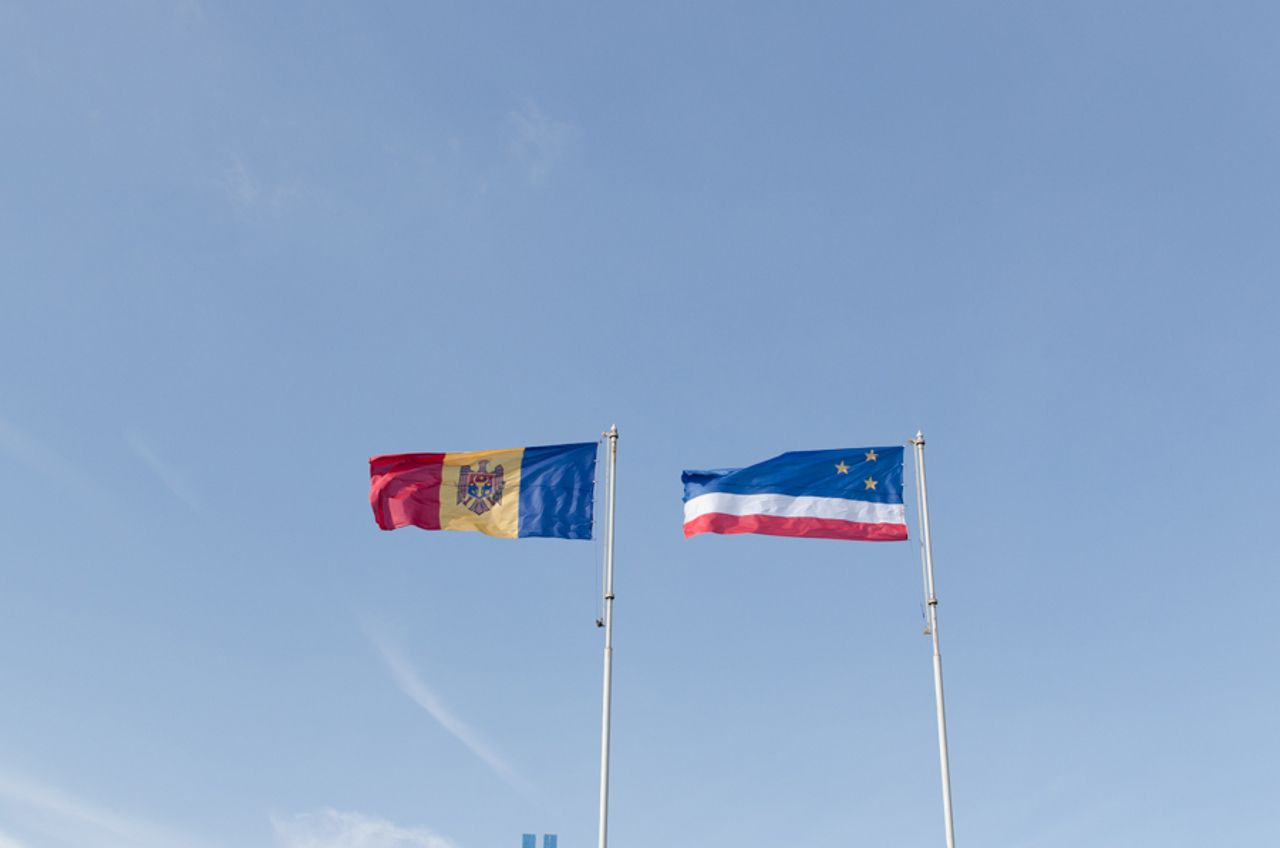
Russia is reportedly seeking to make Moldova’s federalisation part of wider European security talks and negotiations to end the war in Ukraine, according to Russian independent outlet Echo.
Moscow's reported demands raise concerns over Moldova's sovereignty
According to information published by Echo, citing anonymous sources, Moscow's alleged conditions include creating a federation comprising the Republic of Moldova, the Transnistrian region and Gagauzia. They would also involve holding independence referendums in the two regions if Moldova joins the European Union.
Andrei Curăraru, a public policy expert and political analyst with the WatchDog.MD community, warns that such a scenario could give Moscow significant leverage over political decision-making in Chisinau. However, he stresses that the information comes from anonymous sources and that there is no confirmation so far that the proposals have been accepted or represent the Kremlin's official position.
According to Curăraru, the reported proposal would also envisage the withdrawal of Russian troops from the Transnistrian region in exchange for Moldova committing not to join military alliances. The expert points out that Moldova has been permanently neutral since 1994, while Russia pledged to withdraw its troops from Moldovan territory at the 1999 OSCE summit in Istanbul.
“Now it is asking us to make concessions for something it has been required to do for 24 years,” the analyst noted, referring to the deadline for the withdrawal of Russian troops, which expired at the end of 2002. Russia failed to meet that commitment, and its troops remain stationed in the Transnistrian region.
Moscow's demands reportedly extend beyond Moldova
Curăraru also notes that, according to the information published by Echo, the demands attributed to Moscow would not be limited to the Republic of Moldova. They would also concern Finland's military status and the presence of NATO bases in Lithuania, Latvia and Estonia.
In the expert's view, these scenarios show that Russia is seeking a say in the security choices of neighbouring countries.
“We have no confirmation that this has been accepted or that it represents Moscow's official position. But the mere fact that such scenarios are being discussed should concern us. Especially when decisions about the future of the Republic of Moldova are being discussed at a table where Moldova has no seat,” Andrei Curăraru said.
The reports come amid renewed discussions on ending the war in Ukraine. On November 12, US President Donald Trump's special envoy Steve Witkoff told CNN that a new trilateral meeting had been agreed following his talks in Moscow with Russian President Vladimir Putin. He said European representatives could also take part in the next rounds of negotiations.
Federalisation has repeatedly resurfaced in Moldova's political history
The idea of federalising the Republic of Moldova is not new. One of the best-known proposals was the 2003 Kozak Memorandum, which envisaged transforming the country into an asymmetric federation comprising three entities: the Republic of Moldova, the Transnistrian region and Gagauzia.
The document, drafted by Dmitry Kozak, then deputy head of the Russian presidential administration, provided for a bicameral parliament in which representatives of the Transnistrian region and Gagauzia would have held significant weight. The proposed structure would have given representatives from Tiraspol the ability to influence decisions at federal level.
The memorandum also envisaged keeping Russian troops on Moldovan territory for an extended period.
Then-President Vladimir Voronin initially supported the proposal and was expected to sign it in November 2003 in the presence of Russian President Vladimir Putin. At the last minute, however, Voronin backed out amid opposition protests and discussions with Western partners. Putin's visit to Chisinau was cancelled, and the memorandum was never signed.
Voronin later acknowledged that Moldova would have lost its independence had he signed the Kozak Memorandum.
“I do not regret what I did then, and if I had the opportunity today, I would do exactly the same. (...) I saw what was written in that memorandum. It spelled out in black and white what the agreement meant, when the region was supposed to declare independence and what would be left for us. Was I supposed to be the gravedigger of our country's independence? Is that what I took office for? I could not go against my moral, human and state principles or cross that line, with all due respect to Mr Putin,” Voronin said in December 2020.
The issue resurfaced in subsequent years. In 2013, Igor Dodon, then leader of the Party of Socialists, presented his own proposal for federalising the Republic of Moldova. It envisaged a federation comprising three entities: the territory controlled by the constitutional authorities in Chisinau, the Transnistrian region and Gagauzia. Dodon argued at the time that federalisation could provide a solution for reintegrating the country.
After becoming president in 2016, Dodon continued to advocate a federal solution, arguing that the issue of the Transnistrian region could be resolved through such an arrangement. At the same time, he called for expanding Gagauzia's powers as part of a possible constitutional reform.
Translation by Iurie Tataru
RELATED COVERAGE
- US asks Russia to draft new security proposal for Europe
- US, Ukraine and Europe discuss post-war security framework
- Moldova could join EU by 2030 despite unresolved conflict
- Alexandru Munteanu: Transnistrian reintegration is “about people, not territory”
- Experts: The Transnistrian conflict is no obstacle to Moldova’s EU accession