Marta Kos: EU accession empowers those fighting corruption and defending democracy
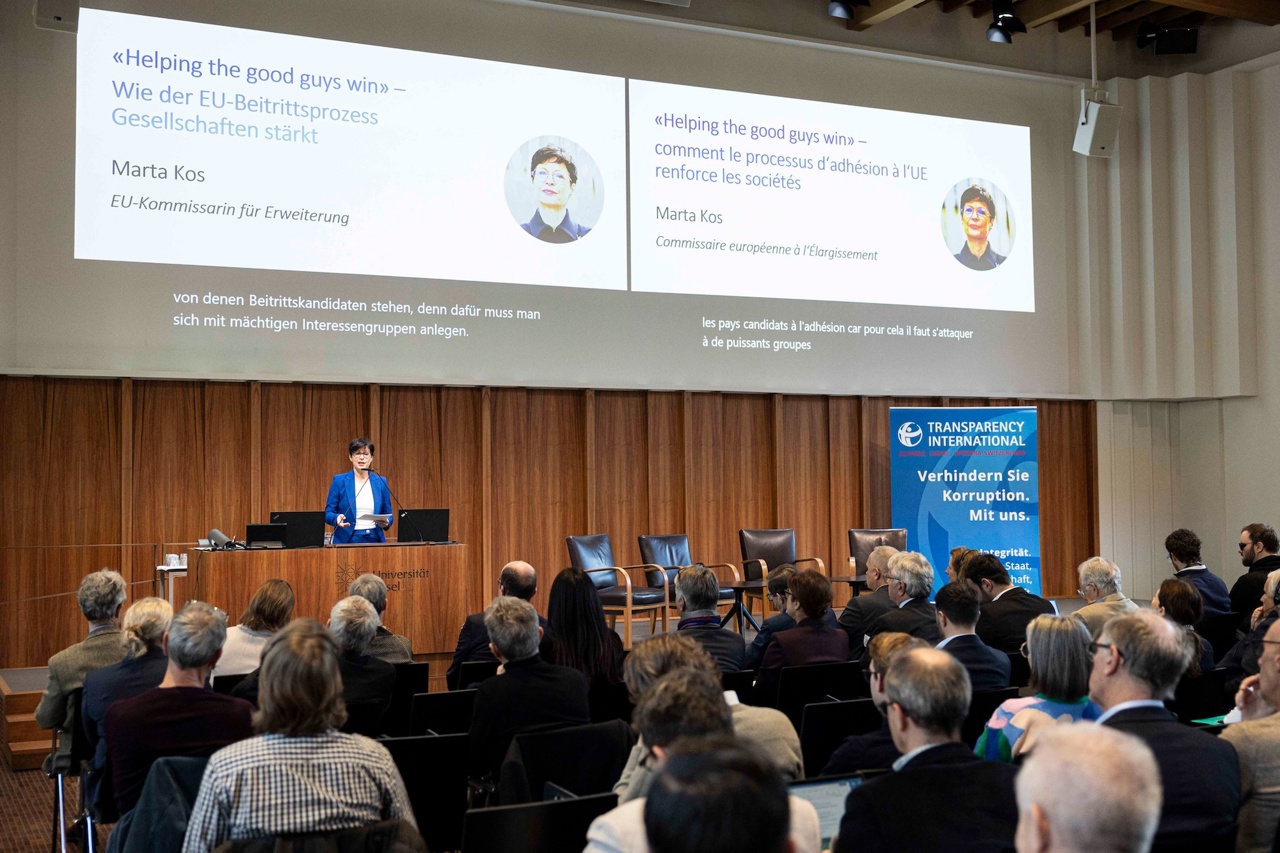
EU accession helps combat corruption and strengthen democracy in candidate countries, including the Republic of Moldova, says European Commissioner for Enlargement Marta Kos. She notes that reforms undertaken during the accession process shift the balance of power in favor of those defending the rule of law while curbing the influence of vested interest groups.
The statement was made on the occasion of Transparency International Switzerland's 30th anniversary. In a message posted on X, the European official noted that EU enlargement is not only a process of political and economic integration, but also a tool for strengthening democratic institutions.
“European Union enlargement helps the ‘good guys’ win. In every candidate country, people are fighting corruption, defending democracy, and standing up to powerful interests. Reforms for EU accession empower these individuals, shifting the balance of power,” stated Marta Kos.
According to the Commissioner, one of the accession process's most significant contributions is creating independent institutions that can function free from political or economic influence. Transparent rules and the equal application of the law must also prevent privileged groups from concentrating power.
“These reforms build independent institutions, establish transparent rules, and guarantee that no one is above the law. This is how enlargement contributes to consolidating democracies and strengthening Europe,” the European official added.
EU enlargement helps the good guys win. This was my central argument at the 30th anniversary of Transparency International Switzerland. In every candidate country, there are people fighting corruption, defending democracy and taking on powerful interests. EU accession reforms strengthen these people by changing the balance of power. They build independent institutions, establish transparent rules and make sure that nobody is above the law. This is how enlargement strengthens democracies and makes Europe stronger.
— Marta Kos (@MartaKosEU) November 13, 2026
Commissioner Kos’s message is directed at all candidate countries, including the Republic of Moldova, where judicial reform and the fight against corruption are key components of the European integration process.
The European Commissioner’s remarks follow closely the publication of the European Commission’s report on EU enlargement, which notes progress made by the Republic of Moldova in its accession process—specifically regarding judicial reform and the strengthening of the rule of law. The document indicates that the country has made headway across all 33 chapters under assessment; however, it still needs to take further measures to fight corruption and strengthen democratic institutions.
A central reform is the external evaluation of judges and prosecutors, known as "vetting." Through this mechanism, the authorities aim to verify the financial and ethical integrity of individuals within the judicial system. The European Union, however, stresses that this reform must also yield concrete results—such as effective investigations, corruption cases brought to trial, and final court rulings.