Moldova overhauls school curriculum with STEM and early coding
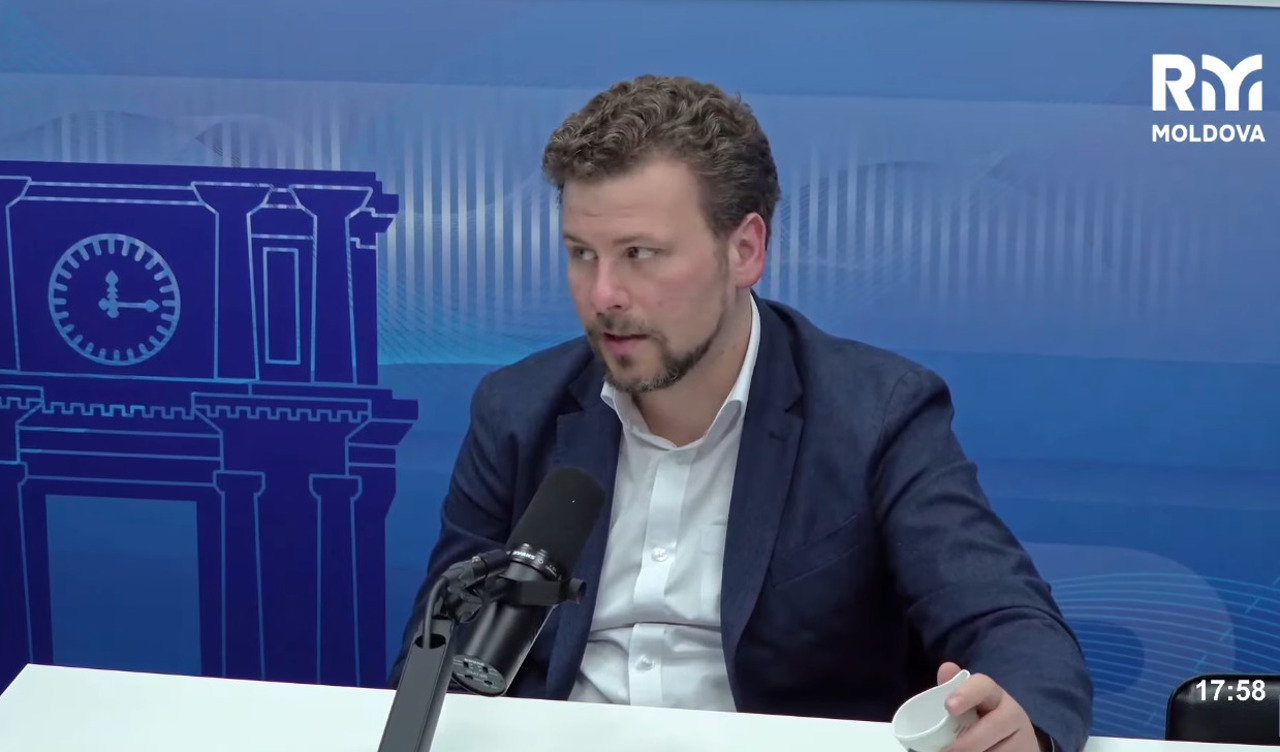
Moldova is overhauling its national school curriculum to expand science, coding, and interdisciplinary STEM classes while shifting exams from rote memorization to applied problem-solving, Education Minister Dan Perciun said on November 23.
Speaking on Radio Moldova, Perciun outlined a multi-year reform that introduces Natural Sciences in the first grade without adding extra hours to the weekly schedule. Schools will reallocate one hour from Romanian Language and Literature to introduce young pupils to basic natural phenomena, such as seasons and the day-night cycle, through play and interactive activities.
“We want these children to understand basic things about the world around them, about nature, and about how certain phenomena work,” Perciun said. “Obviously, at this age we cannot talk about formulas or very complicated things. We are talking about simple concepts taught through play and interactive activities.”
Authorities also plan to offer an optional digital Science assessment at the end of the fourth grade, leaving participation up to students and parents.
Earlier coding, AI, and robotics
Informatics will move down from the seventh grade to the fifth grade to close the gap after primary-level Digital Education ends. The revised syllabus emphasizes software creation over passive device use, starting with visual programming tools in the fifth grade before advancing to coding languages.
“We want students not to be just consumers of technology who know how to use a phone or a computer, but to understand how things work behind the scenes and be able to create products themselves,” Perciun said.
Technology Education classes will also integrate digital literacy, artificial intelligence, 3D design, drones, and robotics. Implementation will depend on school equipment and teacher training, with better-equipped institutions expected to introduce programmable cutting machines for wood and metal, and Technology teachers collaborating with Informatics staff where needed.
Mandatory STEM projects in middle school
Students in grades five through eight will take one mandatory hour of STEM per week, centered on six-month interdisciplinary projects combining mathematics, physics, technology, and entrepreneurship. As an example, Perciun cited students analyzing a school’s energy consumption, calculating efficiency costs, drafting a business plan, and building a scale model equipped with solar panels.
“This is not a subject where the teacher comes in and teaches new material, but an activity where children apply what they learn across different subjects,” Perciun said. “It is important for teachers to collaborate, share a common project, and help students see how knowledge connects.”
The Ministry of Education and Research is currently piloting the STEM model in ten schools, supported by project guides, regular teacher coordination meetings, and a shared digital platform.
PISA-aligned exams and Estonian math textbooks
National exams in Romanian Language and Literature and Mathematics will gradually incorporate applied exercises aligned with Levels 2 and 3 of the OECD’s PISA framework, shifting the format rather than raising overall difficulty. Sample items and exercise banks are scheduled for release in February, followed by teacher consultations and training.
“What is not assessed is not taught,” Perciun said. “If we want students to think, analyze, and apply knowledge, then we must ask for this in evaluations as well. We cannot tell teachers we want competencies while exams only check whether students memorized information.”
Starting in 2028, eighth-graders will also sit a mandatory two-hour integrated Science exam covering physics, chemistry, and biology, developed with specialists from Romania; students will be able to choose whether the grade is recorded in their official gradebooks. Meanwhile, Moldova has secured rights to translate and adapt Estonian mathematics textbooks for grades 1–12, with procurement launching in December and phased classroom rollout beginning in September 2027.
The curriculum overhaul supports Moldova’s national 2027–2031 skills plan, presented on November 20 with an estimated budget of €20.6 million (approx. 411.2 million MDL), roughly 70% of which will come from the state budget. Authorities aim to raise Moldova’s average PISA scores by 2029 from 404 to 440 in reading, from 410 to 440 in mathematics, and from 422 to 445 in science.
Translation by Iurie Tataru
RELATED COVERAGE