Black Sea gas could supply a quarter of Moldova’s daily needs
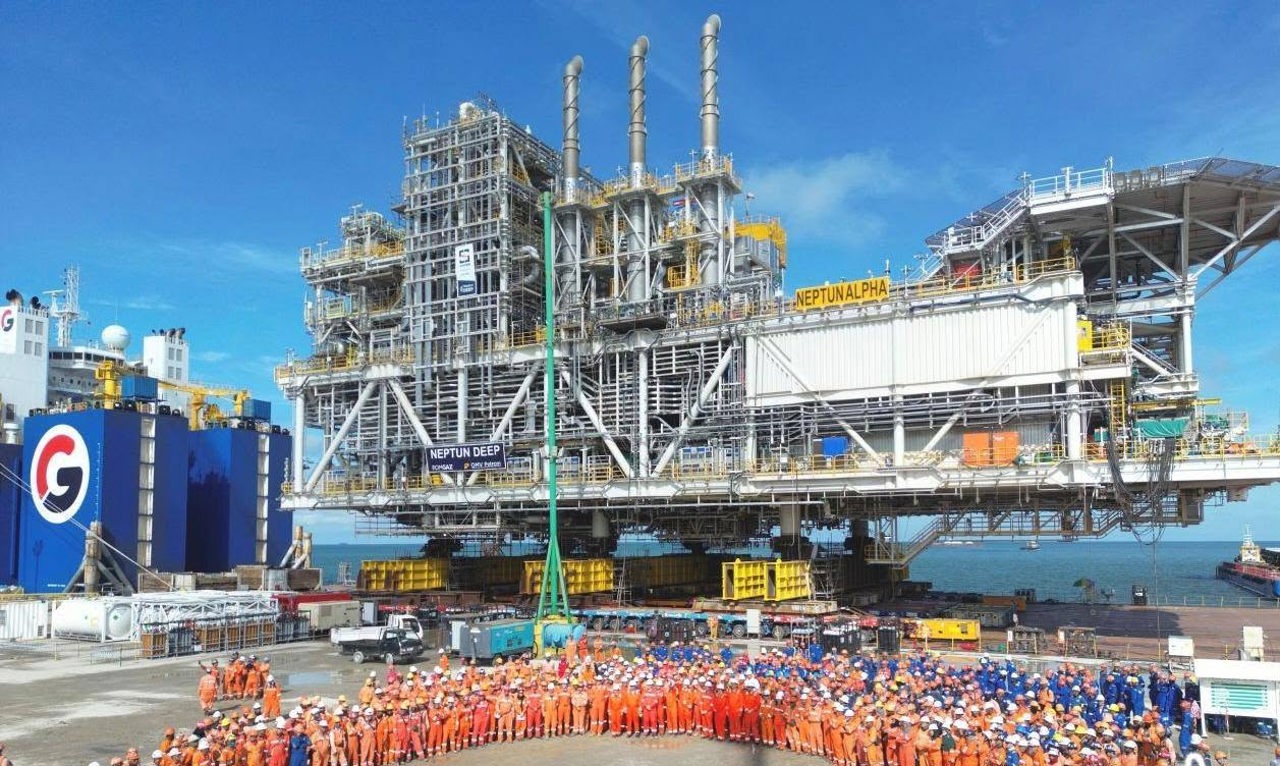
Natural gas extracted from the Black Sea through the Neptun Deep project could cover around a quarter of the Republic of Moldova’s daily consumption once commercial production begins, expected in 2027. Amid growing security risks in the Black Sea region, developing energy interconnections with Romania and diversifying supply sources are becoming increasingly important for strengthening Moldova’s energy security.
These perspectives were discussed on November 26 at the conference “Energy Security in the Black Sea and Its Impact on the Republic of Moldova,” held in Chișinău.
The Neptun Deep project, being developed in Romania, is set to begin commercial production in the second half of next year. The field holds estimated reserves of approximately 100 billion cubic meters of natural gas, with an investment totaling nearly four billion euros.
The project will contribute to the diversification of the Republic of Moldova’s supply sources, emphasized Minister of Energy Dorin Junghietu during the event.
“Once the field enters commercial operation, the Republic of Moldova will be able to cover a portion of its daily consumption—approximately one-quarter—with gas sourced from the Neptun Deep field,” stated Dorin Junghietu.
The project is in its final implementation stage, with work proceeding according to the established schedule and approved budget, noted Alexandru Maximescu, Vice President for Public Affairs at one of the companies involved in the development of Neptun Deep.
According to him, investments in regional natural gas production are significant not only for diversifying supply sources but also for reducing vulnerability to potential energy crises. "Recent crises have shown us how important it is for production to take place as close as possible to the point of consumption. Increasing gas supplies from the Black Sea and other regions in Europe will provide us with much greater resilience, enabling us to better withstand future crises," noted Alexandru Maximescu.
Beyond supply-related challenges, the security of energy infrastructure in the Black Sea is threatened by intensifying military incidents in the region. George Scutaru, Executive Director of the New Strategy Center, drew attention to attacks targeting commercial vessels, drone incursions, and the escalation of security risks near Romania’s territorial waters.
"Protecting a project of this nature is no easy task. Romania possesses the necessary determination—utilizing the resources at our disposal—to safeguard its economic interests within its exclusive economic zone, given the significant strategic value of the Neptun Deep project. We cannot do it alone. For instance, we currently have a French Atlantic 2 aircraft assisting us with surveillance missions. There are other capabilities provided by NATO as well, precisely because our partners also understand what is at stake with this project and with energy developments in the Black Sea," stated George Scutaru.
At full capacity, the Neptun Deep project is expected to yield an annual production of approximately eight billion cubic meters of natural gas. Commercial production is expected to start in the second half of 2027.
The new gas volumes could contribute to the diversification of supply sources in the region, including by leveraging the transport infrastructure that connects Greece, Bulgaria, Romania, the Republic of Moldova, and Ukraine.