Five of Ukraine's neighbours may ban domestic sales of Ukrainian grain after the European Commission extended a regulation to that effect
Five of Ukraine's neighbours may ban domestic sales of Ukrainian grain until 15 September after the European Commission extended an arrangement to do so. At the same time, the document says, lorries carrying Ukrainian grain will be allowed to transit these countries. The European Commission thus decided to give the green light to requests from Bulgaria, Hungary, Poland, Romania and Slovakia, which argue that the EU's liberalisation of all trade with Ukraine has meant flooding domestic markets with cheaper Ukrainian grain, making domestic production unprofitable.
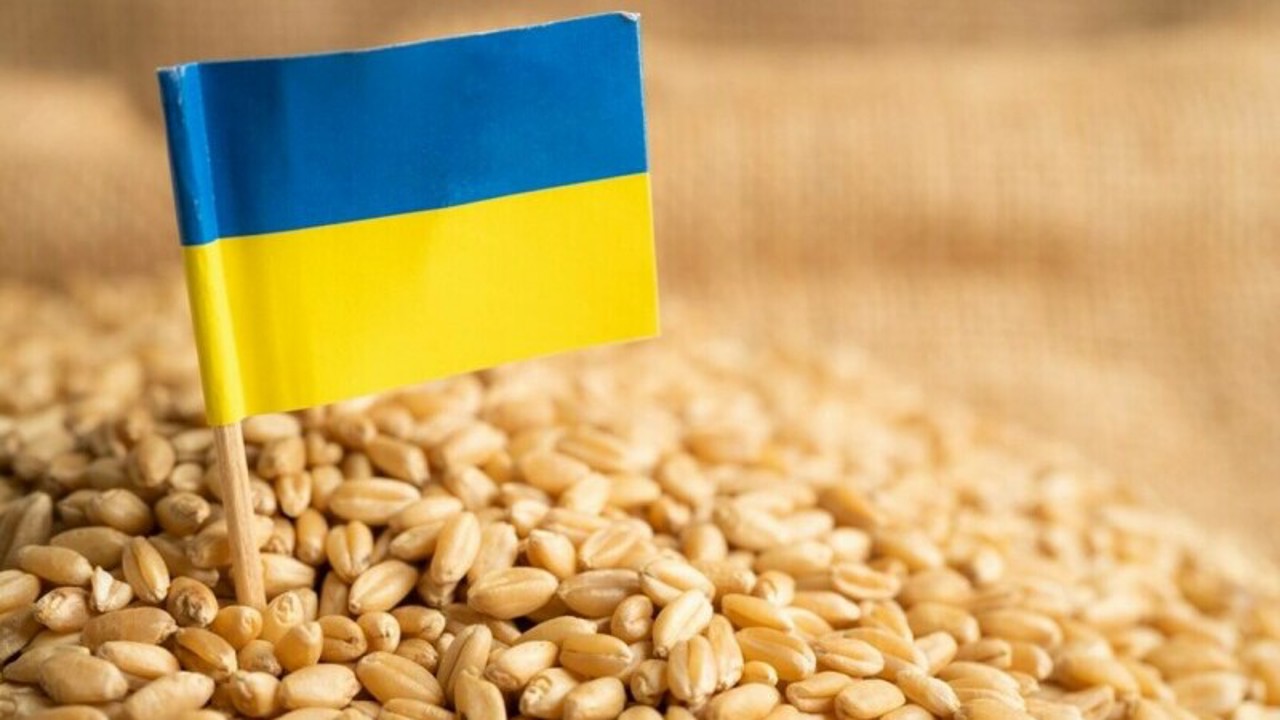
So by autumn, Ukrainian wheat, maize, rapeseed and sunflower seeds can only be sold in 22 EU countries, not in the five that have resisted.
On 2 May, the European Union imposed restrictions until 5 June on imports of wheat, maize, oilseed rape and sunflower seeds from Ukraine, in a bid to curb oversupply of the grain in Bulgaria, Hungary, Poland, Romania and Slovakia. These countries have complained that cheap grain from Ukraine is making local production unprofitable. The EU executive said wheat, maize, rapeseed and sunflower seeds from Ukraine could now be sold to any other EU country.
Last week, Ukrainian President Volodimir Zelenski, in a discussion with European Commission President Ursula von der Leyen, called for the removal of export restrictions on Ukrainian agricultural products.
"Any restriction on our exports is absolutely unacceptable now, because it strengthens the capabilities of the Russian aggressor," Zelenski said, calling on Brussels "to abolish them as quickly as possible", describing them as "severe, even cruel protectionist measures", according to AFP.
On the other hand, a regulation published yesterday, 5 June, in the Official Journal of the European Union, states:
"These measures were necessary to address exceptional circumstances that risk affecting the economic viability of local producers in Bulgaria, Hungary, Poland, Romania and Slovakia (...) The assessment showed that significant logistical bottlenecks remain. In particular, the infrastructure in Bulgaria, Hungary, Poland, Romania and Slovakia remains insufficient to cope with the surge in traffic, particularly at the borders between Ukraine and those Member States (...) These exceptional circumstances continue to affect the economic viability of local producers in the affected Member States."
"In order to rapidly address the exceptional circumstances that make this Regulation necessary, a Joint Coordination Platform has been established to coordinate the efforts of the Commission, Bulgaria, Hungary, Poland, Romania and Slovakia, as well as Ukraine and Moldova to improve the flow of trade between the Union and Ukraine, including transit along agricultural corridors," the EU Regulation reads.
The Joint Coordination Platform will provide operational solutions to improve procedures, infrastructure and remove logistical bottlenecks between Ukraine and the Union by speeding up and improving border control procedures, better coordinating transit, improving infrastructure and reducing overall logistical costs to ensure that wheat, maize, rapeseed (oilseed rape) and sunflower seeds originating in Ukraine can reach deeper into the Union and beyond, as appropriate.