War Retrospective: 2022, Ukraine Under the Terror of Russian Invasion
Russia's invasion of Ukraine plunged Europe into its biggest war since World War II and sparked a conflict that killed tens of thousands of people and displaced millions. It completely destroyed Ukrainian cities and villages and affected the global economy.
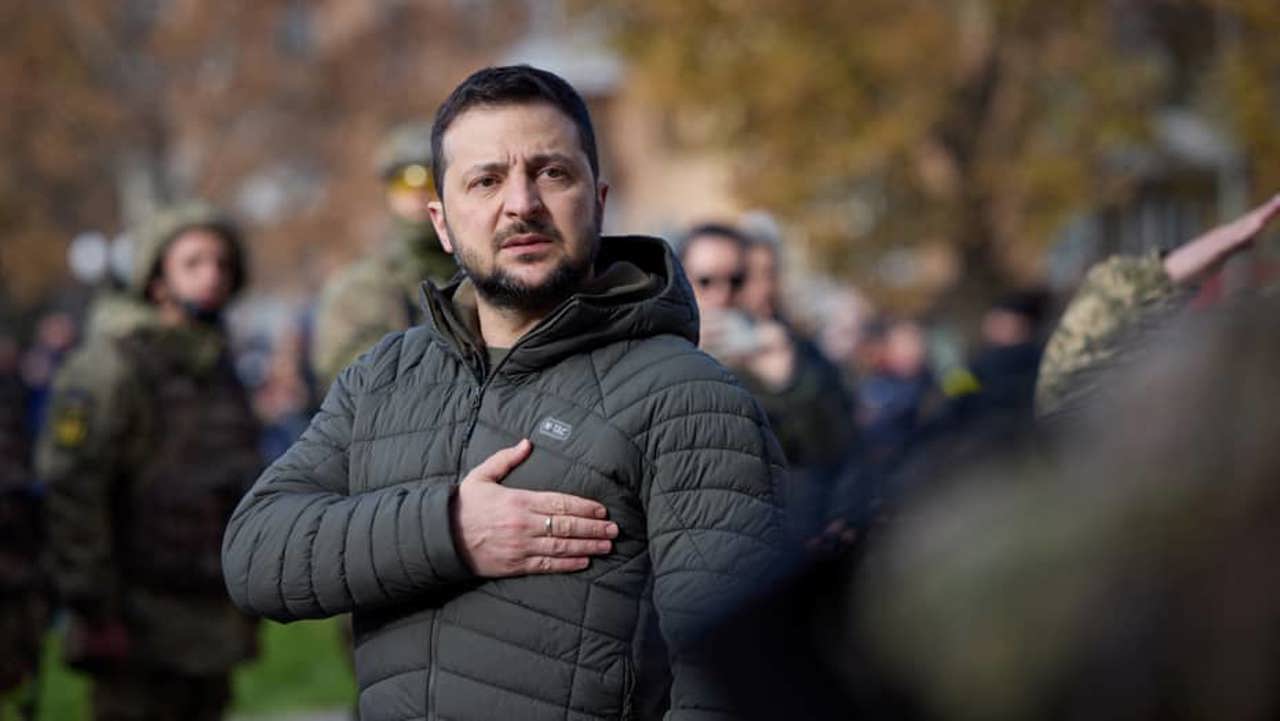
Five o'clock in the morning, February 24th. Millions of Ukrainians were awakened from their sleep by explosions. The sky was full of planes. The war began. Despite warnings from US intelligence, many European and Ukrainian officials did not believe that a military conflict could become a reality.
However, the Kremlin leader ordered Russian soldiers to attack Ukraine. The invaders hoped to take Kiev in three days. Since then, tens of thousands of people have been killed, millions have fled, and cities have been reduced to ruins. As Russian bombs fell on Kiev, President Volodymyr Zelensky made it clear that he would stand by the Ukrainian people.
“The leader of the bloc is here, the head of the president's office is here. Prime Minister Smyhal is here, Podoliak is here, the president is here. We are all here. Our army is here, the citizens are here. We are all here to defend our independence," said the Ukrainian leader, Volodymyr Zelensky, in the first hours of the Russian invasion.
The West has imposed an unprecedented package of sanctions against Russia, its top companies and politicians and businessmen in response to Moscow's invasion of Ukraine.
"We ban all imports of Russian oil, gas and energy. This means that Russian oil will no longer be accepted in American ports, and the American people will deal another strong blow to Putin's war machine," said US President Joe Biden on March 8.
Millions fled Ukraine as Russia bombed their homes. The UN has estimated that it is the fastest growing refugee crisis in decades. About 4.5 million Ukrainians have reached Europe and more than 7 million people are internally displaced.
"I'm from the south of Ukraine, where the war originally started. Bad people came there and mutilated our lives. And now I have to leave my whole family behind. And I ran away with a child. I don't know where I'm going. I'm running away with the child because I want him to stay alive," says Tatiana, one of the refugees.
"I left my father in Kyiv. Dad will sell things and help our heroes, our army, maybe even fight,” says Mark Gonceariuk, another refugee. On March 9, Russia bombed a maternity hospital in Mariupol, killing three people, including a child.
Between March and June, Russian forces destroyed the once prosperous port city. Tens of thousands of civilians have died, lacking food, water and medical services. The Ukrainian military took refuge for weeks in Azovstal, one of the largest steel plants in Europe.
After surrendering in May, the last defenders of Azovstal were taken to a prison camp run by pro-Russian separatists, where dozens died in a fire in July.
Russia's assault on Kiev has failed. Moscow announced its withdrawal from northern Ukraine as a "gesture of goodwill". But as his troops retreated, gruesome evidence was discovered depicting war crimes committed by the Russians.
"They held their hands behind their heads, they were put in a line and kneel with their faces on the ground. The Russian soldiers kept their weapons pointed at them", says Tatiana Cimut, a resident of Bucea.
"They took the lads from the popular defence and took them to the command headquarters. About five minutes later, I heard shots," recalls Volodimir Sidorenko, a resident of Bucea.
Dozens of victims were found in Bucea, some with their hands tied. Russia has denied and claimed, without evidence, that the killings were staged.
"These are war crimes and will be recognized as genocide. You are here and you can see what happened. We know of thousands of people killed and tortured, with limbs cut off, women raped, children killed. I think it's more than... This is a genocide," noted Ukrainian President Volodymyr Zelensky.
After failing to capture Kiev, Russia attacks the Donbas region in force. Throughout June, both sides claimed to have killed thousands of enemy soldiers. The focus of the war shifted mainly to the south, and Kiev vowed to liberate the territories occupied by Russia.
In September, Russia withdrew some of its forces from the Kharkiv region, but following so-called referendums, it announced the annexation of four Ukrainian regions: Donetsk, Lugansk, Kherson and Zaporozhye. But in early October, Ukrainian forces managed to drive the enemy out of Kharkiv.
It was followed by a symbolic strike on the bridge linking Russia to the annexed peninsula of Crimea. The city of Kherson is liberated.
The Kremlin responded with a partial mobilisation of 300,000 people.
"I think it is necessary to support the proposal of the Ministry of Defense and the General Staff to carry out a partial military mobilisation in Russia. I repeat: this is only a partial mobilisation," Kremlin leader Vladimir Putin said at the time.
But amid a chaotic conscription, thousands fled Russia to avoid conscription. Others objected. Since the beginning of the war, demonstrations and dissent have been consistently repressed in Russia.
More than 1,300 people were detained at the protests that denounced the mobilisation.
Russia is changing tactics and attacking Ukraine's critical infrastructure. According to estimates, with the arrival of winter, more than 10 million people were left without light and heat.
After a quick visit to the front line, in Bahamut, where fierce fighting is taking place, the leader from Kyiv leaves for Washington, where he gets $1.8 billion in support, which includes the Patriot missile system.
"Your money is not charity. They are an investment in global security and democracy, which we manage in the most responsible way," President Zelenski said in Washington.
The damaged Zaporozhye nuclear power plant remained in Russian hands, but with the UN hoping to get an agreement on a buffer zone soon.
“We're going into the coming year and we need to maintain a common understanding of our national goals. Of course, this is the liberation of our land from the enemy, as well as the restoration of Ukraine, the return of our people to their homes, the further approach of our state to key partners, the opening of new opportunities for Ukraine in the world - these are tasks for the near future," the president Volodymyr Zelensky emphasised.
Hopes for peace are under the sign of uncertainty, as Moscow does not give up its territorial claims, regarding the four newly annexed regions and Crimea, and Kiev wants an integrated and independent country.