Poland's pivotal vote: EU ties, rights, populism
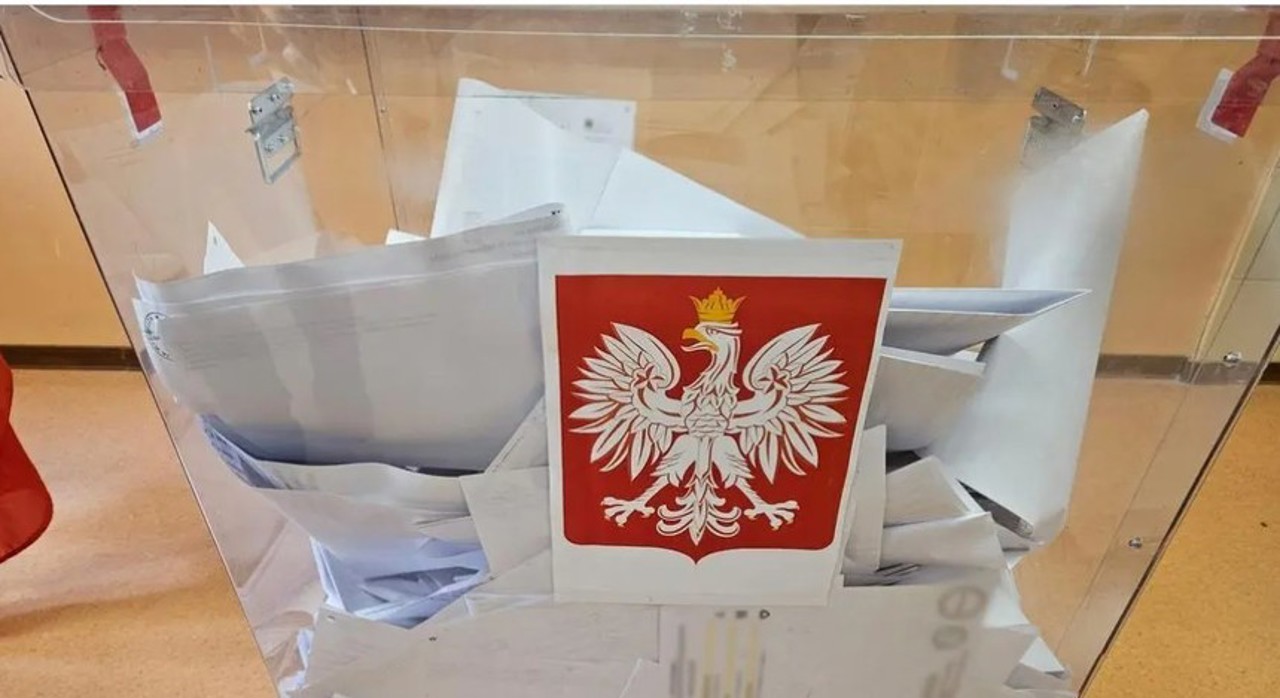
Poles are electing their president on Sunday in a close but decisive race for the future of the country's pro-European government, as well as for abortion and LGBTQ+ rights
Warsaw Mayor Rafal Trzaskowski, a long-time EU supporter, is polling at 30% in the first round, ahead of nationalist historian Karol Nawrocki, who stands at 25%, according to surveys.
If these forecasts hold true, the two candidates will face off in a runoff, scheduled for June 1. This comes at a delicate moment for Europe, as Russia's invasion of Ukraine continues, the far right gains power, and relations with Washington remain tense.
Polling stations will open at 05:00 GMT and close at 19:00 GMT.2 An exit poll is due to be published immediately afterwards.
A total of thirteen candidates are in the race, and final results are not expected until Monday.
Since the coalition led by former EU leader Donald Tusk came to power in 2023, key government initiatives have often been blocked by incumbent conservative President Andrzej Duda's veto.
Some voters hope to see an end to this deadlock.
"'I hope these elections will cement the change,' Hubert Michalowski, a 50-year-old businessman who opposes any turn to the right in Poland, was quoted by AFP as saying. He says he wants his country 'to remain in the center and to reverse this trend in Europe too.'" International politics has largely dominated the election campaign, focusing especially on Poland's place between the EU and the United States and highlighting a clash between two distinct visions. But social issues have also played an important role in the electoral debates.
Rafal Trzaskowski, 53, has promised to support abortion rights in a country where it is effectively banned, and LGBTQ+ rights – a prospect that gives hope to Malgorzata Mikoszewska, 41, a tourism agency employee.
"'Above all, I hope that the law regarding abortion and sexual minorities will be liberalized,' she says."
A breath of fresh air
The Law and Justice Party (PiS), which supports the nationalist Karol Nawrocki, was often at odds with Poland's Western allies and Brussels over the rule of law until it lost power in 2023. Nawrocki, 42, who says he admires Donald Trump, claims the former US president told him 'You will win' when they met at the White House in early May.
The final outcome of the presidential election will largely depend on how supporters of Slawomir Mentzen, a far-right candidate currently polling at around 12% support, vote in the second round.
Mentzen is a libertarian Eurosceptic who firmly opposes abortion and migrants, and who accuses the approximately one million Ukrainian refugees of taking advantage of Poland. Radoslaw Wiecek, a 25-year-old independent entrepreneur who echoes some of Mentzen's rhetoric, says he does not want Poland to be 'totally subservient to the EU.'
For Anna Urbanska, a 74-year-old pensioner, the main issue is immigration. 'I don't want these immigrants allowed into Poland. I want us to be able to live more peacefully,' she says.
Stopping the anti-democratic trend A Trzaskowski victory would allow the government to fulfill its most important commitments – promises the current coalition has struggled to fulfill, leading to many disappointments, especially among women's rights advocates, including on abortion rights.
It would also provide an opportunity to make progress in restoring the rule of law, which was undermined by the previous populist government and the incumbent president.
The head of state has limited powers in Poland, but has the right to veto legislation, a prerogative frequently used by the outgoing president. "'With Nawrocki, the government will be effectively paralyzed, and this could ultimately lead to the collapse of the ruling coalition,' argues political scientist Anna Materska-Sosnowska." His success, she argues, would mean 'effectively the return of populists, with ten times the force, in no more than two years,' at the next general election. Since Donald Tusk came to power, the country has consolidated its position in Europe and occupies a key position on the eastern flank of the Atlantic Alliance (NATO), facing Russia.
In this context, Materska-Sosnowska observes that the presidential election is 'fundamental,' not only for Poland, but also in the face of 'attempts to stop the anti-democratic and populist trend sweeping across Europe.
Translation by Iurie Tataru