Moldova and NATO: Balancing neutrality with stronger defense capabilities
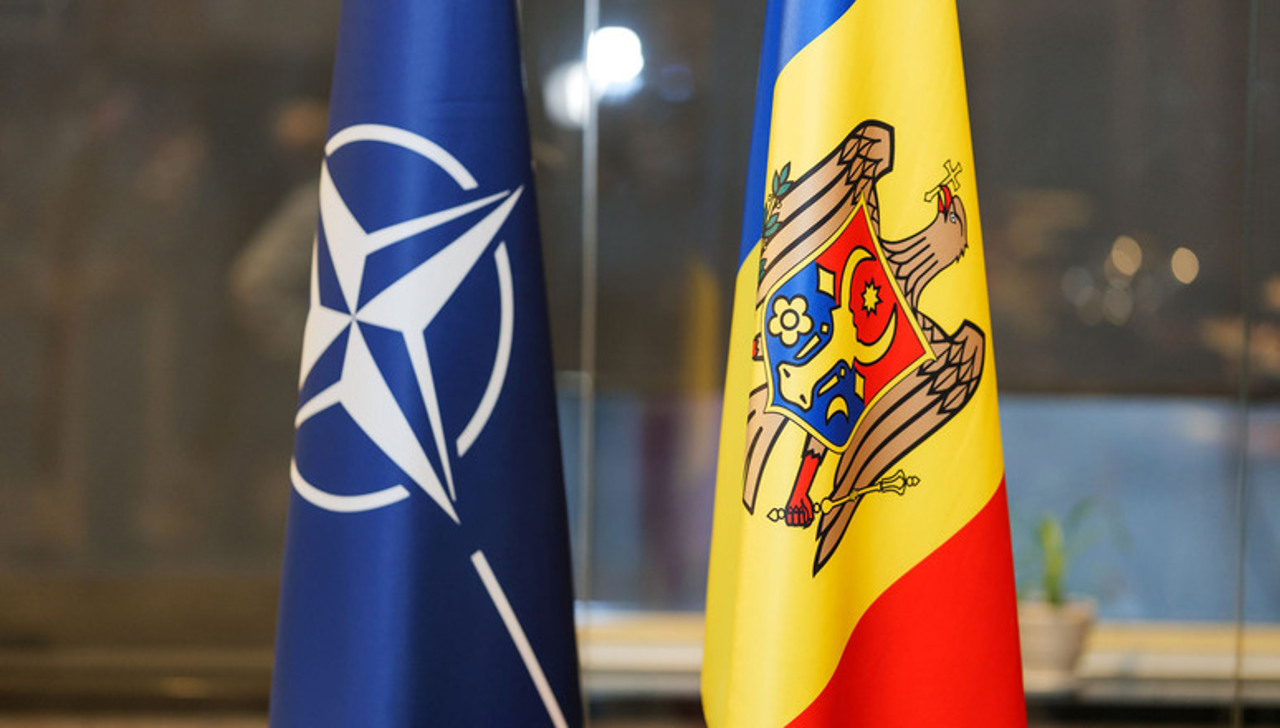
The Republic of Moldova has maintained a relationship with the North Atlantic Alliance for over 30 years, and this partnership has continually evolved. Currently, there are several areas where cooperation can be enhanced for the benefit of our country. This is particularly relevant in light of the Moldova-NATO Individual Partnership Programme (ITPP) for 2025-2028 , which was recently approved by the government in Chișinău. In an interview with Radio Moldova, Viorel Cibotaru, the Ambassador of the Republic of Moldova to Belgium, stated that through joint military exercises and cooperation, our country has strengthened its defense capabilities while upholding its status of neutrality.
The main objective in the field of security for the Republic of Moldova is to complete the reform of the defense sector and to establish robust mechanisms that enhance resilience against the risks and threats the country faces. This was noted by Viorel Cibotaru, the Ambassador of the Republic of Moldova to Belgium. He also emphasized that the plan aims to strengthen international relations with NATO member states, the European Union, and other international partners.
The Ambassador addressed false narratives about the presence of NATO troops in Moldova, clarifying that the only foreign military presence is that of the Russian Federation in the Transnistrian region. He highlighted that the constitutional authorities have repeatedly requested the withdrawal of Russian troops at both the UN and the OSCE.
Cibotaru stated that the Republic of Moldova conducts joint exercises with NATO member states under clear international agreements regarding the status of foreign forces. He noted that such exercises have previously included participation from the Russian Federation, Ukraine, and other nations.
“It is also crucial to project the image and capabilities of the Republic of Moldova at the international level by ensuring collective security on both regional and global scales,” Cibotaru remarked. He pointed out that Moldova is not just a consumer of security provided directly or indirectly by NATO and neighboring countries but also contributes to the security of others. This partnership with NATO equips Moldova with necessary training, adequate resources, and enhances the country’s international visibility.
Recently, the European Union approved a substantial aid package of 20 million euros for air defense. Ambassador Cibotaru considers this assistance significant, especially given that the war in the neighboring country also affects Moldova. He emphasized that any system aimed at protecting citizens from such risks benefits the country.
“The support we receive from the European Union to strengthen our defense, security, resilience, and resistance capabilities is invaluable. This assistance does not contravene our principle of neutrality. Any neutral country primarily focuses on bolstering its own defense capabilities. In fact, it may need to invest even more than a member country of organizations like NATO or the EU, which is entirely reasonable,” he explained.
Moldova's relationship with NATO became more active with the signing of the Framework Document for the "Partnership for Peace" Program in 1994, along with several individual plans with the alliance. Over the years, allies have supported Moldova without requiring it to abandon its neutral status. Even though Moldova does not currently face an immediate military invasion, it is subject to a hybrid war from the Kremlin, making NATO's support crucial in this geopolitical climate.
The full interview with Ambassador Viorel Cibotaru will be broadcast today on Radio Moldova starting at 7:35 p.m.