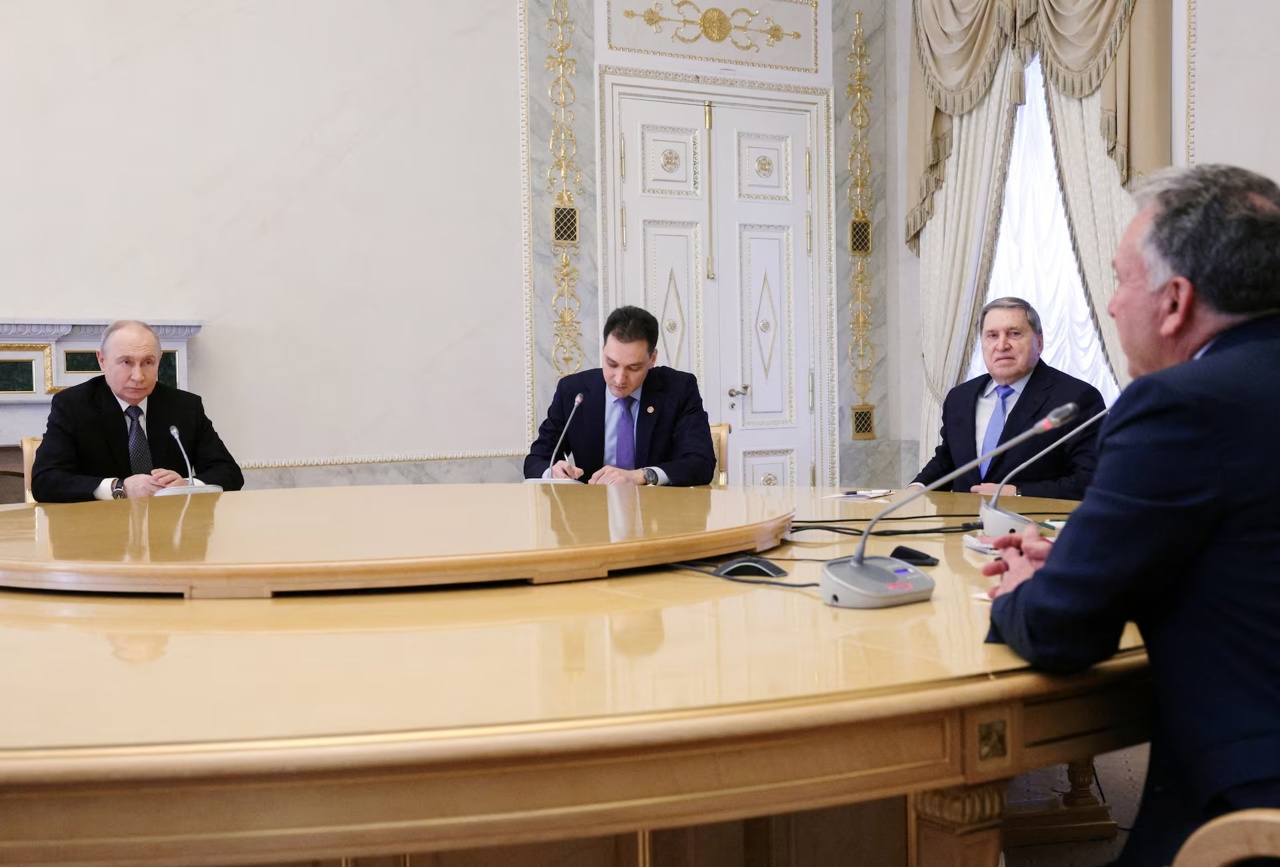
Archive documents displayed in Chișinău marking 85 years since the Ribbentrop-Molotov Pact
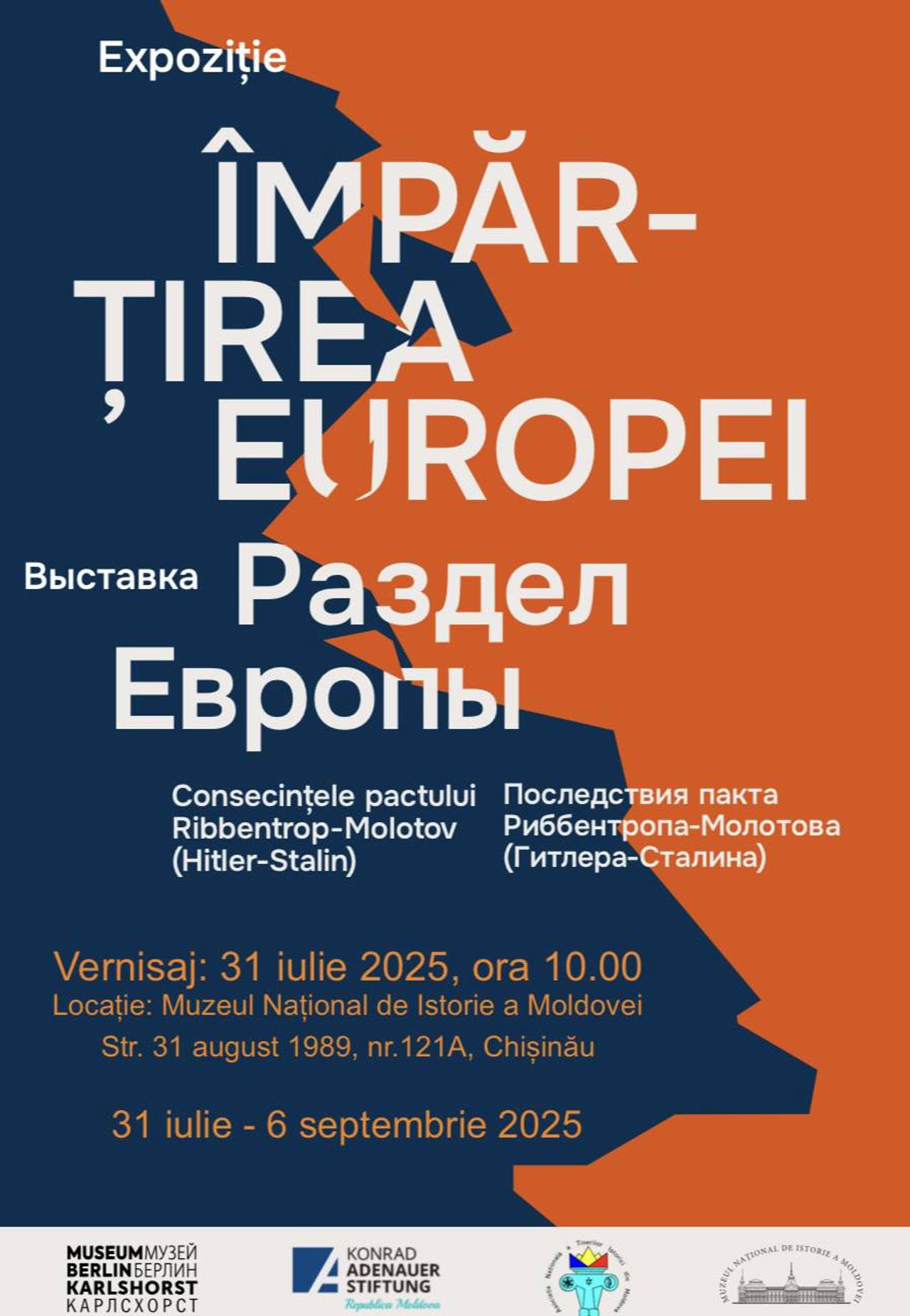
An exhibition titled "The Division of Europe: Consequences of the Ribbentrop-Molotov Pact (Hitler–Stalin)" will open this week at the National Museum of History of Moldova (MNIM) in commemoration of the 85th anniversary of the signing of the Ribbentrop-Molotov Pact.
The traveling exhibition, organized by the Berlin-Karlshorst Museum in Germany and the Department of Eastern European History at Heinrich Heine University in Düsseldorf, is being brought to Chișinău by the Konrad Adenauer Foundation.
Through archival documents, photographs, and personal testimonies, the exhibition highlights the impact of the Molotov-Ribbentrop Pact on Poland, the Baltic countries, Romania, and other states in the region.
“Deportations, forced occupations, and the loss of sovereignty are presented as essential lessons for understanding the present,” states a press release from the National Museum of History of Moldova (MNIM).
“The exhibition provides a space for reflection for young people, teachers, historians, and the general public, inviting them to contemplate the tragedies caused by this pact,” says the Konrad Adenauer Foundation Office in Moldova.
The opening of the exhibition will take place on July 31, with the presence of Dr. Jörg Morré, the director of the Berlin-Karlshorst Museum, and Christoph Meissner, the exhibition curator and a researcher at the museum.
The exhibition will be open to the public from July 31 to September 6, at the National Museum of History of Moldova, between 10:00 AM and 6:00 PM.
Previously, the exhibition was showcased at the Edineț Region Museum from June 5 to 30, 2025. By the end of the year, it is scheduled to visit several cities in Moldova at local museums.
The Molotov-Ribbentrop Pact, also known as the Stalin-Hitler Pact, was a non-aggression treaty signed between Nazi Germany and the Soviet Union on August 23, 1939. It was signed in Moscow by German Foreign Minister Joachim von Ribbentrop and Soviet Foreign Minister Vyacheslav Molotov.
The treaty included secret protocols that divided Eastern Europe into spheres of influence, leading to the return of the Romanian territories of Bessarabia (now the Republic of Moldova) and Northern Bukovina to the Soviet Union. This event marked a dramatic shift in European politics and set the stage for the outbreak of World War II.
Historians later denounced the pact as a political crime. The annexation of Bessarabia by the USSR resulted in deportations, political repression, organized famine, forced labor in communist gulags, industrialization, and collectivization for the indigenous population.
Autor: Valeria Cîrjeu, stagiară