NATO military leaders discuss Ukraine's Post-conflict security
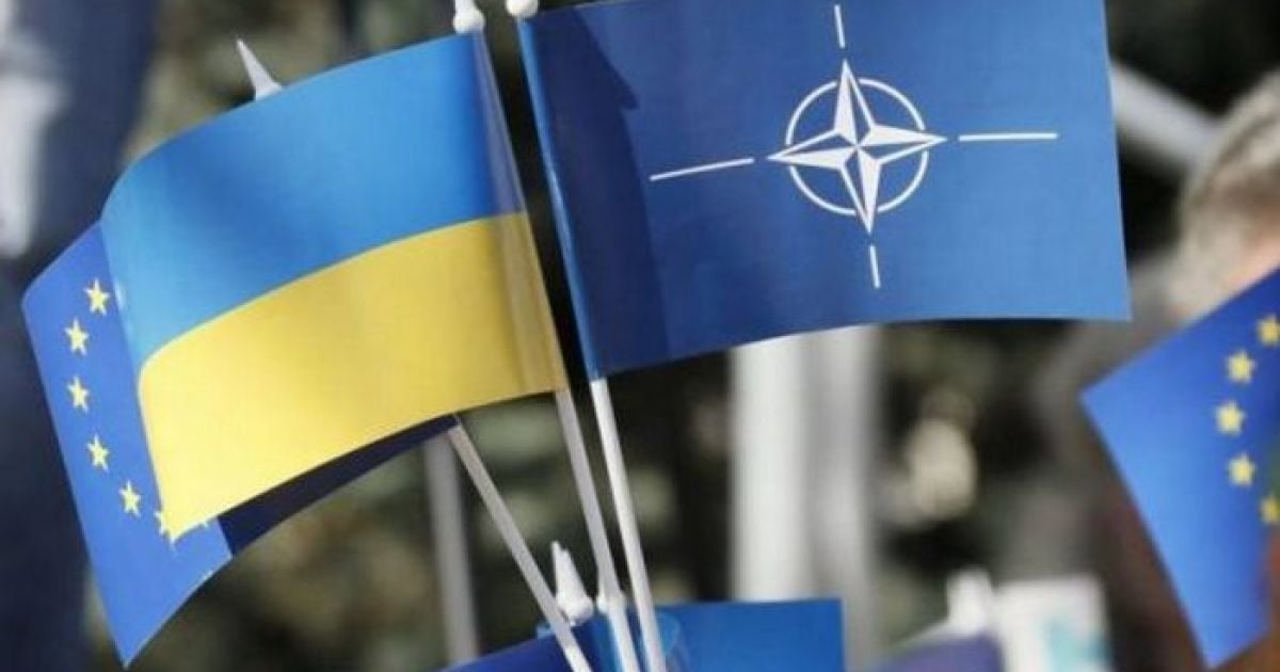
NATO military leaders from the US and Europe have discussed online post-conflict security guarantees for Ukraine, following a promise from Donald Trump to help the war-torn country.
Ten European states could potentially send troops to Ukraine after the war ends, with London and Paris among the first, but they would be stationed far from the front lines. The Kremlin is firmly opposed to the deployment of NATO troops.
US General Alexus Grynkewich, also responsible for NATO operations in Europe, briefed defence chiefs on a meeting between Mr Trump and Mr Putin in Alaska. Mr Trump has advocated for a quick end to the war, while Kyiv fears a deal favourable to Russia. After meeting with Mr Putin, Mr Zelensky, and European leaders, Mr Trump promised to support Ukraine with post-conflict security guarantees equivalent to NATO's Article 5, but without "boots on the ground," according to the White House.
"The President has stated categorically that American missions will not be on the ground in Ukraine, but we can certainly help with coordination and perhaps provide other security guarantees to our European allies," said Karoline Leavitt, the White House press secretary.
The Kremlin states that it supports reliable security guarantees for Ukraine, but such discussions are impossible without Russia.
"We cannot agree that collective security issues are now being proposed to be resolved without the Russian Federation. This will not work. Russia is not overstating its interests, but we will defend our legitimate interests firmly and resolutely. Seriously discussing security issues without the Russian Federation is a utopia, a road to nowhere," said Russian Foreign Minister Sergey Lavrov.
After his meeting with Mr Trump and European leaders, Mr Zelensky announced that security guarantees for Kyiv could be established within ten days. A Bloomberg report suggests the plan involves a multinational group, including the UK and France, to train and supplement Ukrainian forces. The UK and France would send several hundred troops to be stationed far from the front. The US would provide intelligence sharing, border surveillance, weapons, and potentially anti-aircraft systems.
Translation by Iurie Tataru