Moldovan passport ranks 92nd globally, seen as ‘mirror of international trust’
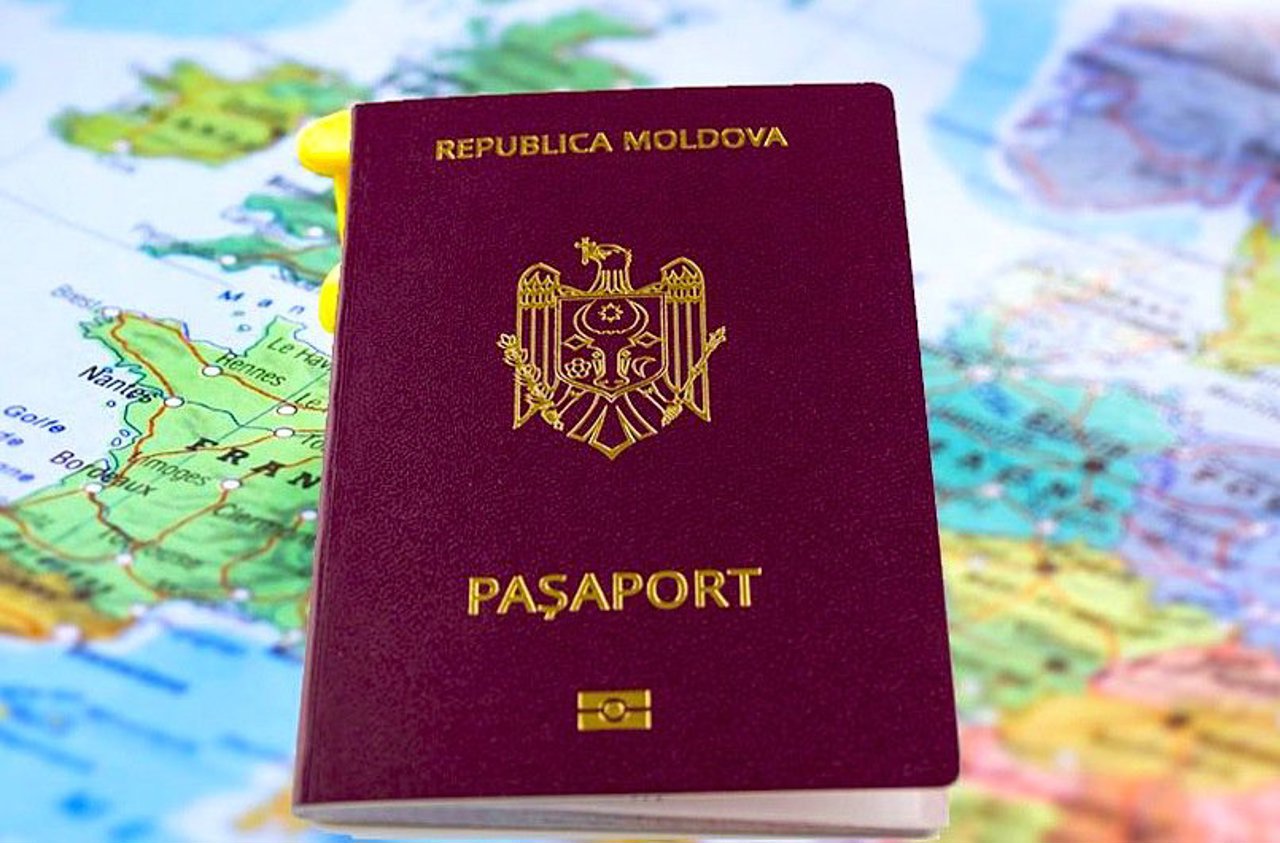
The Moldovan passport provides visa-free access to approximately 110 countries, while Ukrainian passport holders enjoy visa-free travel to nearly 140 countries. In comparison, the Romanian passport is the most powerful, granting access to over 170 countries. Each year, a global ranking is published that assesses the "power" of passports, considering not only visa-free travel but also other significant factors.
In the international ranking that measures the "power" of passports—not only in terms of visa-free travel but also based on other relevant factors—the passport of the Republic of Moldova ranks 92nd.
Raisa Ghirișan, the director of a company specializing in document preparation, told Radio Moldova that a passport's position in this ranking is primarily determined by the number of countries to which its holder can travel without a visa. Additionally, the country's political and economic stability, as well as its diplomatic relations, play significant roles.
"The Moldovan passport primarily grants us freedom of movement within the European Union and many other countries globally. This is a crucial advantage for a small country like ours. Our presence in this ranking confirms that the Republic of Moldova is already experiencing international openness, and the 92nd place serves as a starting point toward a much brighter future than we currently have," the director said.
When discussing the main destinations where Moldovan citizens can travel without a visa, she highlighted that the most significant achievement is the ability to access the European Union for short-term stays of up to 90 days. Furthermore, Moldovans enjoy a liberalized travel regime with Turkey, Israel, CIS states, and most Balkan countries.
This freedom extends beyond tourism, offering opportunities for education, visits, and particularly important economic partnerships.
When asked what steps the Moldovan authorities could take to improve the passport's ranking internationally, Raisa Ghirișan emphasized the need to negotiate bilateral travel agreements with countries such as the USA, Canada, and Japan. She also noted that internal stability and enhanced external trust through reforms and transparency are essential.
"We must intensify diplomatic and economic relations with key states, and of course, continue to strengthen our ties with the European Union," Raisa Ghirișan emphasized.
She pointed out the direct correlation between a country's passport power and its level of development.
"Politically stable, developed countries with strong economies and robust diplomatic relations tend to have more powerful passports. In essence, a passport reflects the level of international trust. As we continue to grow economically and politically, our passport will gain greater strength and respect worldwide," Raisa Ghirișan concluded.
Visas, obstacles, and discoveries: The African adventures of Moldovan Natalia Ciobanu
For Natalia Ciobanu, a passionate traveler, her passport is not just an official document; it symbolizes her freedom of movement. It serves as a living archive of the encounters, cultures, and experiences she has gained throughout her travels. Natalia has traversed continents, journeying by land, sea, and air, and has visited 163 countries. She shared her adventures and the bureaucratic challenges she faced with journalist Daniela Gherman from Radio Moldova, as well as the joy of discovering the world.
"I travel with very little money, but it's becoming increasingly difficult due to complex visa bureaucracies and high costs. For instance, if I want to go to the Republic of Djibouti, I have to fly through Saudi Arabia, which is my only option. I have to apply for a transit visa, even if I’ll stay in the airport for only 2-3 hours, and that can be quite expensive, around 30 dollars. Currently, I'm hoping to visit at least five or six more countries, possibly even ten. In Africa, I have about 16 countries left to explore, some of which are quite dangerous, like Somalia, the Central African Republic, Mali, and Burkina Faso, due to ongoing attacks and conflicts. Others, like Equatorial Guinea, are also difficult to access; I lost the visa I had obtained with great difficulty, which cost me 92 euros, and when I arrived, they wouldn’t let me in. So, I try not to plan anything rigidly; I prefer to go where I can. I think that if I succeed, great; if not, that's okay. If I plan extensively, I become obsessed and frustrated, and I end up disappointed,” said Natalia Ciobanu.
Although Natalia also holds a French passport, she emphasized that travelling with her Moldovan passport can be more advantageous for certain countries. Her experience on the African continent shows that obtaining visas can be simpler and less expensive with her Moldovan document.
"For example, with my French passport, obtaining a Nigerian visa costs about 250 euros, while with the Moldovan passport, it only costs 120 euros. The Nigerian visa was the most complicated, but I only use my French passport in countries where no visa is required, such as Morocco, Senegal, Gambia, South Africa, and Angola,” she added.
Natalia also mentioned that tourism is well-developed in Namibia, and citizens of the Republic of Moldova can travel there without a visa, which offers additional freedom for exploring the African continent.