ELECTIONS 2025 // OSCE observers laud CEC transparency, flag risks of interference and vote buying
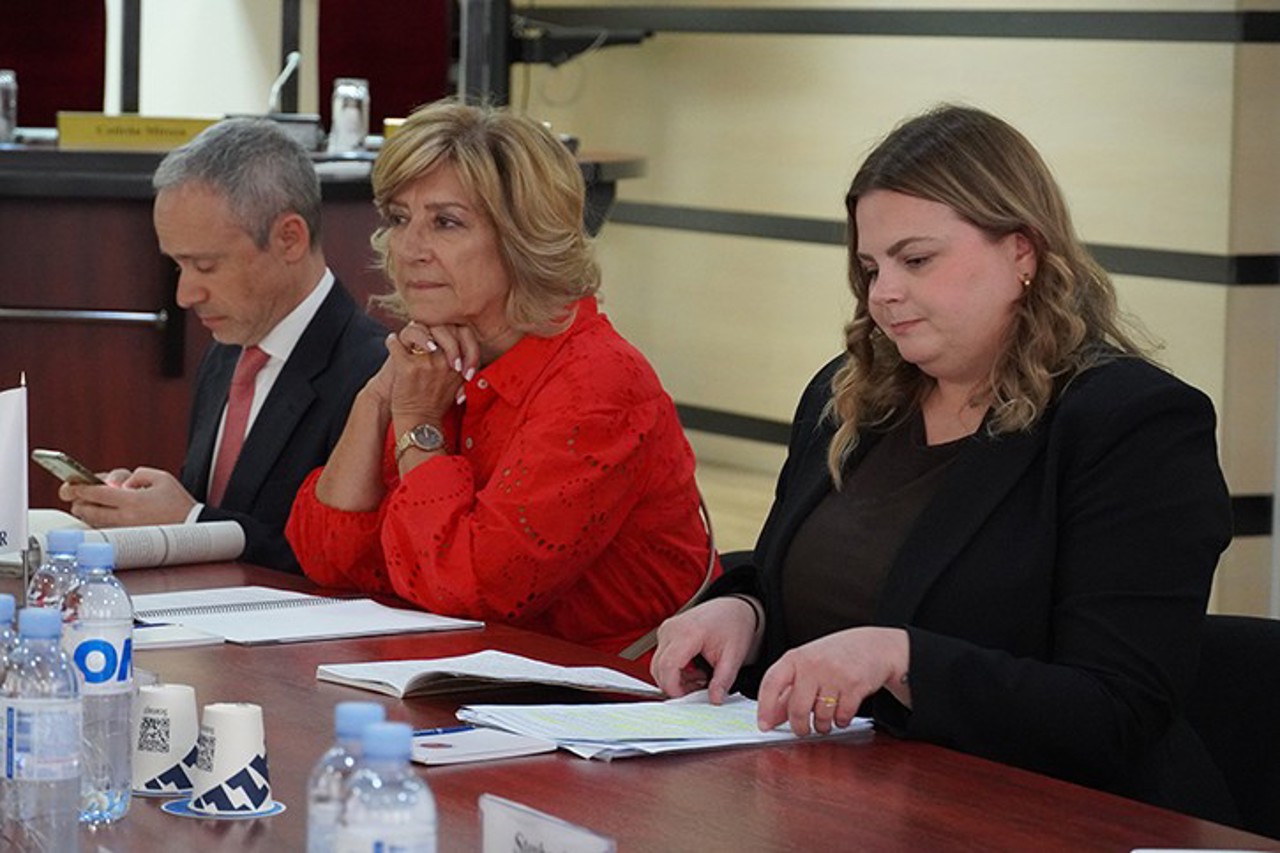
The parliamentary elections scheduled for September 28 will be a critical test of Moldova’s democratic institutions in the face of hybrid threats. This warning comes from MEPs Paula Cardoso of Portugal and Linnéa Wickman of Sweden, who are leading the OSCE observer teams in Moldova. In an article published on the European Interest platform, the MEPs emphasize that the elections in Moldova should not be viewed as a mere electoral formality.
“On September 28, Moldovans will go to the polls in parliamentary elections that could prove decisive for the country’s democratic future. We cannot afford to view this vote as routine. It comes at a time when hybrid threats are multiplying and the very idea of Moldova’s place in Europe is being challenged. What happens in these elections will reverberate far beyond Chisinau,” the authors say.
Cardoso and Wickman emphasize that these are the first parliamentary elections held under the new Electoral Code adopted in 2022, adjusted to eliminate loopholes that allowed for fraud. Also, through Law 100/2025, sanctions for electoral corruption and illegal financing were tightened.
“While these measures are a welcome development, legislation alone cannot protect democracy. What matters most is whether citizens believe that these reforms will be implemented fairly and consistently and that their vote will truly count,” reads the article.
During a recent pre-election visit to Chisinau, Cardoso and Wickman held extensive discussions with representatives of the election management bodies, political parties and candidates, civil society, and the media. They also met with their election observation partners from the OSCE Office for Democratic Institutions and Human Rights, who have been on the ground since mid-August closely monitoring the run-up to the elections, as well as with representatives of the OSCE Mission to Moldova. These discussions were crucial in understanding the context of potential areas of concern.
“As observers deeply involved in the electoral landscape of the Republic of Moldova, we see the upcoming parliamentary elections as a defining moment for the nation’s democratic trajectory. These elections are taking place against a backdrop of deep political polarization, exacerbated by Russia’s ongoing war against Ukraine and Moldova’s pursuit of European Union integration. Russia’s war has also hit Moldova’s economy, driving up energy prices and fueling inflation,” the MEPs say.
They also mention that the central electoral authority in Chisinau has shown professionalism and transparency, establishing 37 district electoral councils and over 2,200 polling stations, of which 301 are abroad. However, the opposition’s suspicions of political influence remain a sensitive area.
The authors also highlight the persistent risks associated with disinformation campaigns, illicit financing, and cyberattacks. In parallel, the media landscape remains fragile.
“Moldova has a diverse press, but is constrained by declining advertising revenues and non-transparent ownership structures. Some journalists have faced online and in-person harassment, with limited institutional protection. Television remains influential, but is increasingly rivalled by social networks, where regulation is even weaker,” the OSCE representatives warn.
In addition, illegal funds continue to enter the campaign through intermediaries, despite the new regulations, to undermine trust in the electoral process “before a single ballot is cast”.
Cardoso and Wickman also mention in the same article that, in recent weeks, police and prosecutors have detained suspects and confiscated sums of money used to buy votes and finance paid protests. Also, public information campaigns have been launched to warn voters about the consequences of selling votes.
The MEPs insist that international election observation plays an essential role for the credibility of the election. The OSCE assessment will contribute to strengthening the democratic path of the Republic of Moldova, confirming or denying the fairness of the process.
Portuguese MP Paula Cardoso was appointed by the OSCE Chairman-in-Office as Special Coordinator and Leader of the OSCE Short-Term Observers, and Swedish MP Linnéa Wickman will lead the OSCE Parliamentary Assembly delegation.