Moldova's GDP growth slows to 1.1% amid inflation crisis and IT export boom
Moldova’s economy grew by a modest 1.1% in the second quarter of 2025 compared to the same period last year, reaching 82bn Moldovan lei (MDL).
Official data shows that the construction, energy, and information technology (IT) sectors were the main growth drivers, while agriculture and transport sectors recorded declines.
Economic expert Viorel Gîrbu states that the Moldovan economy is still feeling the effects of the inflationary crisis and currency imbalances, and the recovery is slow, relying on new foundations.
"The inflationary shock in the national economy triggered a foreign exchange market shock, leading to (...) an approximate 50% increase in the value of the national currency. In fact, what we witnessed in 2022 and continue to witness today are the consequences of this shock. The economy has not recovered; the economy is restructuring. Yes, it is settling on new bases to cope with these new conditions," Gîrbu pointed out on the show "Spațiul Public" (Public Space) on Radio Moldova.
Amid increased demand for housing, residential construction advanced by over 34%. According to Ana Stamati, Executive Director of the Real Estate Developers and Investors Association (ADII), the non-residential and logistics segment grew by 52% in the first months of this year.
"Romania and Ukraine have become much more interested in and attentive to what the Republic of Moldova offers and how we can team up. Yes, we feel a greater focus on us as a potential partner/market," Stamati said on the same show.
The Executive Director of the Real Estate Developers and Investors Association added that three large industrial projects are currently being developed in Criuleni, Comrat, and Ungheni, which are due to be publicly announced by the end of the year.
Moldova's IT sector drives exports past $700m mark
Another sector with major growth potential is IT, which has become one of the main drivers of the Republic of Moldova's exports.
According to Vitalie Tarlev, a digitalisation consultant to the Prime Minister’s Economic Council and a member of the Administration Board of "Moldova IT Park," if we aim for GDP growth, we must invest in innovation and focus on increasing productivity.
The same source stated, on Radio Moldova, that IT exports have grown from $30 million to over $700 million thanks to the public policies promoted in this field.
"Our exports were $30 million – tiny. Now we have over $700m in exports, thanks to the successful promotion of innovation-oriented policies," Tarlev highlighted.
Out of the total goods and services developed by the Moldova IT Park platform, 88% go to export. The next stage is the digitalisation of traditional sectors—agriculture, construction, health, and energy, the expert added.
"About 12% of IT products remain in the country. That is a significant figure, but still insufficient. We are currently concerned with how to bring digital innovation into sectors such as agriculture, health, finance, construction, energy, etc. This will increase productivity and, respectively, will have a positive impact on GDP growth. (...) The fact that the Republic of Moldova has found its niche in the global market and sells IT services is a very good and sustainable element. Accordingly, we must invest in the quantitative and qualitative development of IT professionals. From these $700 million, we should reach seven billion dollars," he explained.
Agriculture hit by weather and infrastructure
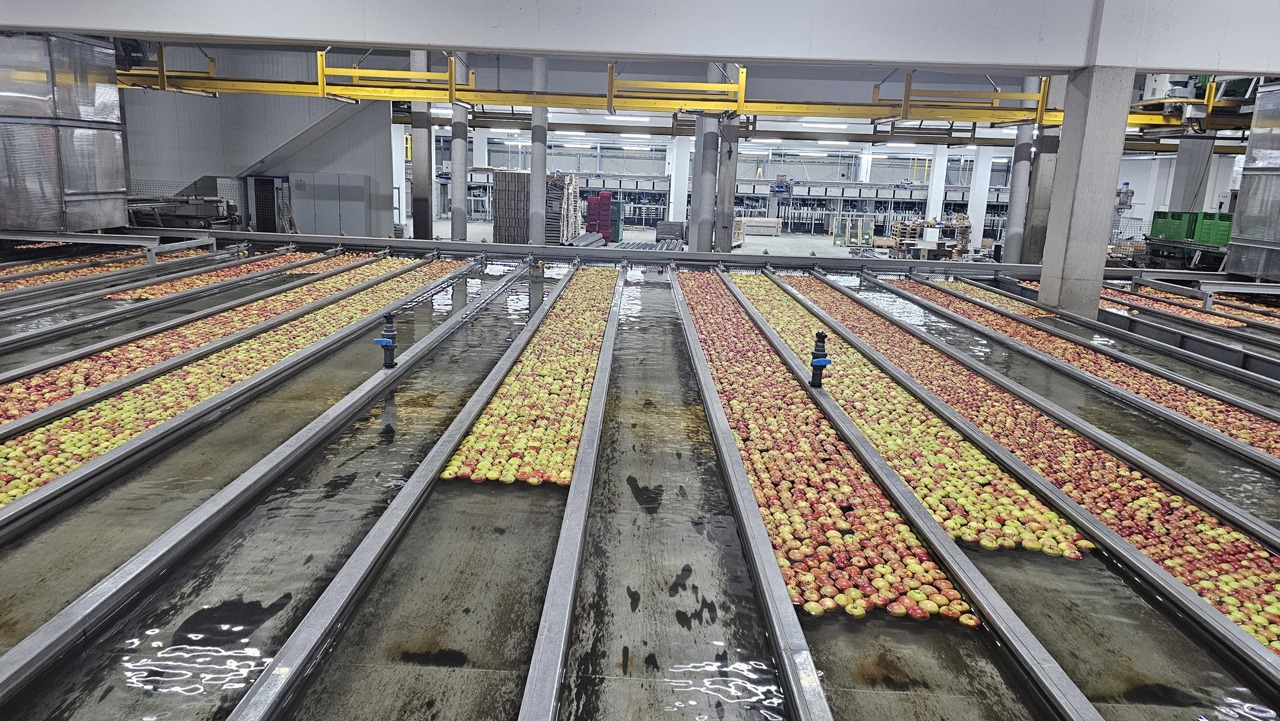
However, the agricultural sector was strongly affected by weather conditions, including the frosts in the spring of the current year.
"Another cause would be the poor infrastructure, because out of the total area of 105 thousand hectares of producing plantations in the Republic of Moldova, only 15 thousand are model orchards—meaning modern plantations," said Nadejda Rusu, Director of Lobby and Advocacy at the Fruit Producers and Exporters Association "Moldova Fruct," on "Spațiul Public."
The "Moldova Fruct" Association proposes a model for the reconversion of traditional orchards into intensive orchards, which could generate an economic multiplier effect worth €1.5bn over the next five years.
"If we were to take these one hundred thousand hectares of fruit plantations and carry out their reconversion, replanting them with intensive, super-intensive orchards, then, in four to five years, we could have a multiplier of €1.5bn," Nadejda Rusu calculated.
Representatives of the IT, real estate, and agricultural sectors say that the interconnection of the fields can accelerate economic growth, as the digitalisation of agriculture, the automation of construction, and the streamlining of logistics are solutions for sustainable development.
The Ministry of Economic Development and Digitalisation estimates 2025 economic growth at 1.3%, a revision downwards from previous forecasts. In the medium-term, scenarios indicate possible GDP increases between 1.5% and 4.3%, depending on the external context and investments in innovation. Although the economic advance is modest, experts say that the Republic of Moldova has development potential through digitalisation, investments in education, and better integration between economic sectors.
Translation by Iurie Tataru