Students in Peresecina build robots and study nature with drones
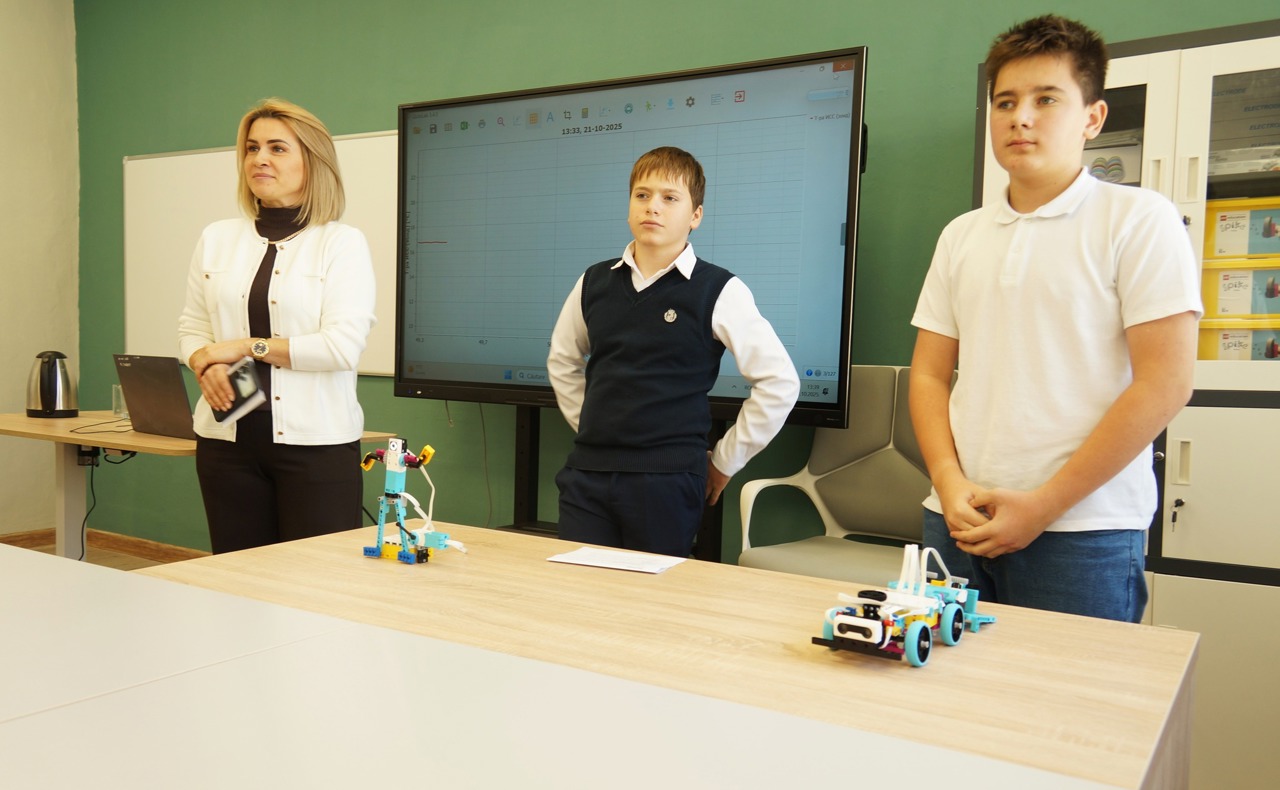
Students at the "Alexandru Donici" Lyceum in Peresecina, in the Orhei district, have the opportunity to research natural phenomena, build robots, and even 3D-print objects, including human organs. The institution has recently inaugurated an ultra-modern digital laboratory as part of the "Model Schools" project, which aims to modernize the educational process and enhance students' engagement with real sciences.
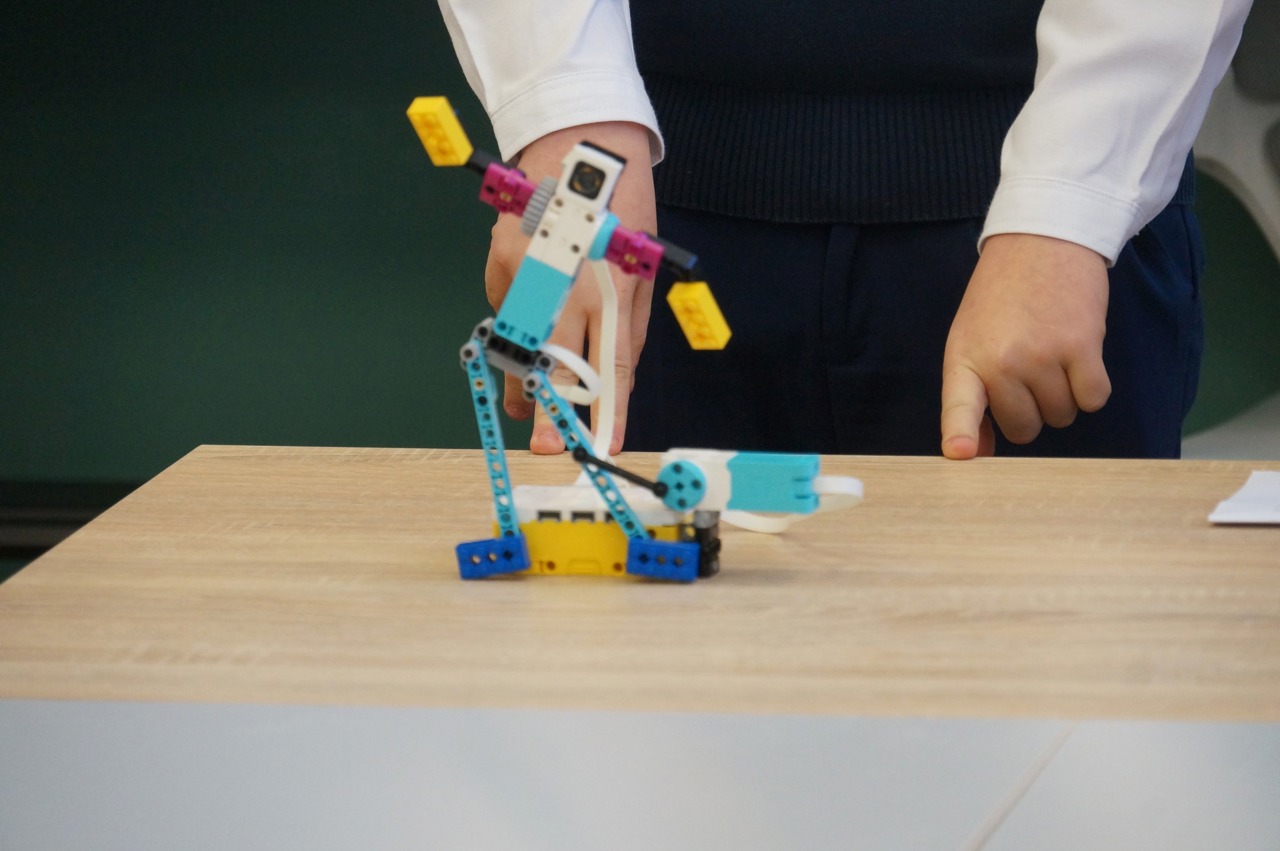
The laboratory is equipped with 10 drones, a 3D printer, robotics sets and various interactive tools. Some of these are already used in Physics and Biology lessons.
Even the first robot was built from Lego pieces.
*"These are lab-disks, we can use them in Biology, Physics, Chemistry, Geography. They are much more convenient to work with in practice. They measure, for example, the heartbeat of a person per minute, said eighth-grade student Nicoleta Bodorovici.
"I find this very interesting, because we can see, practically, not just theoretically, what the teacher tells us. We did experiments in Physics and showed the graph on the computer - how the temperature rose and fell", added Nicoleta.
For Elena Șamurai, a ninth-grade student, working with drones was a unique experience: “When I operate these drones, you feel like a child, curious. How interesting they fly, film, what they do. I think I would use them in Geography, to film or see an area from above.”
The activities in the laboratory are coordinated by two teachers specially trained for this type of learning.
Mathematics teacher, Marta Jioară, believes that modern technologies can change students’ perception of the exact sciences: “Children learn, develop skills in the fields of Science, Mechanics, Engineering, Design, Mathematics. With these 3D printers, for example, they can build a room, even a house, set up an alarm or create a traffic light.”
The director of the institution, Ana Ivanov, says that she has noticed an increase in students' interest in practical activities: "I had a fear, because everything new is little known to the generation of teachers, but I was impressed by the students I saw involved and interested. I saw them sitting in the laboratory, I saw here a sparkle of playfulness that does not find its place in the classroom".
The digital laboratory in Peresecina is the second modern workshop opened within the "Model Schools" project. In total, 12 institutions will benefit from such facilities.
The initiative is implemented by the Development Foundation of the Republic of Moldova, in partnership with "Class of the Future", with the support of the Ministry of Education and Research and external funding.
The first FabLab laboratory was inaugurated this fall in Ștefan Vodă.