Ilie Ilașcu: Moldova mourns former political prisoner jailed in Transnistria
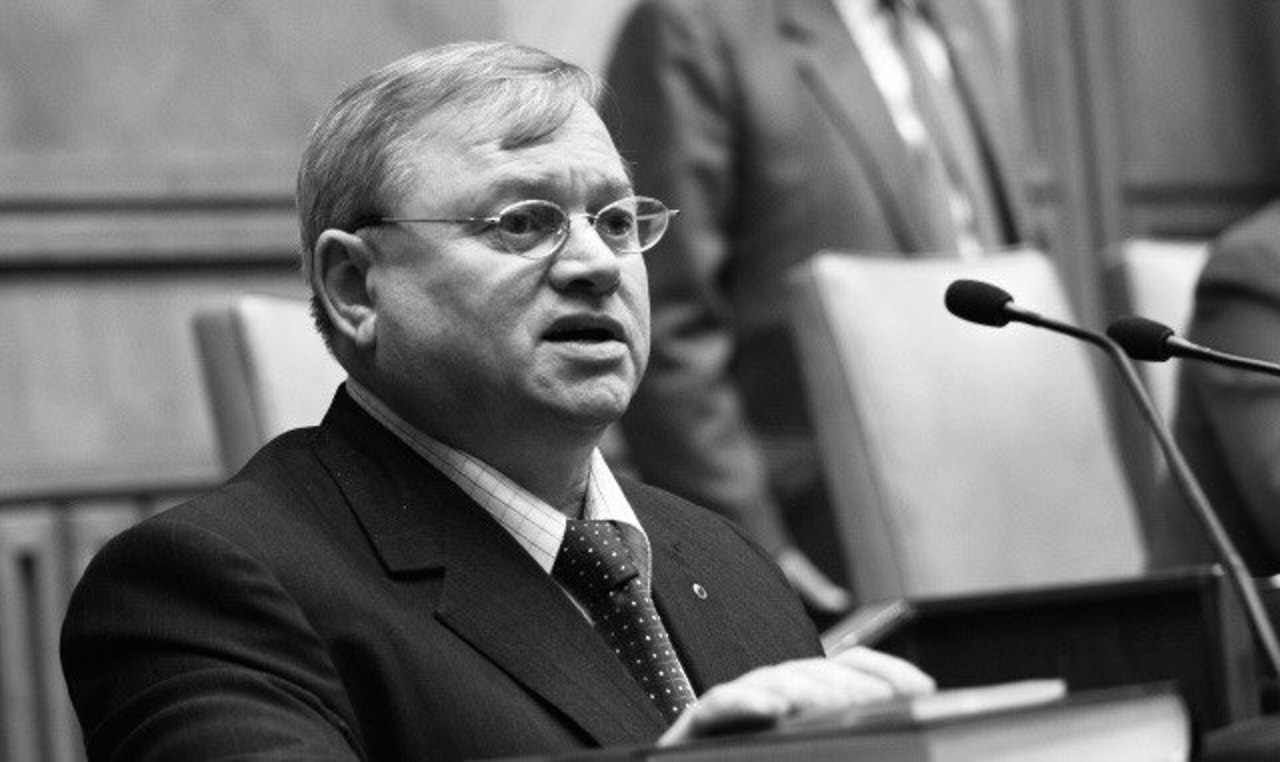
Former political prisoner Ilie Ilașcu is being laid to rest today at Bellu Cemetery in Bucharest. The Republic of Moldova has declared a day of national mourning, with a symbolic farewell ceremony held in Chișinău for the public to pay respects.
The Moldovan state flag is flying at half-mast across the country and at all diplomatic missions abroad. A nationwide moment of silence was observed at 12:00 PM in tribute to Ilie Ilașcu.
Who Was Ilie Ilașcu?
Born in Taxobeni, Fălești district, in 1952, Ilie Ilașcu was a founding member of Moldova’s National Liberation Movement. He led the Tiraspol branch of the Popular Front of Moldova until 1992.
He commanded troops of the Ministry of National Security of the Republic of Moldova during the 1992 conflict on the Nistru (Dniester) River.
On June 2, 1992, Ilașcu, along with Andrei Ivanțoc, Alexandru Leșco, and Tudor Petrov-Popa, was arrested by Russian special forces. A year later, a court in the Russian-backed separatist Transnistria region sentenced him to death. His nine-year imprisonment—from 1992 to 2001—was marked by isolation, psychological pressure, and systematic rights violations. He was subjected to mock executions on four occasions, being taken out of his cell to hear his death sentence read, followed by a blank shot fired at the wall.
Following intervention and pressure from the Parliamentary Assembly of the Council of Europe and the European Union, Ilașcu was transferred to Chișinău and freed on May 5, 2001.
The other members of the Ilașcu Group were subsequently released over several years, concluding with the release of Andrei Ivanțoc and Tudor Petrov-Popa in 2007, both having served 14 years.
Landmark ECtHR Verdict
In 2004, the European Court of Human Rights issued its landmark judgment in the case "Ilașcu and Others v. Moldova and Russia." The ruling established the responsibility of the Russian Federation and the R. Moldova for torture, illegal deprivation of liberty, and the violation of the right to correspondence.
Ilie Ilașcu went on to serve two terms as a deputy in the Parliament of the Republic of Moldova and two terms as a senator in Romania.
A Symbol of Resistance
Ilie Ilașcu is widely remembered as a figurehead in the struggle for national identity and freedom.
President Maia Sandu described him as "a symbol of resistance and the struggle for integrity," noting his fight for national identity against the Transnistrian separatist regime.
President of Romania, Nicușor Dan, praised Ilașcu as "an example of integrity and courage," emphasizing his role as a symbol of Romanian resistance in the separatist Transnistrian region.
Writer Dumitru Crudu reflected on Ilașcu's moral strength, citing his ability to endure nearly ten years of inhumane detention. Crudu stated that Ilașcu's resolve, animated by the ideal of national unity, kept him mentally sound despite the psychological torture.
Ion Iovcev, former director of the "Lucian Blaga" High School in Tiraspol, called Ilașcu's death "an immense loss for the entire national space," recognizing him as a guiding figure in the fight for national language and values in the separatist region.
Translation by Iurie Tataru